Trump says ‘don’t read anything into it’ when asked about declaring Venezuela’s airspace closed
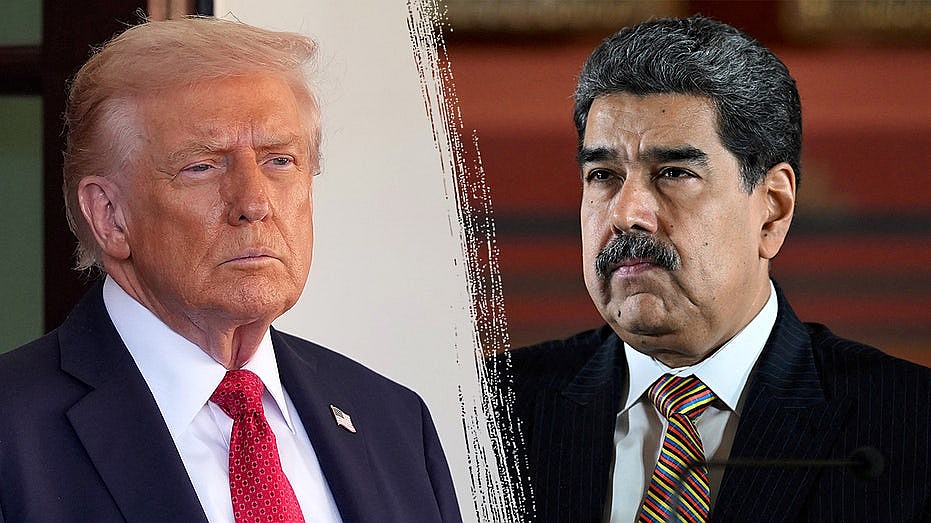
In a recent press conference aboard Air Force One, President Donald Trump addressed the escalating tensions between the United States and Venezuela, particularly regarding the latter’s alleged role in sending criminals and drug traffickers into the U.S. Trump stated that Venezuela is “not a very friendly country” and declared the airspace above and surrounding Venezuela closed to airlines, pilots, and drug dealers. When reporters inquired if this warning hinted at an imminent military strike, Trump urged them not to “read anything into it.” This statement comes amidst a backdrop of heightened military activity, with the U.S. conducting over 20 strikes against suspected drug boats in Latin American waters since September, resulting in the elimination of over 82 suspected narco-terrorists.
The situation has intensified as Venezuelan President Nicolás Maduro has responded defiantly to U.S. actions. While he has called for peace, he also warned of “imperialist aggression” from the U.S., urging his supporters to prepare for confrontation. In a dramatic address in Caracas, Maduro wielded the sword of Simón Bolívar, the revered 19th-century independence leader, and emphasized the importance of mobilization against foreign threats. He framed the current crisis as a pivotal moment for the Venezuelan homeland, stating, “Failure is not an option,” and calling for the utmost sacrifice to defend the nation. This rhetoric underscores the deepening divide and the potential for conflict as both nations navigate this fraught landscape.
As the U.S. bolsters its military presence in the Caribbean and approaches Venezuela’s borders, the stakes continue to rise. Maduro’s defiance and Trump’s aggressive stance signal a precarious situation that could lead to further confrontations. With both leaders employing fiery rhetoric and mobilizing their respective bases, the international community watches closely, aware that any miscalculation could escalate into a more significant conflict. The implications of these developments not only affect U.S.-Venezuelan relations but also have broader ramifications for regional stability in Latin America.
https://www.youtube.com/watch?v=QSGm5AaUB9U
President
Donald Trump
defended calling Venezuela’s airspace closed, saying the country is sending criminals into the U.S., but told reporters not to “read anything into it” when asked whether the warning suggested an imminent strike.
While speaking to reporters aboard Air Force One on Sunday, Trump said Venezuela is “not a very friendly country” and claimed it has sent criminals, gang members and drug traffickers into the U.S.
On Saturday, Trump told airlines, pilots, drug dealers and human traffickers to “consider THE AIRSPACE ABOVE AND SURROUNDING VENEZUELA TO BE CLOSED IN ITS ENTIRETY.”
When asked Sunday if the warning meant an airstrike is imminent, Trump said: “Don’t read anything into it.”
WHITE HOUSE RESPONDS TO REPORTS OF TRUMP PREPARING TO HIT MILITARY TARGETS INSIDE VENEZUELA
Trump also confirmed a report from the New York Times that he spoke on the phone with
President Nicolás Maduro
, though he offered no details about the conversation.
“I wouldn’t say it went well or badly,” he said. “It was a phone call.”
The president’s comments come amid rising tensions between the U.S. and Venezuela over Venezuela’s failure to stop drug traffickers from sending narcotics into the U.S.
TRUMP’S STRIKE ON CARTEL VESSEL OFF VENEZUELA SENDS WARNING TO MADURO: ‘NO SANCTUARY’
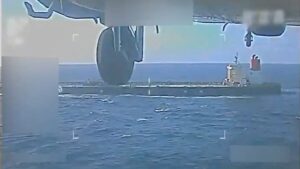
Since September, the Trump administration has conducted over 20 strikes against alleged drug boats in Latin American waters and beefed up its
military presence in the Caribbean
as part of Trump’s effort to crack down on the flow of drugs into the U.S.
The strikes have brought the total number of
suspected narco-terrorists
eliminated to over 82, with three survivors.
But as the U.S. continues to bolster forces in the waters off Venezuela, Maduro has called for peace but also remained defiant against what he called “imperialist aggression.”
U.S. WARSHIPS TO PATROL INTERNATIONAL WATERS AROUND VENEZUELA AS TRUMP VOWS TO STOP CARTELS
Maduro delivered an address in Caracas last week while brandishing a sword and warning supporters to prepare for confrontation, saying the U.S. will “very soon” begin stopping suspected Venezuelan drug traffickers on land.
He appeared at a mass rally in the capital holding the sword of Simón Bolívar, the 19th-century independence leader regarded as the liberator of much of South America. Maduro told supporters the country was facing a decisive moment.
The Associated Press reported that he said, “For anyone, whether civilian, politician, military, or police – Let no one make excuses. Failure is not an option. The homeland demands it! Our greatest effort and sacrifice. And with (Simón) Bolívar, I come to say that if the homeland demands it, the homeland will have our lives, if necessary,” he declared while raising Bolívar’s sword.
Maduro framed the situation as a struggle against what he described as external threats, urging Venezuelans to mobilize against any foreign aggression.
Fox News Digital’s Diana Stancy and Efrat Lachter contributed to this report.