
Off-label use of COVID-19 vaccines was once discouraged but has become common amid new guidelines
In May 2025, significant changes to COVID-19 vaccine eligibility and recommendations were implemented by the U.S. Food and Drug Administration (FDA) and the Centers for Disease Control and Prevention (CDC), leading to confusion among the public and healthcare providers alike. The FDA restricted access to updated COVID-19 vaccines to individuals aged 65 and older and those under 65 with specific high-risk conditions. Meanwhile, the CDC adopted a new approach that emphasizes individualized decision-making over broad recommendations for vaccination. This shift has raised questions about who can receive the vaccines and how healthcare professionals can administer them. Despite the changes, access to COVID-19 vaccines remains feasible, particularly through off-label use, which allows for the administration of FDA-approved vaccines to populations outside of the specified age and health criteria.
Historically, COVID-19 vaccines were made widely available starting in late 2020, following expedited development processes under initiatives like Operation Warp Speed. Initially, vaccines were accessible to all individuals aged six months and older, with costs typically covered by insurance. However, the recent regulatory changes have complicated this landscape. Critics argue that limiting recommendations may discourage vaccinations and allow the virus to circulate more freely. Notably, professional organizations such as the American Academy of Pediatrics continue to advocate for broader vaccination, recommending that all children between six months and two years old receive the vaccine, irrespective of FDA eligibility. The Advisory Committee on Immunization Practices (ACIP) also voted in favor of broadening access, emphasizing the importance of individual decision-making in consultation with healthcare providers.
The concept of off-label use plays a crucial role in navigating these changes. Off-label use refers to administering vaccines for purposes or populations not explicitly approved by the FDA. While this practice is common in healthcare, particularly in pediatrics, it is essential for ensuring that individuals who may not meet the new eligibility criteria can still receive vaccinations. The CDC’s recent guidance has facilitated this process by ensuring that vaccines administered off-label will be covered by insurance, thereby removing some barriers to access. As the respiratory virus season approaches, understanding these nuances in vaccine availability and the role of off-label use will be vital for individuals seeking COVID-19 vaccinations.
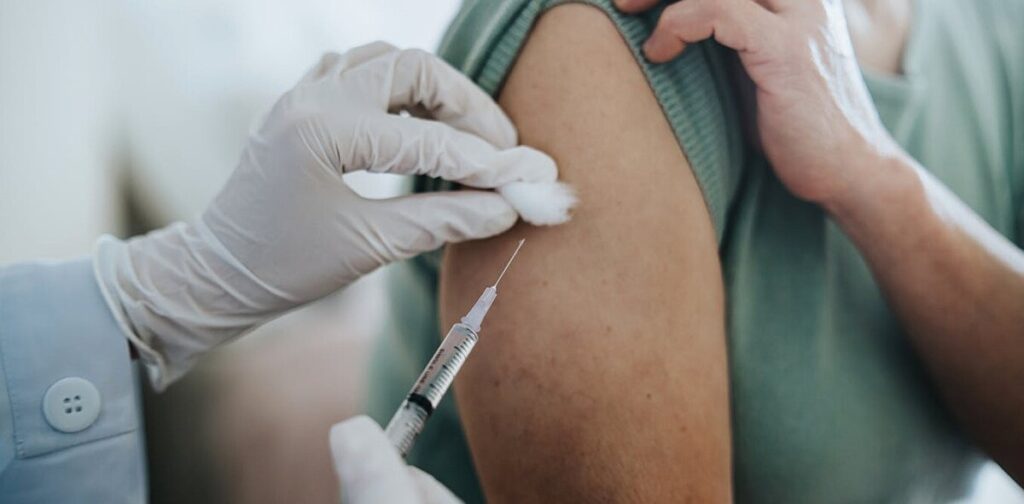
Getting a COVID-19 vaccine is trickier now than in years past, but still possible.
d3sign/Moment via Getty Images
Following the federal government’s changes to COVID-19 vaccine eligibility and recommendations in 2025, many people are wondering whether they can get
COVID-19 vaccines for themselves or their children
.
In May 2025, the U.S. Food and Drug Administration
limited eligibility for updated COVID-19 vaccines
to people ages 65 years and up
and to those under 65 with a “high-risk” condition. In September, the Centers for Disease Control and Prevention adopted an “
individualized decision-making
”
approach to COVID-19 vaccination
instead of broadly recommending the vaccines.
It’s not just the public that is confused. Many physicians and pharmacists also have questions about whether and how they can administer COVID-19 vaccines.
As philosophers with
expertise in bioethics
and
legal philosophy
, we have been following the ethical and regulatory landscape for COVID-19 vaccines since they first became available in late 2020.
In the fall of 2025 that landscape looks a bit different in light of the new guidelines. While it is
causing understandable confusion
, most people who want to get a COVID-19 vaccine can do so. Broad access is possible, in part, through what in health care is called
“off-label use
.”
“Off-label” refers to using an FDA-approved product for a different purpose, or with a different population, than that for which it received approval. Off-label prescriptions are common in health care,
particularly in pediatrics
.
COVID-19 vaccines from 2020-2025
People likely recall that COVID-19 vaccines were
developed faster
than any vaccine had been previously, thanks to efforts such as the U.S. government’s
Operation Warp Speed
. Initially limited in supply, the vaccines first became available through “
emergency use authorization
” in December 2020, with health care workers among the first prioritized by the government to receive them.
In August 2021, the
FDA fully approved
the
first COVID-19 vaccine
for people ages 16 and up. Following this,
younger children started to become eligible for COVID-19 vaccines
. From 2022 through summer 2025, COVID-19 vaccines were available to everyone 6 months and older in doctors’ offices or pharmacies, mostly free of charge, albeit with
disparities in access
due to an individual’s age, geographic location or vaccine costs.
But in May 2025, the new FDA and CDC
leadership appointed by the Trump administration
started to
change their agencies’ positions
on COVID-19 vaccines. Such regulatory changes affect who is considered eligible for the vaccines and whether public and private insurers must provide coverage. Meanwhile, state laws influence the ability of pharmacists, who frequently provide routine vaccinations,
to administer COVID-19 vaccines
.
Understanding the role of federal agencies such as the FDA and the CDC, as well as medical professional organizations and guidelines, can help untangle the complicated picture for access to COVID-19 vaccines.
Critics of the changes note that when a vaccine is available but not recommended, fewer may choose to be vaccinated and more disease may circulate unchecked in the general population.
2025 changes to FDA and CDC guidance
It’s helpful to understand the process through which vaccines become approved and endorsed by government agencies in the U.S.
First, the
FDA approves drugs and other biologic products such as vaccines
for specific uses, in specific age groups – in this case, to prevent people from getting COVID-19 or, if they do get it, to reduce the severity of their symptoms.
Next, the CDC recommends products that the FDA has approved or authorized. These
recommendations have a different regulatory function
than the initial FDA decisions. The CDC issues public health guidelines for which vaccines people should receive and which ones public and private insurance must cover. In some states, the CDC’s recommendations also affect whether pharmacies can administer vaccines.
Until September 2025, when the CDC shifted its stance, the agency broadly recommended COVID-19 vaccines for everyone 6 months of age and older, regardless of their underlying conditions. These recommendations supported public health and ensured that public and private insurance covered 100% of the cost of these vaccines as preventive health care.
Medical and CDC recommendations
Despite the FDA’s updated eligibility criteria and the CDC’s revised guidance, medical professional organizations have
continued to broadly recommend COVID-19 vaccines
.
In August, the American Academy of Pediatrics
issued its own vaccine schedule
. In addition to kids who meet FDA eligibility due to heightened risk, the organization recommends that all
children between 6 months and 2 years old be vaccinated against COVID-19
, as well as any child whose parent or guardian wants them to be vaccinated.
When the Advisory Committee on Immunization Practices, or ACIP – the committee that advises the CDC on vaccine policy – met in mid-September, it
voted to recommend that anyone 6 months and older
can get a COVID-19 vaccine according to “individual-based decision-making.” The committee also voted to require continued funding of COVID-19 vaccines through private and public health insurance and the
Vaccines for Children program
that provides free vaccines to children who are Medicaid eligible, uninsured or underinsured. In October, the interim CDC director
adopted the ACIP recommendations
as the formal guidance from the CDC for the 2025-2026 COVID-19 vaccines.
These recommendations from the CDC and medical professional organizations are difficult to square with the FDA labeling changes for COVID-19 vaccines. The CDC is recommending that people make individual decisions with their medical providers about COVID-19 vaccination, regardless of their eligibility through FDA approval.
This is possible because anyone who doesn’t meet FDA eligibility can get a COVID-19 vaccine through off-label use.
The American College of Obstetricians and Gynecologists still recommends that people who are pregnant get the COVID-19 vaccine.
Olga Rolenko/Moment via Getty Images
Off-label use of COVID-19 vaccines
Using COVID-19 vaccines off-label
means administering them for the same purpose but to a wider population than those who are FDA-eligible. In 2021 the CDC
prohibited the off-label use
of COVID-19 vaccines purchased by the federal government.
This was an unusual move
and is no longer the case.
While uncommon, off-label vaccination is sometimes recommended. One example is off-label vaccination against measles, mumps and rubella, or MMR, for children under 12 months old who
plan to travel
to areas where measles is not eradicated, or are exposed to a disease outbreak.
Moreover, the CDC’s 2025-2026 COVID-19 vaccine recommendations remove certain barriers that typically accompany off-label use.
For example, products used off-label are not always covered by insurance. Many private insurers
already committed to covering COVID-19 vaccines
as preventive care for the 2025-2026 vaccine season. The recommendations from ACIP and the CDC subsequently guaranteed that private and public health insurance plans would continue to
cover COVID-19 vaccines in full
. This includes COVID-19 vaccines under the
Vaccines for Children
program that purchases vaccines for approximately half of U.S. children.
Off-label use of a product is
ethically and legally permissible
if a physician believes its benefits outweigh its risks for their patient. But the CDC’s recommendation for individual decision-making may also lessen clinicians’ worries about liability. So might the guidance from the American Academy of Pediatrics, as well as the American College of Obstetricians and Gynecologists’
vaccine recommendations that anyone who is pregnant should get
an updated COVID-19 vaccine during pregnancy.
Off-label use is typically done via a doctor’s prescription. Yet many COVID-19 vaccines are
administered in pharmacies
. Getting vaccinated in a pharmacy is especially helpful for people without primary care doctors or the time or money for a clinic visit. Many states have taken steps to remove barriers to
obtaining off-label COVID-19 vaccines at pharmacies
. The CDC’s October 2025 recommendations for individual decision-making also
enable COVID-19 vaccination by pharmacists
.
For people who would like to be vaccinated against COVID-19, knowing how off-label use fits into current regulations may be helpful for understanding their access to vaccines this respiratory virus season, and medical treatment in general.
The authors do not work for, consult, own shares in or receive funding from any company or organization that would benefit from this article, and have disclosed no relevant affiliations beyond their academic appointment.



