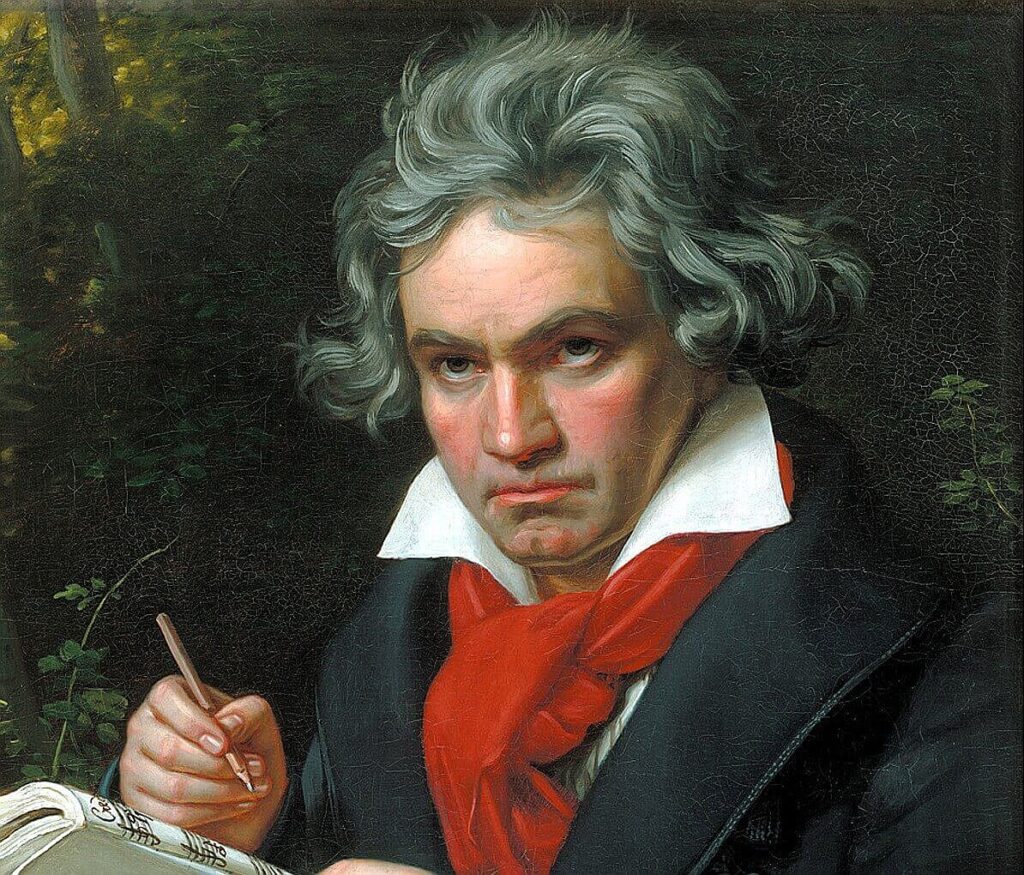
Ludwig van Beethoven
Ludwig van Beethoven (1770 – 1827) stands as a monumental figure in the realm of classical music, heralded for his profound influence on the evolution of composition and the broader cultural landscape. His career represents a pivotal shift from the classical traditions established by his predecessors, such as Mozart and Haydn, to a more expressive and individualistic style that laid the groundwork for the Romantic era. Unlike many of his contemporaries, who primarily composed for religious purposes, educational settings, or social entertainment, Beethoven infused his works with deep emotional resonance and personal narrative. This transformation not only redefined the role of the composer but also altered the relationship between music and its audience, inviting listeners to engage with complex human emotions and experiences.
Beethoven’s innovative spirit is exemplified in his symphonies, sonatas, and string quartets, where he experimented with structure, harmony, and thematic development. His Symphony No. 5, with its iconic four-note motif, is a testament to his ability to convey struggle and triumph, reflecting the tumultuous spirit of his time. Furthermore, his late works, such as the late string quartets and the Ninth Symphony, showcase an extraordinary depth of thought and an exploration of universal themes, such as joy and brotherhood, culminating in the famous “Ode to Joy.” These compositions not only marked a departure from traditional forms but also invited future generations of composers to explore their own identities and emotions through music. In this way, Beethoven’s legacy is not merely in his compositions but in his role as a pioneer who opened the door for artistic freedom and expression, influencing countless musicians and composers who followed in his footsteps.
In addition to his musical genius, Beethoven’s life story adds another layer of intrigue. He faced numerous personal challenges, including progressive hearing loss that ultimately left him completely deaf. Despite this, he continued to compose some of his most celebrated works, demonstrating an indomitable spirit and a relentless pursuit of artistic expression. His ability to create profound music in the face of adversity has made him an enduring symbol of resilience and creativity. Today, Beethoven’s influence is felt not only in the concert hall but also in popular culture, where his works continue to resonate with audiences worldwide. As we celebrate Beethoven’s contributions to music, we recognize him not only as a composer but as a visionary who forever changed the landscape of Western classical music.
https://www.youtube.com/watch?v=W-fFHeTX70Q
Ludwig van Beethoven (1770 – 1827) is one of the greatest composers in history. His work marked a turning point for composers, who had previously written primarily for religious services, to teach, or to entertain at social functions. But Beethoven’s […]