Cranberry Country, Wisconsin
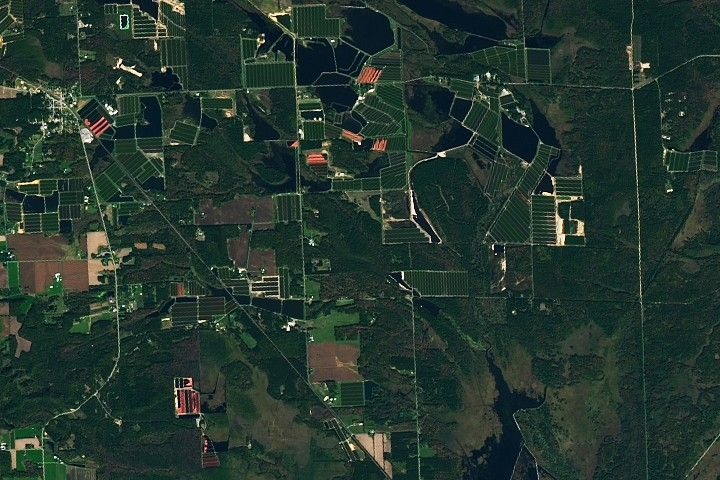
On October 13, 2025, the Earth Observatory released a captivating satellite image showcasing the vibrant cranberry beds of Wisconsin, a state renowned for its agricultural contributions. Known as “America’s Dairyland,” Wisconsin is the leading producer of cranberries in the United States, with its annual harvest accounting for over half of the nation’s total cranberry yield. The unique combination of wetlands, a cool climate, and sandy, acidic soils in central and northern Wisconsin creates an ideal environment for cultivating these tart berries. The image, captured by the Operational Land Imager-2 on Landsat 9, reveals the geometric patterns of cranberry beds near Warrens, a town proudly dubbed the “Cranberry Capital of Wisconsin,” during the crucial autumn harvest season.
The cranberry harvesting process is as fascinating as the crop itself. Growers flood the fields with water, allowing the ripe berries, which contain air pockets that make them buoyant, to float to the surface. This technique transforms the fields into a stunning sea of red, making it easier for harvesters to collect the berries. The flooding is not uniform; satellite images from the fall show different areas turning red at different times, highlighting the meticulous management of the crop throughout the season. Historically, cranberries are native to Wisconsin marshes and have been harvested by Native Americans for centuries. Commercial production began in the mid-19th century, evolving from manual harvesting methods to mechanized processes around 1950. By 1994, Wisconsin became the top cranberry producer in the U.S., a title it holds to this day, with the industry generating approximately $1 billion and providing jobs for nearly 4,000 people.
As Thanksgiving approaches, the brilliant red cranberries are prepared for sale in markets and for processing into sauces and juices. During this time, the cranberry vines transition to a deep purple hue, signaling their dormancy for the winter months. Growers take special care to protect the plants by flooding the fields again, creating a layer of ice that shields them from harsh winter conditions. This ice is often coated with sand, which not only protects the plants but also enriches the soil for the upcoming spring growth. With proper care, a cranberry plant can yield fruit for over 50 years, ensuring that Wisconsin remains a cornerstone of cranberry production for generations to come.
EO
Science
Earth Observatory
Cranberry Country, Wisconsin
Earth
Earth Observatory
Image of the Day
More
Subscribe
October 13, 2025
Known as America’s Dairyland, Wisconsin produces the
most cheese
of any state and
trails only California
in the production of milk. Less famously, the state outpaces all others in a key part of many Thanksgiving menus. Wisconsin is the
leading producer of cranberries
in the U.S., with its annual hauls accounting for more than half of the country’s total yield.
The wetlands, cool climate, and sandy, acidic soils of central and northern Wisconsin provide the foundation for raising the tart berry successfully. This satellite image shows geometric networks of cranberry beds alongside small lakes near the town of Warrens, the “Cranberry Capital of Wisconsin.” It was acquired with the
OLI-2
(Operational Land Imager-2) on
Landsat 9
on October 13, 2025, during the autumn harvest season.
When berries are ripe, growers
flood fields
with up to a foot of water and then use specialized machines to knock fruit off the vines. Because cranberries contain pockets of air, they float to the surface—turning entire fields red—to be
corralled and removed
. Beds are not all flooded at once; satellite images acquired throughout the fall show
different areas appearing red
at different times.
Cranberries are native to Wisconsin marshes, and Native Americans have harvested the fruit for centuries.
Commercial production in Wisconsin
began in the mid-19th century and expanded as technology and cultivation methods improved. Around 1950, harvesting largely shifted from hand rakes to machines. By 1956, Wisconsin was the second-largest cranberry producer in the U.S. after
Massachusetts
, and in 1994 it took over the top spot. Today, cranberries in Wisconsin are an approximately
$1 billion industry
that employs nearly 4,000 people.
In mid-November, as Thanksgiving approaches, the brilliant red berries are on their way to be sold in markets or processed for use in sauces, juices, and other products. Meanwhile, the vines
turn deep purple
and go dormant. Growers prepare the beds for winter by again flooding the fields to cover plants in a
protective layer of ice
. They also coat the ice in sand, which will become part of the substrate and rejuvenate growth in the spring. With the right care, a cranberry plant can produce fruit for
50 years or more
.
NASA Earth Observatory image by Lauren Dauphin, using Landsat data from the
U.S. Geological Survey
. Story by
Lindsey Doermann
.
References & Resources
Esri StoryMaps
Mapping the Thanksgiving Harvest
. Accessed November 26, 2025.
NASA Earth Observatory (2022, November 24)
Cranberry Bogs in Plymouth County
. Accessed November 26, 2025.
The Old Farmer’s Almanac (2025, October 1)
How Cranberries Are Grown, Plus More Fun Facts
. Accessed November 26, 2025.
US Cranberries
Cultivation
. Accessed November 26, 2025.
Wisconsin Historical Society
Cranberry Farming in Wisconsin – Image Gallery Essay
. Accessed November 26, 2025.
Wisconsin State Cranberry Growers Association (2025)
Wisconsin Cranberries
. Accessed November 26, 2025.
Wisconsin State Cranberry Growers Association (2018, May 21)
Wisconsin Cranberries: Growing Strong
. Accessed November 26, 2025.
Downloads
October 13, 2025
JPEG (4.09 MB)
You may also be interested in:
Stay up-to-date with the latest content from NASA as we explore the universe and discover more about our home planet.
Flooding Along the Uruguay and Ibicuí Rivers
3 min read
Astronaut photos captured the aftermath of torrential rainfall in Rio Grande do Sul, Brazil’s southernmost state.
Article
Greenland Ice Sheet Gets a Refresh
3 min read
A moderately intense season of surface melting left part of the ice sheet dirty gray in summer 2025, but snowfall…
Article
Greenland’s Bejeweled Ice Sheet
2 min read
In early July 2025, around halfway through the island’s annual melting season, blue meltwater ponds dotted the western side of…
Article
1
2
3
4
Next
Keep Exploring
Discover More from NASA Earth Science
Subscribe to Earth Observatory Newsletters
Subscribe to the Earth Observatory and get the Earth in your inbox.
Earth Observatory Image of the Day
NASA’s Earth Observatory brings you the Earth, every day, with in-depth stories and stunning imagery.
Explore Earth Science
Earth Science Data


