Airlines cancel 2,500 flights, roll out waivers, as storm disrupts Thanksgiving return
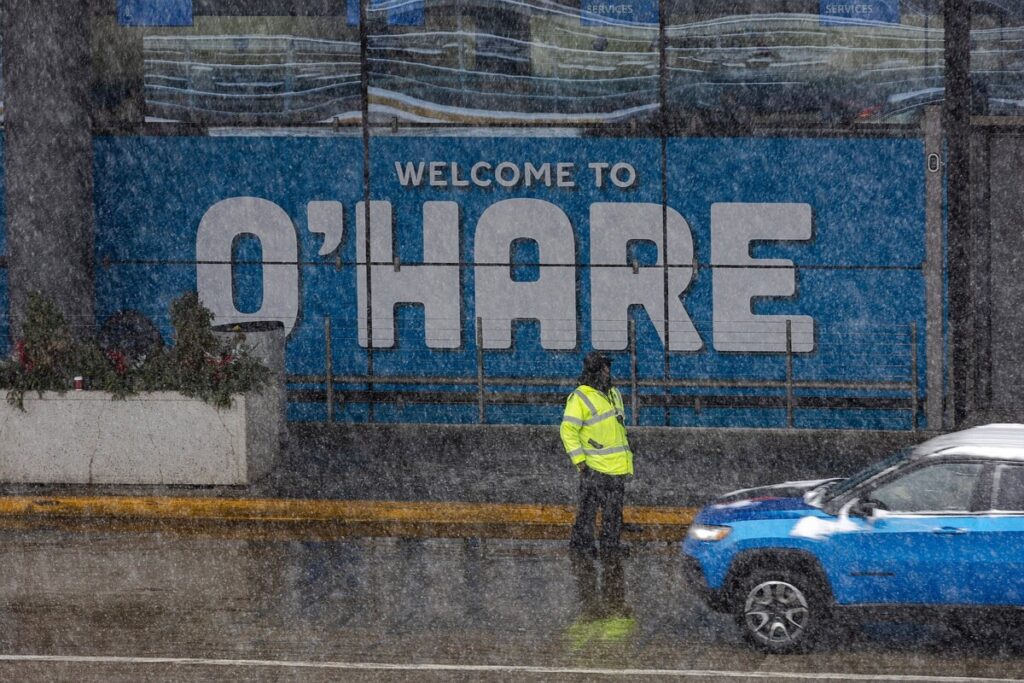
This Thanksgiving holiday season has faced significant disruptions due to an unexpected winter storm that swept through the upper Midwest and Great Lakes, resulting in nearly 2,000 flight cancellations on Saturday alone, followed by another 679 on Sunday. The storm, which brought heavy snowfall—up to a foot in some areas—particularly impacted major airports in Chicago and Milwaukee, causing chaos for travelers during one of the busiest travel periods of the year. Chicago O’Hare International Airport (ORD), a critical hub for United and American Airlines, saw nearly half of its scheduled flights canceled, while Chicago Midway Airport (MDW), a key base for Southwest Airlines, experienced around 40% cancellations on the same day. This disruption not only affected local travel but also rippled outwards, causing delays and cancellations across the country as airlines scrambled to adjust their schedules.
By Sunday, while the storm had moved out of the region, lingering effects were still felt, with 679 flights canceled and over 8,200 delayed throughout the day. However, conditions began to stabilize as the day progressed, with cancellations at O’Hare dropping to about 6% of the day’s schedule, a significant improvement from Saturday’s chaos. Other airports in the Midwest, including St. Louis Lambert International and Omaha’s Eppley Airfield, also faced substantial disruptions, although some, like Eastern Iowa Airport, saw a marked recovery, with only a fraction of flights canceled. Airlines responded to the storm’s impact by implementing flexible rebooking policies, allowing affected passengers to adjust their travel plans without penalty. Travelers are advised to check their flight statuses before heading to the airport, as airlines work to restore normalcy in their operations.
As the fallout from the storm continues to affect travel plans, it’s crucial for passengers to stay informed and proactive. Resources such as flight-tracking services can provide real-time updates, and airlines have made provisions for those needing to rebook. With the holiday travel rush expected to continue, travelers should remain vigilant and prepared for potential changes in their itineraries.
This year’s Thanksgiving air travel has finally hit a hitch.
Airlines canceled nearly 2,000 flights on Saturday and another 679 on Sunday, rolling out weather waivers as a potent storm swept through the upper Midwest and Great Lakes. The system brought up to a foot of snow or more to much of the region.
The disturbance — which came after a calm run-up to Thanksgiving — has disrupted the plans of thousands of travelers during the second half of what’s expected to be one of the busiest Thanksgiving holiday periods ever for air travel.
•
Flight canceled or delayed? Here’s what to do next
•
3 things to do if your flight is delayed
•
7 tips to avoid getting stranded by airlines when things go wrong
•
Why is my flight canceled because of “weather” when it’s clear outside?
According to
FlightAware
, the official cancellation tally for Saturday stood at 1,978, with the major airports serving Chicago and Milwaukee the hardest hit. At Chicago O’Hare International Airport (ORD) — a hub for both United and American airlines — nearly half the day’s schedule was canceled. At Chicago Midway Airport (MDW), a major base for Southwest Airlines, about 40% were canceled on Saturday.
By Sunday, the storm had pulled out of the region, but lingering delays and cancellations remained — though schedules seemed to have stabilized by late afternoon.
Airlines had canceled 679 flights on Sunday and delayed another 8,292 as of 5:15 p.m. EST,
according to flight-tracking service FlightAware
. Of Sunday’s cancellations, at least 300 were already grounded by Saturday evening, though the overall cancellation total had not risen much since early 1 p.m.
JIM VONDRUSKA/BLOOMBERG VIA GETTY IMAGES
Conditions were likely to improve throughout Sunday, though more cancellations were likely as carriers work to get planes and crews back into place. Sixteen flights on Monday had already been grounded, though disruptions like those seen Saturday and Sunday were not expected.
Still, the weekend flight disruptions snarled thousands of flyers during the busy post-Thanksgiving travel period.
The flight woes that hit Chicago and Milwaukee rippled out to flights across the region — and country — though dozens of airports across the Midwest suffered significant disruptions.
But schedules were improving Sunday. At O’Hare, FlightAware put cancellations at about 6% of the day’s schedule, down dramatically from Saturday when nearly half were canceled.
At Eastern Iowa Airport (CID) near Cedar Rapids, only seven departures — roughly 16% of the day’s schedule — and no arrivals had been canceled. That marked a major improvement from Saturday, when 60% of the schedule was canceled.
Among other airports that saw significant winter-weather disruptions on Saturday were:
St. Louis Lambert International Airport (STL)
Omaha’s Eppley Airfield (OMA) in Nebraska
Des Moines International Airport (DSM) in Iowa
Green Bay Austin Straubel International Airport (GRB)
Dane County Regional Airport in Madison, Wisconsin (MSN)
Cherry Capital Airport in Traverse City, Michigan (TVC)
Quad Cities International Airport near Davenport, Iowa (MLI)
South Bend International Airport in South Bend, Indiana (SBN)
Fort Wayne International Airport in Indiana (FWA)
General Wayne A. Downing Peoria International Airport in Illinois (PIA)
Waterloo Regional Airport in Iowa (ALO)
On Sunday, the system had moved to the east and away from most major air hubs. Sunday’s lingering disruptions should continue to improve, though road travel could be a problem across parts of Pennsylvania and upstate New York.
Most major airlines had rolled out flexible rebooking policies for passengers affected by the storm and scheduled to fly through the region.
STORM WAIVERS:
American
|
Delta
|
Frontier
|
Southwest
|
Sun Country
|
United
Travelers scheduled to fly on Sunday or Monday should check ahead on the status of their flights before heading to the airport.
Check back for updates.
Related reading:
Best travel credit cards
Where to go in 2025: The 29 best places to travel
6 real-life strategies you can use when your flight is canceled or delayed
8 of the best credit cards for general travel purchases
10 ways to get through airport security faster
Editorial disclaimer: Opinions expressed here are the author’s alone, not those of any bank, credit card issuer, airline or hotel chain, and have not been reviewed, approved or otherwise endorsed by any of these entities.


