A Terrible and Avoidable Tragedy in D.C.
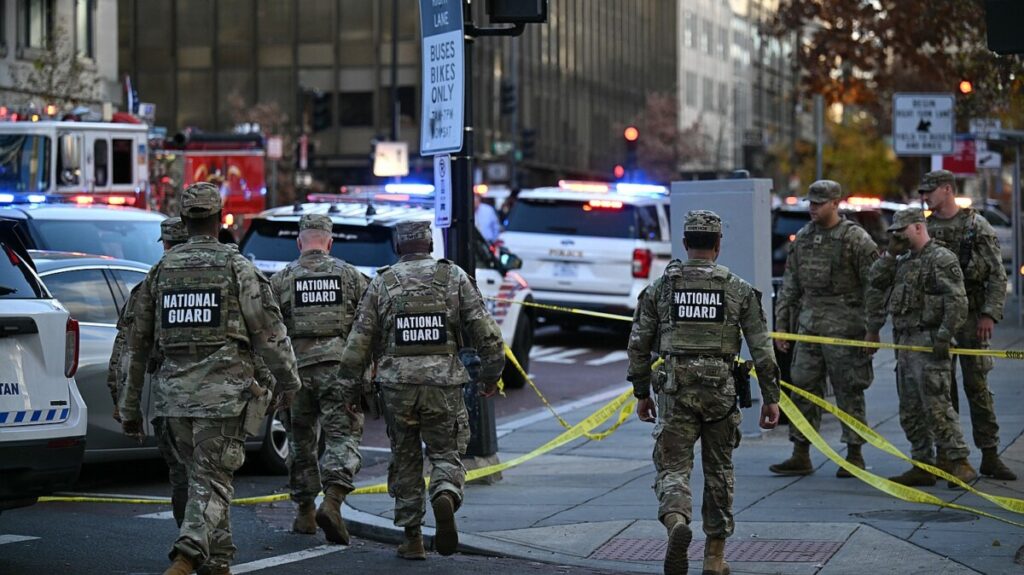
In a troubling incident that underscores the complexities of military deployment in domestic settings, Afghan refugee Rahmanullah Lakanwal shot and severely injured two National Guard members in Washington, D.C. This event has raised alarm bells among military commanders who had previously warned that deploying troops in high-visibility roles, particularly in politically charged environments, could make them vulnerable to violence. The National Guard troops, sent to D.C. ostensibly to curb crime, are primarily untrained in law enforcement, spending their days on tasks such as cleaning up trash rather than engaging in any meaningful law enforcement activities. Commanders had expressed concerns that such deployments could serve as “easy targets of opportunity” for individuals with grievances, a warning that the Justice Department dismissed as speculative. Unfortunately, the shooting has proven these concerns to be valid, highlighting the inherent risks of using military personnel for purposes that do not align with their training and mission readiness.
Lakanwal’s background adds another layer of complexity to the situation; he previously worked for the CIA during the Afghan War and arrived in the U.S. under Operation Allies Welcome, which was designed to assist those who aided U.S. forces. His motives remain unclear, as he has reportedly refused to speak since his arrest. In response to the shooting, former President Trump suggested pausing immigration from Afghanistan, a move that overlooks the circumstances surrounding Lakanwal’s entry into the U.S. Trump also ordered additional troops to D.C., despite a federal judge’s ruling that the deployment was likely illegal. This knee-jerk reaction reflects a broader trend where the National Guard has been utilized for political purposes rather than genuine public safety, with deployments lacking clear objectives, defined rules of engagement, and a cohesive strategy. The National Guard members, already facing low morale due to their unclear mission and the political nature of their deployment, are caught in a precarious situation that blurs the lines between military duty and political theater.
The deployment of National Guard troops to D.C. has been framed as a public safety measure, despite crime rates already declining in the area. The initiative, which has been dubbed “Task Force Beautification,” has focused on menial tasks like trash collection and landscaping, raising questions about the appropriateness of military involvement in such activities. The military’s own assessments indicate a lack of public and internal support for this deployment, as National Guard members find themselves patrolling the streets of a city embroiled in partisan politics rather than fulfilling their intended roles. The situation mirrors the “sunk-cost fallacy” observed in military strategies, where continued investment in a flawed decision is justified by previous losses. Ultimately, the deployment of the National Guard in this context illustrates a fundamental misunderstanding of their purpose and readiness, leaving them stranded in a political battlefield for which they are ill-equipped. As the nation grapples with the implications of this incident, it becomes clear that a reassessment of military engagement in domestic affairs is urgently needed.
https://www.youtube.com/watch?v=kykjhqADHmI
Before an Afghan refugee,
Rahmanullah Lakanwal
, yesterday shot and seriously injured two National Guard members who had been deployed by President Donald Trump to Washington, D.C., military commanders had warned that their deployment represented an easy “
target of opportunity
” for grievance-based violence. The troops, deployed in an effort to reduce crime, are untrained in law enforcement; their days are spent cleaning up trash and walking the streets in uniform. Commanders, in a memo that was included in litigation challenging the high-visibility mission in D.C., argued that this could put them in danger. The Justice Department countered that the risk was merely “
speculative
.” It wasn’t. There are costs to performatively deploying members of the military—one of which is the risk of endangering them.
Lakanwal’s exact motives are still unknown; he worked
for the CIA
during the Afghan War. He is now in custody but apparently
refusing to speak
. Trump offered a predictable response to the shooting:
pausing immigration
for anyone from Afghanistan, a move that conveniently ignored how Lakanwal had gotten to the United States. He came as part of
Operation Allies Welcome
, admitted for his assistance to U.S. troops, and was reportedly granted asylum
status
after vetting by the Trump administration earlier this year.
Trump yesterday also ordered
additional troops
to D.C., on the theory that more troops are always better than fewer ones, even though a federal judge had ruled just last week that the entire deployment would have to be halted because it was probably illegal.
More troops is not the answer. The National Guard has been deployed as part of the White House’s political attacks on cities run by Democrats, and the Guard members are vulnerable because politics is not a military mission. The military spends a lot of time thinking about “
readiness
”: the need for troops to be trained and prepared for what may be asked of them, and for them to be protected while doing it. The problem of mission readiness does not get solved by deploying more soldiers. It gets solved by having a clear mission.
Even if the deployments to D.C. were legal, they lack a clear mandate and metrics of success, and have vague rules of engagement and ill-defined operating procedures. And morale is low among part-time volunteer soldiers, who have had to leave home to patrol the streets of an American city that Trump doesn’t like.
Trump’s use of the military began as a so-called
public-safety
emergency, though crime was already down in D.C. before the deployment. The D.C. National Guard falls under the command of the federal government—unlike a state’s National Guard—so the district was an easy choice for Trump’s first target. Governors from
red states
gladly volunteered their troops for the mission, although the Pentagon was struggling to find one. It began to publish information regarding the troops’ trash-cleanup and landscaping successes, calling the initiative
Task Force Beautification
. Uniformed troops patrolled streets in “high visibility” efforts, fully decked out, though any visitor to D.C. could see they were just waiting around.
The military is fully aware of the lack of support for this deployment both among the public it serves and among those performing the mission. The National Guard has been sending out news releases describing its progress, with updates such as: “
cleared 906 bags
of trash, spread 744 cubic yards of mulch, removed five truckloads of plant waste, cleared 3.2 miles of roadway and painted 270 feet of fencing.” Sounds nice, but that says nothing about why this is a job for the National Guard.
Ironically, deploying more National Guardsmen to increase the force protection for National Guardsmen is a very Afghanistan-style military error. The
sunk-cost fallacy
describes a phenomenon whereby individuals irrationally decide to continue investing in a flawed decision as a way to try to justify the original bad decision. We sent more and more troops to Afghanistan because we had already lost troops there, instead of pausing to reassess the war itself.
We are not at war now. But Trump’s use of the National Guard suggests that he thinks we are not at peace either. The National Guard is stranded somewhere on this battlefield of partisan politics. They are not ready for this arena, and we should never have asked them to be.


