Thousands March for Climate Action as COP30 Talks Enter Second Week
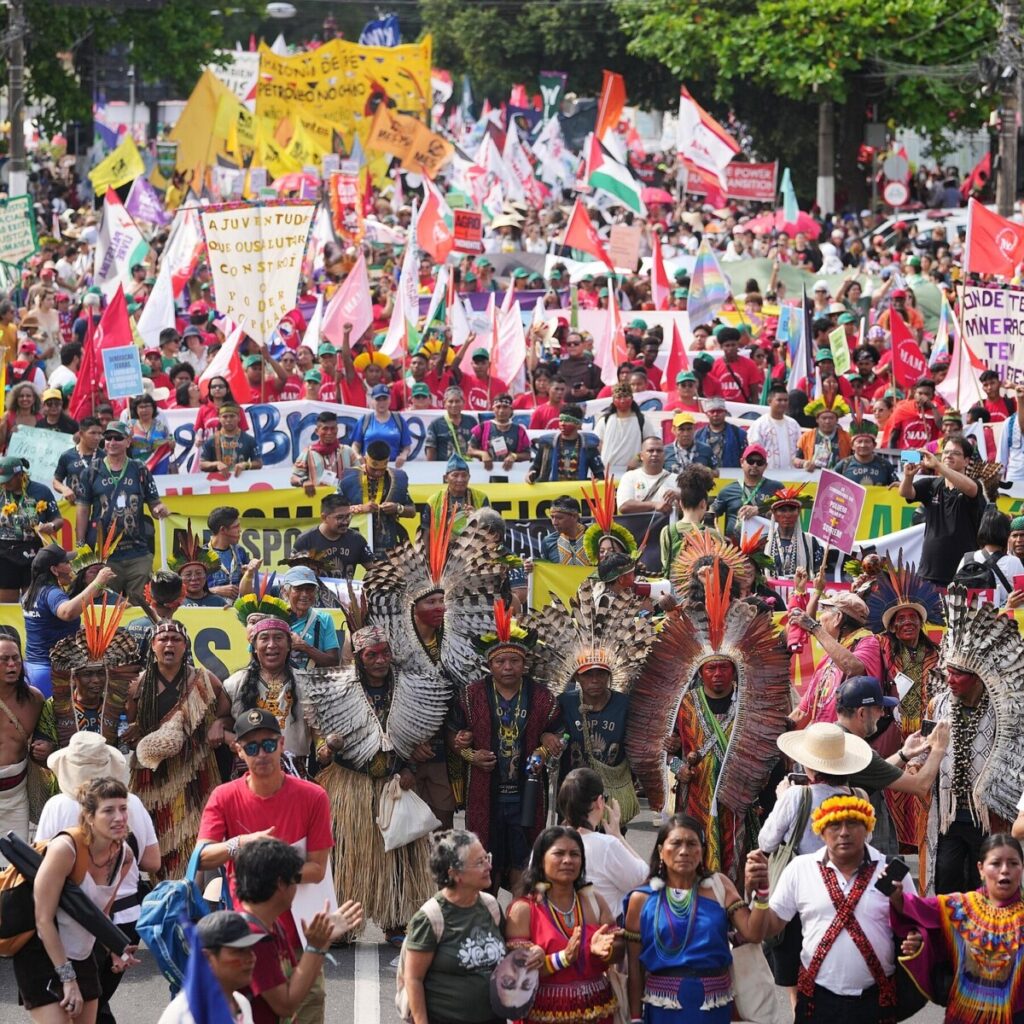
On Saturday, a vibrant demonstration took place near the U.N. climate summit in Belém, Brazil, marking a significant shift in the atmosphere surrounding these crucial international discussions. Unlike the previous three summits held in countries with stringent restrictions on public protests, the Belém summit has welcomed a more open and participatory environment. This change reflects Brazil’s commitment to engaging civil society in climate action and acknowledges the critical role that grassroots movements play in addressing the climate crisis. Protesters gathered to voice their demands for urgent action on climate change, highlighting issues such as deforestation in the Amazon, indigenous rights, and the need for sustainable development.
The demonstration in Belém attracted a diverse crowd, including environmental activists, indigenous leaders, and concerned citizens from various backgrounds, all united by a common goal: to push for stronger commitments from world leaders to combat climate change. The atmosphere was charged with energy and hope, as participants showcased creative signs, banners, and performances that conveyed their messages. This inclusive approach contrasts sharply with past summits, where government crackdowns on protests stifled public expression and limited the opportunities for activists to influence policy discussions. In Belém, the Brazilian government has not only allowed protests but has actively encouraged dialogue between activists and policymakers, fostering a more dynamic exchange of ideas.
The shift in the summit’s atmosphere underscores the growing recognition of the importance of public engagement in climate negotiations. With the urgency of the climate crisis escalating, the voices of those most affected by environmental degradation—particularly indigenous communities—are being amplified. Activists are calling for tangible actions, such as halting deforestation, transitioning to renewable energy, and ensuring that climate policies prioritize social equity. As the summit progresses, the Brazilian example may serve as a blueprint for future climate discussions, demonstrating that when governments embrace public participation, it can lead to more robust and effective climate action. The Belém summit stands as a hopeful reminder that collective action, transparency, and inclusivity are essential in the global fight against climate change.
A demonstration near the U.N. climate summit in Belém, Brazil, on Saturday. The atmosphere has been a marked contrast to the past three summits that were held in countries where governments restricted public protests.


