Popular fashion brands that filed for bankruptcy in 2025
In 2025, the fashion industry has witnessed a significant wave of bankruptcies, with several major brands unable to withstand the pressures of a challenging economic landscape. Among the most notable cases is Forever 21, which filed for Chapter 11 bankruptcy protection in March. This once-popular fast-fashion retailer has struggled in recent years, facing mounting financial losses exacerbated by fierce competition from online giants like Shein and Temu. These brands have capitalized on the “de minimis” rule, allowing shipments valued under $800 to enter the U.S. tariff-free, making it increasingly difficult for Forever 21 to compete on price. The company’s recent bankruptcy filing underscores a broader trend in the fashion sector, where traditional retailers are grappling with evolving consumer preferences and economic headwinds.
The landscape for fashion retailers has been further complicated by changing consumer spending habits, as shoppers become more selective amid economic uncertainty. Fast-fashion retailers have gained significant market share, leading to store closures across the U.S. In fact, over 3,700 stores have shut down in 2025 alone, affecting brands ranging from baby apparel company Carter’s to department store chain Macy’s. Tariffs imposed during the Trump administration have also placed additional strain on many apparel brands, forcing them to either raise prices or adjust supply chains to mitigate financial impacts. Notably, other brands like Ssense, which specializes in niche luxury fashion, and Liberated Brands, known for Billabong and Quicksilver, have also succumbed to these pressures, filing for bankruptcy earlier this year.
As the fashion industry navigates these turbulent waters, the need for innovation and adaptation is more critical than ever. Authentic Brands Group, which now owns Forever 21’s intellectual property, is attempting to revitalize the brand by shifting its focus towards a digital-led strategy. Meanwhile, the broader implications of these bankruptcies highlight a significant transformation in consumer behavior, with many opting for cheaper, secondhand clothing options. The ongoing challenges faced by these retailers serve as a stark reminder of the volatile nature of the fashion market, underscoring the importance of agility and responsiveness in a rapidly changing economic environment.
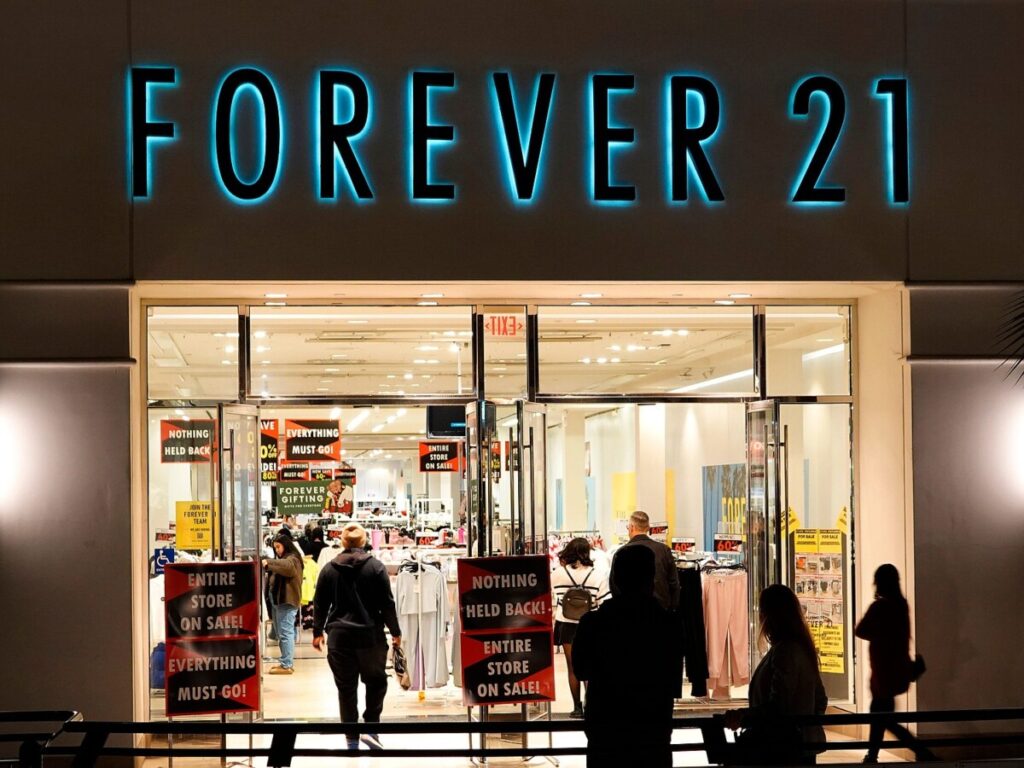
Forever 21 filed for bankruptcy in March.
Kevin Carter/Getty Images
Several major fashion brands and retailers have filed for bankruptcy in 2025.
Economic challenges, tariffs, and competition from fast-fashion brands like Shein hurt sales.
Store closures and shifting consumer spending patterns continue to impact the fashion industry.
It’s been a
busy year for corporate bankruptcies
, and fashion brands and retailers aren’t immune.
An uncertain economic environment has led some consumers to be more selective about where they spend their money. As a result, some are reaching for cheaper styles — fast-fashion retailers like Shein took market share from competing brands in 2024, according to data and analytics company
GlobalData
— or
buying secondhand clothing
.
Many retailers and restaurants, such as baby apparel brand Carter’s and department store chain Macy’s, have been shuttering stores. More than
3,700 stores have closed
across the US in 2025, by Business Insider’s count.
President Donald Trump’s tariffs have also created new challenges for fashion brands, from Abercrombie & Fitch to
Nike
, some of which have said they’re raising prices or altering their supply chains to minimize the financial impact.
However, other companies haven’t been able to bounce back from waning traffic, tariffs, and more. These apparel brands filed for bankruptcy protection in 2025.
Forever 21
Forever 21 cited a weakened ability to compete with foreign online retailers
Justin Sullivan/Getty Images
Forever 21
was once a mainstay in fast fashion for young women shopping at the mall. The past six years have been marked by financial losses, and the company filed for Chapter 11 bankruptcy protection twice.
The rise of online fast-fashion brands like Shein and Temu, which typically offer styles at a lower price than Forever 21’s already budget-friendly offerings, has hurt the brand in recent years.
In a March 2025 bankruptcy filing, the company cited the “de minimis” rule, which had permitted shipments valued under $800 to enter the US without tariffs, as a key factor that weakened its ability to compete on price with foreign online retailers.
Authentic Brands Group, the owner of Forever 21’s intellectual property, said in September that it found new partners to renew the US business and transform it into a digital-led brand.
Ssense
Ssense filed for bankruptcy in August.
NurPhoto/NurPhoto via Getty Images
Online retailer Ssense is known for selling niche luxury fashion brands. In August, the marketplace filed for Canada’s equivalent of bankruptcy protection in the Quebec Superior Court.
Business of Fashion
reported
that Ssense CEO Rami Atallah blamed the company’s downfall on the Trump administration’s trade policy, in an email sent to staff. Canada faces a 35% tariff on goods that are not covered by a free trade agreement between the nations.
Liberated Brands
Liberated Brands filed for bankruptcy in February.
Nano Calvo/VW Pics/Universal Images Group via Getty Images
Liberated Brands, which operated Billabong and Quicksilver, filed for Chapter 11 bankruptcy in February. The case was dismissed in May, and the company has shut down its US and Canadian retail operations.
In February court filings, Liberated Brands said it had been hit by macroeconomic pressures, supply-chain disruptions, and declining profits.
Sneakersnstuff
The popular Stockholm-based sneaker retailer filed for bankruptcy in January, as Swedish outlet Ehandel first reported. It was confirmed by Sneakersnstuff cofounder Peter Jansson in a now-deleted Instagram post.
The company was acquired by German investment company Reziprok Ventures in February.
Read the original article on
Business Insider