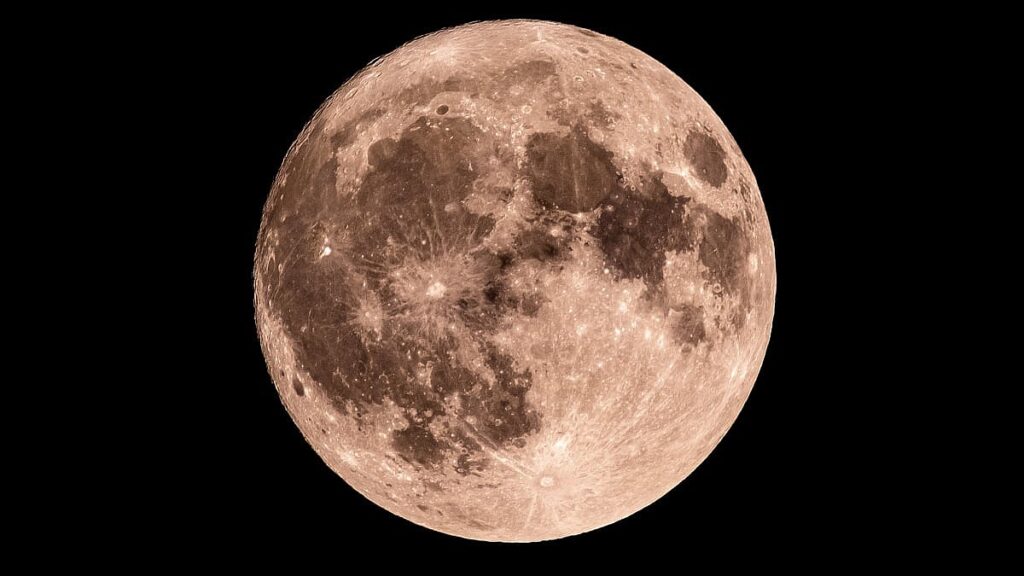
Moon phase today: What the moon will look like on November 30
As we approach the Full Moon on December 4, the night sky offers a breathtaking view of the Waxing Gibbous moon, which is currently illuminated at 74%. This phase of the lunar cycle, occurring just a few days before the full moon, provides an excellent opportunity for stargazers and astronomy enthusiasts to explore the surface of our celestial neighbor. According to NASA’s Daily Moon Observation, tonight’s moon is bright enough for the naked eye to spot prominent features such as the Vaporum, Crisium, and Fecunditatis Mares. For those equipped with binoculars, the Endymion and Alphonsus craters, along with the stunning Apennine Mountains, come into clearer view. If you have a telescope, the excitement escalates as you can attempt to locate the historic landing sites of Apollo 11 and Apollo 14, as well as the majestic Caucasus Mountains.
Understanding the moon’s phases adds depth to this celestial experience. The lunar cycle, lasting approximately 29.5 days, consists of eight distinct phases that reflect the changing illumination of the moon as it orbits Earth. This cycle begins with the New Moon, where the moon is not visible due to its position between Earth and the sun, and progresses through various stages including the Waxing Crescent, First Quarter, and the Waxing Gibbous phase we are currently experiencing. Each phase culminates in the Full Moon, when the entire face of the moon is illuminated, before transitioning to the Waning Gibbous, Third Quarter, and finally the Waning Crescent, leading back to darkness. The upcoming Full Moon on December 4 will mark the last of three consecutive supermoons, a phenomenon where the moon appears larger and brighter due to its proximity to Earth, a spectacle that should not be missed.
As you gaze up at the night sky, take a moment to appreciate the beauty and complexity of the moon’s phases. Whether you’re an experienced astronomer or a casual observer, tonight’s Waxing Gibbous provides a perfect opportunity to explore the wonders of our universe. Grab your binoculars or telescope, and immerse yourself in the celestial show that unfolds above.
https://www.youtube.com/watch?v=ItKJm8vZbYc
We’re just a few days away from the Full Moon now, so the moon is nice and bright tonight. There’s plenty for you to see when you look up, so keep reading to find out exactly what you can see.
What is today’s moon phase?
As of Sunday, Nov. 30, the
moon
phase is Waxing Gibbous. This means 74% of the moon is lit up tonight, according to
NASA’s Daily Moon Observation
.
If you’re looking at the moon without any visual aids you should be able to spot the Vaporum, Crisium, and Fecunditatis Mares. With binoculars you’ll also be able to spot the Endymion and Alphonsus Craters, and the Apennine Mountains. If you have a telescope, pull it out to try and catch a glimpse of the Apollo 11 and 14 landing spots, and the Caucasus Mountains.
When is the next full moon?
The next full moon will be on Dec. 4, which will be the last of three consecutive supermoons. The
last full moon was on Nov. 5
.
What are moon phases?
NASA
explains that the lunar cycle (which is about 29.5 days long) is made up of the Moon’s phases, which describe how the Moon looks from Earth as it travels around us. We view the same side of the Moon at all times, but the sunlight hitting its surface shifts as it moves through its orbit. That changing illumination is what makes the Moon appear full, half-lit, or not visible at all. The cycle includes eight distinct phases:
New Moon – The moon is between Earth and the sun, so the side we see is dark (in other words, it’s invisible to the eye).
Waxing Crescent – A small sliver of light appears on the right side (Northern Hemisphere).
First Quarter – Half of the moon is lit on the right side. It looks like a half-moon.
Waxing Gibbous – More than half is lit up, but it’s not quite full yet.
Full Moon – The whole face of the moon is illuminated and fully visible.
Waning Gibbous – The moon starts losing light on the right side. (Northern Hemisphere)
Third Quarter (or Last Quarter) – Another half-moon, but now the left side is lit.
Waning Crescent – A thin sliver of light remains on the left side before going dark again.