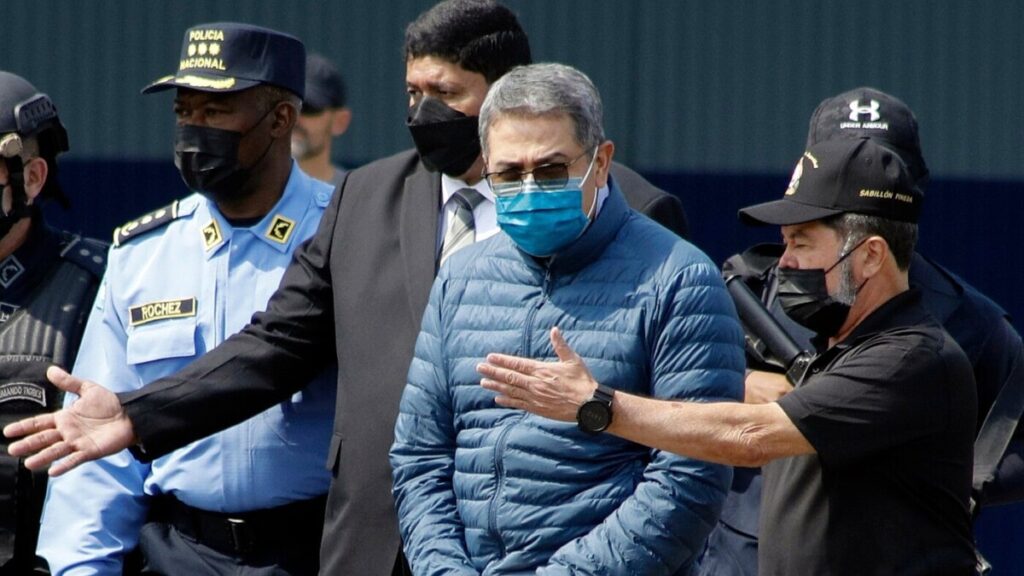
Trump plans to pardon former Honduran President Juan Orlando Hernandez
Former Honduran President Juan Orlando Hernandez has been sentenced to 45 years in prison after being convicted on multiple charges, including drug trafficking and weapons offenses. This landmark decision marks a significant moment in the ongoing battle against corruption and drug-related crime in Central America, particularly in Honduras, which has long been plagued by these issues. Hernandez, who served as president from 2014 until early 2022, was found guilty by a U.S. court, where evidence presented indicated that he had collaborated with drug cartels to facilitate the trafficking of cocaine into the United States. The case against him was bolstered by testimonies from former associates and cartel members, revealing a deeply entrenched network of corruption that extended into the highest levels of the Honduran government.
Hernandez’s conviction is not just a personal downfall but a reflection of the broader challenges facing Honduras, a country that has been a significant transit point for drug trafficking due to its geographical location. His administration has been accused of enabling drug cartels, with allegations that he accepted millions of dollars in bribes from traffickers, including notorious figures like Joaquín “El Chapo” Guzmán. This case has drawn international attention, highlighting the interplay between political power and organized crime in the region. The implications of Hernandez’s sentencing extend beyond his personal punishment; it signals a potential shift in the political landscape of Honduras, as citizens and activists call for accountability and reform in a country that has struggled with governance and rule of law.
The verdict has sparked a mix of reactions within Honduras and among international observers. Many view it as a step toward justice and a message that even the highest officials are not above the law. However, concerns remain about the future of governance in Honduras, especially as the country grapples with the legacy of corruption that has historically undermined its institutions. The U.S. government’s involvement in prosecuting Hernandez underscores its commitment to combating drug trafficking and corruption in Central America, as these issues have direct repercussions for U.S. security and immigration. As Honduras moves forward, the focus will likely shift to the need for systemic reforms to prevent such abuses of power from recurring, ensuring a more stable and just society for its citizens.
Former Honduran President Juan Orlando Hernandez was convicted for drug trafficking and weapons charges and sentenced to 45 years in prison.
(Image credit: Elmer Martinez)


