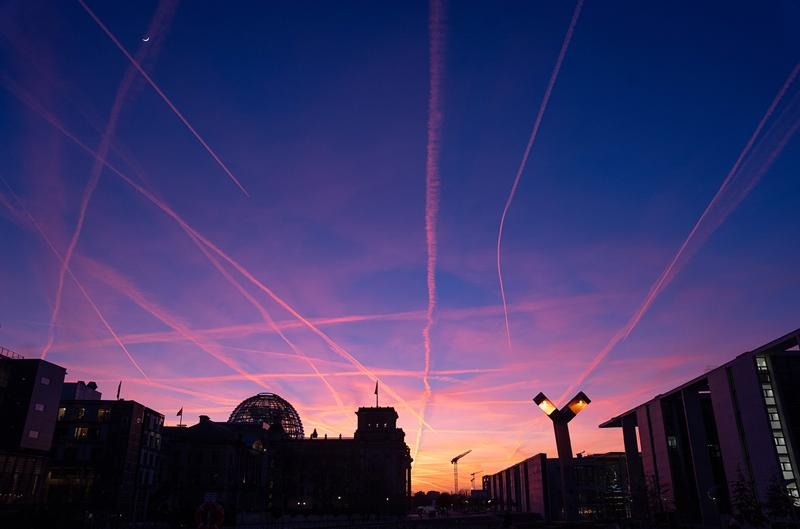
Airplane contrails may not be the climate villain once feared
Recent studies have sparked a significant debate about the effectiveness of adjusting flight paths to reduce the formation of heat-trapping clouds, which contribute to climate change. These clouds, primarily formed from aircraft contrails—ice crystals that develop when water vapor from jet engine exhaust condenses—can trap heat in the atmosphere, leading to increased global temperatures. Researchers have explored whether changing flight routes to minimize contrail formation could effectively mitigate their warming impact. However, findings suggest that while altering flight paths may reduce local contrail formation, the overall benefits on a global scale might be limited.
One study conducted by scientists at the University of Reading emphasizes that the potential climate benefits of adjusting flight paths may not outweigh the increased fuel consumption and greenhouse gas emissions associated with longer flights. For instance, while a rerouted flight might avoid creating contrails over certain regions, the additional fuel burned could lead to higher carbon dioxide emissions, which are a significant driver of climate change. The researchers argue that the trade-offs between reduced contrail formation and increased carbon emissions must be carefully considered, as the latter could negate any potential climate benefits gained from avoiding contrails.
Moreover, another study published in the journal “Nature” highlights the complexity of the issue, suggesting that the climate impact of contrails is not uniform across different regions and atmospheric conditions. In some cases, the warming effects of contrails may be offset by the cooling effects of other atmospheric phenomena. This variability indicates that a one-size-fits-all approach to adjusting flight paths may not be effective. Instead, the studies advocate for a more nuanced understanding of the interactions between aviation emissions and climate dynamics, emphasizing the need for comprehensive strategies that consider both contrail formation and overall emissions reduction. As the aviation industry seeks to balance operational efficiency with environmental responsibility, these findings underline the importance of informed decision-making in the ongoing effort to combat climate change.
https://www.youtube.com/watch?v=oDGqi1Z9tNw
Studies raise questions about the benefits of adjusting flight paths to minimize heat-trapping clouds


