A day with Newfoundlands, the original ship’s dog
**A Day with Newfoundlands: The Original Ship’s Dog at Mystic Seaport Museum**
Imagine yourself in 1893, battling the fierce waves of the Atlantic Ocean after being tossed from your wooden vessel. Who would you want to see swimming towards you? Likely, a powerful Newfoundland dog, known for its strength and swimming prowess, would be your top choice. Fast forward to 2025, where at Connecticut’s Mystic River, a Newfoundland named Sasha leaps into the water, demonstrating the remarkable water rescue skills these dogs have honed over centuries. Sasha is part of a dedicated group of 17 Newfoundlands at the Mystic Seaport Museum, a living history museum committed to preserving America’s maritime heritage. Visitors can witness Sasha and her canine companions in action, practicing water rescues and cart-pulling, showcasing the invaluable role these dogs played in maritime history.
Historically, Newfoundlands have served as essential working dogs, aiding fishermen and sailors in various tasks. They were not only adept at rescuing individuals who fell overboard but also helped pull heavy loads, such as fishing gear and supplies, to shore. The Land and Sea Newfoundland Training Group, which collaborates with the Mystic Seaport Museum, emphasizes the importance of maintaining these skills. Shelia Mallinson, president of the group, highlights that the environment at the museum mirrors the working conditions of Newfoundlands in the past, thereby allowing them to practice their traditional skills. Beyond just demonstrations, the group also focuses on responsible dog ownership and training, ensuring that these gentle giants remain well-behaved and safe around visitors.
The Newfoundland breed is uniquely equipped for both water and draft work. Their double coat provides insulation and water resistance, while their webbed feet and strong tails function as natural paddles, making them exceptional swimmers. With a gentle temperament and a strong desire to work alongside humans, Newfoundlands have earned their title as the original ship’s dog. At Mystic Seaport, these dogs not only participate in engaging demonstrations but also help educate the public about their rich history, serving as a living testament to the bond between humans and working dogs throughout maritime history. The partnership between the Land and Sea Newfoundland Training Group and the museum plays a crucial role in preserving this heritage, reminding us of the significant contributions these magnificent dogs made to seafaring communities.
It’s a dark and stormy night and you’ve suddenly found yourself swept off of your wooden vessel into the wild Atlantic Ocean. It’s 1893, so your woolen clothes are pulling you down to Davy Jones’ locker. What kind of
dog
would want to rescue you? Chances are, you’re not hoping for a bulldog or pug. You’d probably want a big, warm, and powerful canine. A dog like a Newfoundland.
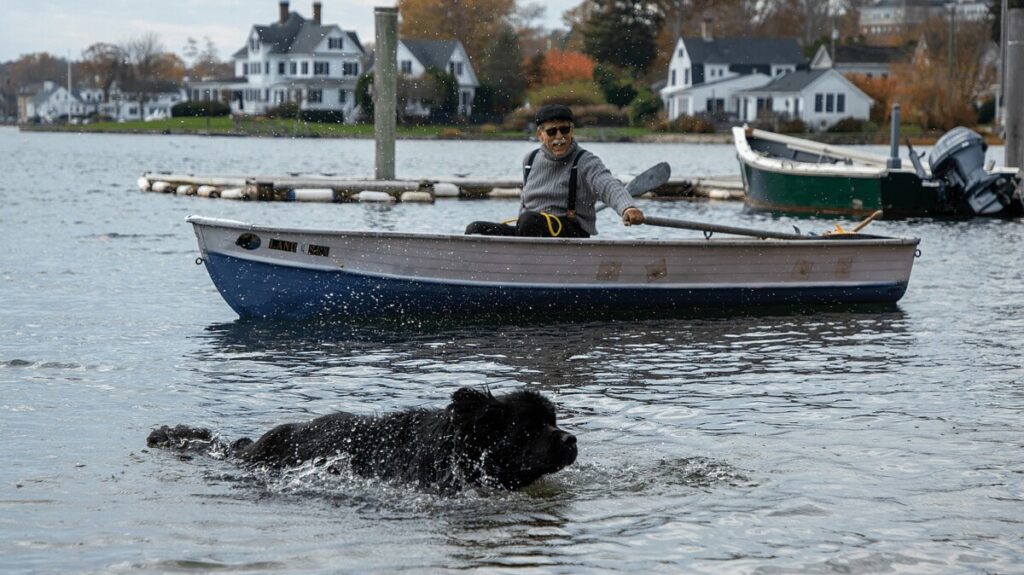
Fast forward to 2025, specifically to Connecticut’s Mystic River, and a man in a rowboat is calling out to shore. “Come, Sasha! Come!” A large, fluffy, black dog then jumps from the sandy shore and into the brackish water. The Newfoundland grabs onto a rope, pulling the entire boat safely into shore in a demonstration of what these dogs have done for centuries.
Newfoundlands have a long history of water rescue, cart pulling, and even babysitting. Today, Sasha is one of the 17 Newfoundlands (or Newfies) working at the Mystic Seaport Museum. The 96-year-old living history museum is dedicated to preserving America’s maritime past, and several times a year, visitors get to see more than just rigging and sextants. They can watch Sasha and other Newfoundlands practice their water rescue and cart pulling skills so that they are not lost to time.
“One of the things that I love about our partnership with the Mystic Seaport Museum, is that the environment is exactly where a Newfoundland dog would have been,”
Shelia Mallinson
, president of the
Land and Sea Newfoundland Training Group
, tells
Popular Science
. “They would be working in that setting, they would have been helping on the boats. We’re working with them to really utilize those skills and keep them alive.”
On the beach, Mark Hyland sends Sasha out to Steve Petsch in a rowboat. This exercise helps Sasha practice her water rescuing and towing skills, all with a captive audience.
CREDIT: Popular Science.
Past meets present meets pooch
About two hours south of Boston, Massachusetts, the
Mystic Seaport Museum
is home to a recreated New England coastal village, a working shipyard, and over 500 historic watercraft including the 1841 whaleship
Charles W. Morgan
, America’s oldest commercial ship still in existence.
On select days, guests can watch Newfoundlands in action, practicing their water rescue and cart pulling skills through the recreated village, while learning about the dogs and their history from Newfoundland owners. It also gives visitors a chance to see this historic breed up close.
“There are always people who tell us that they came to the seaport simply to see the dogs,”
Land and Sea Newfoundland Training Group member Deja Petsch
tells
Popular Science.
“Which is funny to me, because I can always just pet my dog, but you have to remember that not everyone can have a dog like this right in their household.”
The
Land & Sea Newfoundland Training Group
is a group of Newfoundland dog enthusiasts who are dedicated to preserving the heritage of the breed. In addition to their demonstrations with Mystic Seaport Museum, they host other educational demonstration events like
Christmas tree pulls
. Importantly, the group also provides training and education for responsible dog ownership—whether your canine is a family dog or ship’s dog.
Members of the Land and Sea Newfoundland Training Group at Mystic Seaport Museum on November 9, 2025.
Image: Julia Cronin.
The original ship’s dog
Maritime history is full of true stories and tall tales of the Newfoundland’s deeds. During the Lewis and Clark expedition from 1804 to 1806 a
black Newfoundland owned by Merryweather Lewis named Seaman
helped hunt beavers, brought catches back from hunting parties, and allegedly caught a goat in the water. He also saved his human companions from charging bison on several occasions and alerted the party when bears were around along the Upper Missouri River in present-day Montana.
Another longstanding
legend alleges that
RMS Titanic
First Mate William Murdoch smuggled his Newfoundland named Rigel aboard
. However, that story was likely made up by a reporter. But even if a Newfoundland wasn’t onboard the
Titanic
, the dogs have certainly been a presence aboard numerous other ships and working in seaports.
“The Newfoundland is the original ship’s dog,” says Mallinson. “They were found on shipping vessels in the 19th century. They were utilized on the boats for bringing in fishing gear, bringing in fishing nets,” she explains. “They would be hitched to a cart so they could take the catch of the day to market. They also rescued people who had fallen overboard.”
When the catch of the day was ready to be hauled into town or firewood needed to be delivered, these able-bodied dogs could pull carts loaded with hundreds of pounds of goods. Some dogs in this modern training group have even
pulled 15-foot-tall Christmas trees
!
Dan Gelb and his Newfoundland dog Boss told visitors some of the many true stories of Newfoundland water rescues.
Image: Popular Science.
“Having a dog as your working draft animal had some advantages over more traditional draft animals for that time and place, namely a horse,” Land and Sea Newfoundland Training Group member
Steve Petsch
tells
Popular Science
. “Dogs are kind of more versatile. They’ll work for fish, whereas the horses are a little more fickle in that kind of an environment. And horses are probably a little more expensive to keep under those economic conditions.”
Horses require a more expensive
diet of grass, hay, and oats
, making their upkeep more expensive than a working dog.
“So not only in the water was their size an advantage, but also on land, both for not being too small, but not being so big and costly as a horse,” Steve says.
And their work did not stop at the end of the day. The true gentle giants were helpful at home, bringing in firewood, transporting milk or mail, and even watching over children. The protective and loving dog
Nana in the novel
Peter Pan
was a Newfoundland
.
Sasha pulling Steve and his rowboat safely to shore.
Image: Julia Cronin.
Why the Newfoundland?
Newfies are considered
working dogs
, a group that also includes Bernese mountain dogs, Alaskan malamutes, and Saint Bernards. While it varies by breed, these dogs are generally capable of performing tasks that
require a lot of physical strength
.
“For water rescue, their [Newfoundlands’] double coat makes them suitable because it is composed of outer guard hairs that are relatively waterproof or water-resistant, and an undercoat that serves as an insulator,”
Cornell University veterinarian Dr. Aly Cohen
tells
Popular Science
. “The double coat helps them regulate their body temperature properly. In terms of personality, their gentle, calm, and confident temperament also makes them suitable for rescue work.”
Newfoundlands also have wide, webbed feet and a “long, straight, and strong tail,” according to Cohen. That tail and feet combo are like built-in paddles and a rudder, helping them swim effectively. Coupled with their size, a Newfoundland can weigh over 150 pounds, they are the type of dog that you’d definitely want coming to rescue you if you fell overboard.
“The Newfoundland was such a valued member of the team that they would make space for them [onboard],” says Deja.
Deja Petsch and her Newfoundland named Mouse. Unlike other Newfoundlands, Mouse has softer and more gray fur due to a genetic mutation.
Image: Julia Cronin.
When it comes to draft work—pulling carts full of firewood, milk, fish, and other important goods—sheer strengthened and well-muscled bodies come in handy. They also have a lower center of gravity than other dog breeds, which helps them pull those heavier loads. Combine that with their general demeanor and you have an animal fit for working with and for humans.
“Essentially, they really want to work with people,” says Deja. “They want to connect with humans. They want to have a job to do. They want to be a part of what you’re doing, and they don’t care what you’re doing.”
Hamlet pulls a cart with firewood alongside his human with Grace DiModugno. This is called draft work, and was crucial for transporting materials around shipyards. According to DiModugno, Hamlet particularly likes draft work. CREDIT:
Popular Science.
Preserving skills and trades
At Mystic Seaport Museum, the dogs get the chance to consistently practice these unique skills. Training any dog requires time, patience, and repetition in order to be
Canine Good Citizens
. This 10-skill test conducted by the American Kennel Club teaches good manners to dogs and responsible dog ownership to their owners at the same time.
Most of the dogs in the Land and Sea Newfoundland Training Group are not only certified in water rescue and as Canine Good Citizens, but are registered
therapy dogs
as well. With a dog the size of a Newfoundland, it’s crucial that both owner and dog are trained to keep everyone—both the canine and humans—safe.
“A male Newfoundland who could be 150 or 170 pounds can easily pull you all over the place, can pull you onto the ground,” says Deja. “We always try to be incredibly respectful of the fact that, yes, there are people who come to Mystic Seaport to see the dogs. But there are definitely people who come to Mystic Seaport who want to enjoy the seaport and don’t like dogs.”
However, good training and developing people skills does not mean strict or fierce training. “Newfoundlands, and probably more dogs than we recognize, are somewhat soft in their approach to training. They want it to be a partnership where they feel valued and rewarded,” Steve explains.
Mark and Sasha begin one more rescue.
Image: Popular Science
.
For example, instead of approaching something like pulling a cart of firewood as a boring task, it is portrayed and worked on as something fun to do together.
“I think our approach to training with the dogs really matches that natural part of them that is a partner that likes a sort of a softer, kinder training environment,” Steve says.
This type of training paired with a living history museum, where skilled interpreters work as blacksmiths, coopers, ship builders, and more, preserves a chapter of American maritime history that Newfoundlands played an important role in.
“Anything that has to do with history is important. Keeping it alive, whether it’s the ships and the buildings at the seaport or the people or the animals that would be there during that time, it all goes together,” says Mallinson. “It’s all an important part of our heritage and the dogs were a part of it, so it’s good to have them out there doing all of this.”
The post
A day with Newfoundlands, the original ship’s dog
appeared first on
Popular Science
.


