The US Air Force just war-gamed how pilots would fight if they lost communications in a high-intensity future war
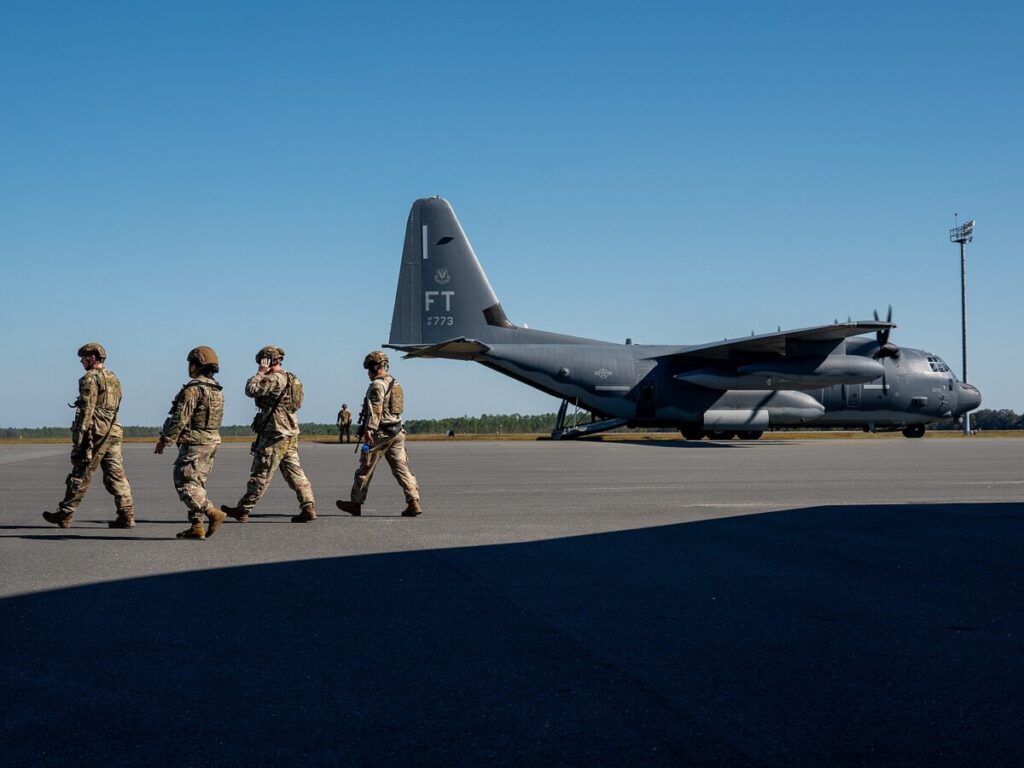
The U.S. Air Force is intensifying its preparations for potential conflicts where traditional air operations from major bases may not be feasible, particularly in scenarios involving near-peer adversaries like China. Central to this strategy is the Agile Combat Employment (ACE) concept, which emphasizes flexibility and adaptability in operations. Recently, the 23rd Wing from Moody Air Force Base in Georgia conducted Exercise Mosaic Tiger 26-1, a comprehensive training exercise designed to test pilots and technicians under conditions of communication loss. This exercise included scenarios where airmen had to generate sorties independently, relying on pre-established Air Tasking Orders (ATO) for guidance in the absence of real-time communications. The exercise involved various aircraft, such as the A-10C Thunderbolt II and HC-130J Combat King II, and focused on sustaining air operations despite limited resources and communication breakdowns.
The implications of such exercises are significant, as they reflect a shift in military strategy in response to the evolving nature of warfare. With global communications and navigation heavily reliant on satellite systems, the Air Force recognizes the potential for adversaries to disrupt these capabilities. During the exercise, airmen were trained to operate from austere locations, adapting to roles outside their usual responsibilities, such as maintaining aircraft and establishing communications. This cross-training fosters “multi-capable airmen,” a key aspect of the ACE strategy, ensuring that personnel can handle various tasks in high-pressure environments. For instance, maintenance crews had to manage supplies judiciously, ensuring aircraft readiness while being mindful of resource constraints. The overarching goal of ACE is to prepare the Air Force for a future where operations may need to be conducted from dispersed locations, enhancing resilience against threats targeting centralized air bases, particularly in the Indo-Pacific region, where U.S. installations are within range of China’s missile capabilities.
In summary, the Air Force’s Agile Combat Employment strategy, exemplified by Exercise Mosaic Tiger 26-1, is a proactive approach to modern warfare challenges. By simulating communication outages and limited resources, the Air Force is equipping its personnel to operate effectively under duress, ensuring mission success even in contested environments. This preparation is crucial in maintaining operational readiness and resilience in the face of evolving threats, particularly as tensions in the Indo-Pacific region continue to rise.
The Air Force’s Agile Combat Employment concept has been a focus for years as it prepares for the potential of a conflict where it can’t fully operate out of its major air bases.
US Air Force photo by Airman 1st Class Rachel Howell
The US Air Force spent weeks testing how pilots and technicians would operate without communication.
Scenarios included losing communications and keeping aircraft operational with limited resources.
This is part of preparation for a conflict with a near-peer like China.
In a future war where battlefield systems are contested, pilots could find themselves flying and fighting without consistent communications with commanders.
The Air Force just war-gamed what such a scenario would look like, forcing its pilots to adapt by
generating sorties
on their own rather than waiting around for orders.
This month, the 23rd Wing from Moody Air Force in Georgia ran Exercise Mosaic Tiger 26-1, a series of flights based around the
Air Force’s Agile Combat Employment
strategy. Aircraft like the A-10C Thunderbolt II “Warthog” attack aircraft and HC-130J Combat King II recovery aircraft were involved in the training.
One element included sustaining air operations should pilots and maintainers lose communications, like encrypted radio or messages, with command and control. If communications are out for 72 hours, pilots would refer to the Air Tasking Order, or the pre-determined directive that outlines daily air missions, roles and responsibilities of aircraft and units, and targets.
“With the published Air Tasking Order (ATO) for 72 hours out, I have the ability to fall back and execute those operations for the next three days,” said Lt. Col. Nathan Frey, 74th Fighter Squadron director of operations, according to an
Air Force press release
.
Airmen involved in the exercise had to shift objectives based on limited maintenance resources and communications while still supporting combat sortie generation.
US Air Force photo by Airman 1st Class Rachel Howell
The US military’s global communications and navigation are highly dependent on satellite transmissions — systems a powerful adversary could attempt to disrupt or physically damage.
If the communications outage goes beyond 72 hours, the situation would look a lot different. Pilots would rely on pre-briefed timelines of events and the last information they have on what their commander
would want. They’d be flying air operations without real-time updates.
“If degradation lasts past 72 hours, we would shift to military-type orders that provide broad intent and allow us to coordinate with adjacent units without the detailed integration from the AOC,” said Lt. Col. David Pool, 74th MGFE commander, in the press release. “That’s where the Wing would step in to assist in liaising between adjacent units to conduct detailed mission planning prior to execution.”
Other parts of Exercise Mosaic Tiger 26-1 included stressing rescue and support teams in contested conditions. In the scenarios, airmen flew out of, rearmed and refueled aircraft at, and operated from
small or converted airstrips
. They also did jobs that weren’t their focus areas, like maintaining aircraft, establishing communications, and defending base perimeters.
“Every Airman in the squadron is tackling tasks that normally wouldn’t fall in their wheelhouse,” said Lt. Col. Justin May, 23d Combat Air Base commander.
Having “multi-capable airmen” has been a focus of the Agile Combat Employment strategy for years, spreading lessons on maintenance, munitions, and logistics across airmen.
Airmen run post-flight inspections on an A-10C Thunderbolt II in Florida as part of Exercise Mosaic Tiger 26-1 earlier this month.
US Air Force photo by Airman 1st Class Rachel Howell
Maintenance airmen
from the 74th and 75th Fighter Generation Squadrons also had to meet the challenge of keeping aircraft ready to fly for lengths of time without knowing when or if they’d be resupplied.
That meant equipment and supplies were used sparingly, and parts were reused, a far different environment for technicians than their home bases.
“Being responsible for what supplies we do have on-site all leads back to ensuring that we stay accountable and utilize all resources available,” Staff Sgt. William Flores, a crew chief with the 75th, said per the release. “Take oil, for example. If we’re burning too much oil, we may want to swap jets so we’re not using more oil than we can supply, and by doing that, we can maintain air operations.”
The Air Force’s Agile Combat Employment concept is designed to prepare the service for a future conflict where it wouldn’t be operating from big, centralized air bases but rather flying out of more
spread-out, distributed places
that can be as austere as a stretch of highway. The plan is one of the Air Force’s potential counters to
China’s massive missile force
, which, in a war, would target those air bases and runways to prevent US aircraft from taking off.
Agile Combat Employment is especially relevant to the vast Indo-Pacific region where important bases like Anderson Air Force Base on Guam are within range of
China’s missiles
.
Read the original article on
Business Insider


