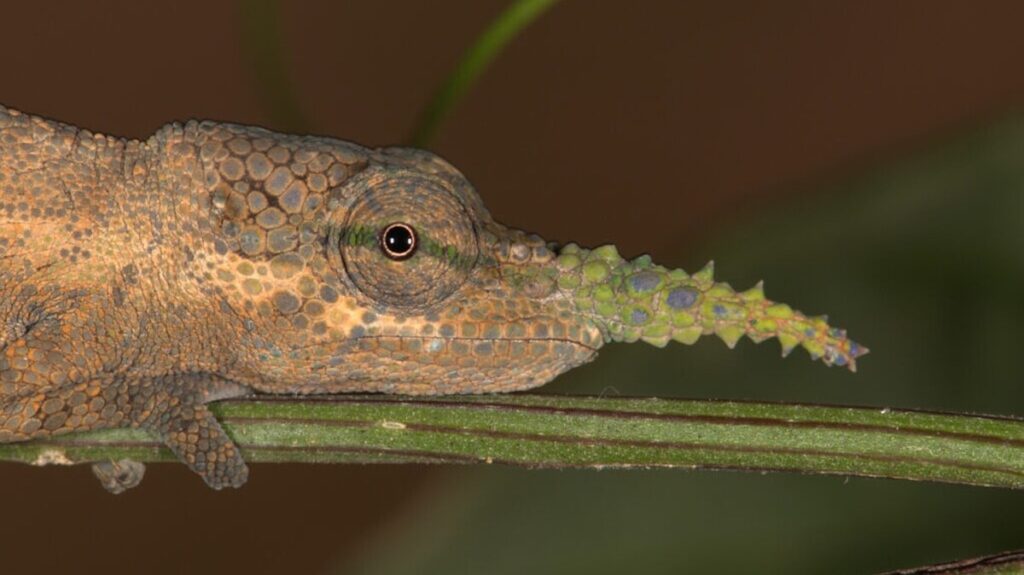
No lie. The long-nosed Pinocchio chameleon is multiple species.
For nearly 150 years, the Pinocchio chameleon, scientifically known as *Calumma gallus*, has been a subject of fascination among zoologists and herpetologists. Originally described in 1877, this unique reptile, with its distinctive long, bumpy nose, was named for its resemblance to the beloved Italian marionette known for its penchant for fibbing. However, a groundbreaking study published in *Salamandra*, the German Journal of Herpetology, reveals that the Pinocchio chameleon is not a singular species but rather a complex of multiple species, each exhibiting its own variations in snout length and shape. This revelation marks a significant shift in our understanding of chameleon diversity, particularly on the island of Madagascar, which is home to over 40% of the world’s chameleon species.
The research team at Germany’s Bavarian State Collections of Natural Histories employed an innovative technique called museomics, which involves extracting and analyzing DNA from historical specimens collected over the years. By examining samples dating back to 1836, the researchers uncovered a taxonomic error that had persisted for over a century. Their findings indicate that some chameleons previously classified as *C. gallus* should now be recognized as *Calumma pinocchio*, while a new species, *Calumma hofreiteri*, has also been identified. The study highlights the dynamic nature of chameleon evolution, suggesting that the rapid changes in the size and color of their nasal appendages may be influenced by female mate selection preferences. As coauthor Frank Glaw noted, “The genetic analyses are conclusive: the nose chameleons have virtually fooled previous research.”
Despite the exciting taxonomic updates, the situation for these reptiles remains precarious. The International Union for Conservation of Nature (IUCN) has classified the Pinocchio chameleon as endangered, reflecting the ongoing threats to their populations in Madagascar. As researchers continue to uncover the rich biodiversity of this unique island, the application of modern genetic methods not only enhances our understanding of species complexes but also underscores the urgent need for conservation efforts to protect these remarkable creatures. With the total number of recognized chameleon species in Madagascar now reaching 100, the ongoing study of their genetics and ecology is vital for their survival in an ever-changing environment.
For nearly 150 years, zoologists have taken the Pinocchio
chameleon
(
Caluma gallus
) at face value.. However, a recent reexamination detailed in
Salamandra, the German Journal of Herpetology
reveals that the chameleon is actually multiple species with elongated snouts worthy of the nickname.
Over 40 percent of the 236 known chameleon species around the world live on the island of
Madagascar
located off the East African coast. The reptiles are often recognizable for a variety of reasons, including their
ballistic tongue
they use to slurp up prey, their color changing abilities , and their independently mobile eyes that give them stereoscopic vision. But the male Pinocchio chameleon specifically possesses yet another striking trait: a bumpy and very lengthy nose.
Males of the new chameleon species Calumma pinocchio have a smooth-edged nasal appendage. Credit: Frank Glaw (ZSM/SNSB)
First described in 1877 and also known as the
lance-nosed or blade chameleon
,
C. gallus
was named after the Latin word for rooster. While an understandable comparison, the lizard eventually became more commonly known for its resemblance to the famous, fib-prone Italian marionette.
For decades, researchers knew that the shape and size of the Pinocchio chameleon’s nasal appendage fluctuated animal-to-animal, but believed that it was simply a unique physical quirk. Using a technique known as museomics, a team at Germany’s Bavarian State Collections of Natural Histories obtained and studied DNA sequences collected from the museum’s old specimens. One of these precious samples dated as far back as 1836. Only after traveling back through time via DNA did they realize the taxonomic error stretching back nearly a century-and-a-half.
“The genetic analyses are conclusive: the nose chameleons have virtually fooled previous research,” study coauthor Frank Glaw
said in a statement
.
Glaw explained that the team’s study also confirmed each chameleon’s nose can quickly change in terms of color, shape, and length.
“Their evolution is possibly driven by the respective preferences of females in mate selection,” he added.
Adult male of
Calumma nasutum
. This species is known since almost 190 years, but its true identity was uncovered only now by the application of modern genetic methods. Credit: Miguel Vences (TU Braunschweig)
As it stands today, some lizards previously considered to be
C. gallus
are now reclassified as
Calumma pinocchio
. Additionally, a second new species called
Calumma hofreiteri
has been established apart from another chameleon,
Calumma nasutum
.
“The study shows the great potential of the new museomics methods to correctly identify historically collected specimens especially in species complexes,” added Miguel Vences, study coauthor and zoologist at the Technical University of Braunschweig.
Although Madagascar’s total number of known chameleons now tops out at exactly 100 separate species, many of their actual populations continue to dwindle. Regardless of its taxonomy, the IUCN says the Pinocchio chameleon
remains endangered
.
The post
No lie. The long-nosed Pinocchio chameleon is multiple species.
appeared first on
Popular Science
.


