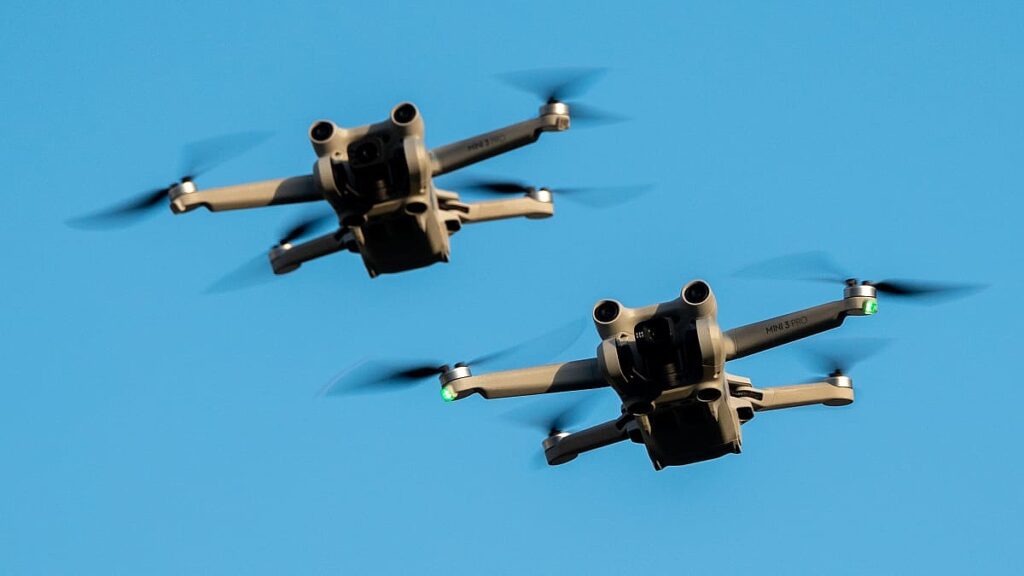
Everything we know about the looming DJI drone ban in the United States
DJI, a leading name in the drone industry, faces an imminent ban in the United States set for December 23, 2025. This potential prohibition is the result of escalating tensions between the U.S. government and the Chinese drone manufacturer, which has been under scrutiny since 2017. The ban stems from a provision in the National Defense Authorization Act (NDAA), which requires security audits for Chinese-made drones. If these audits aren’t completed within a year, companies like DJI will be barred from importing new products into the U.S. Despite DJI’s significant presence in both consumer and commercial markets—holding approximately 70% of the global market share and 77% in the U.S. consumer sector—lawmakers argue that reliance on a foreign vendor poses a national security risk. Adam Welsh, DJI’s Head of Global Policy, claims that the ban is a strategic move to eliminate competition for American drone manufacturers.
The implications of a DJI ban are profound, particularly for industries reliant on their drones, such as agriculture and emergency services. A report from the New York Times highlighted the potential disruptions that farmers and first responders could face if DJI products are no longer available. Welsh estimates that about 450,000 jobs in the U.S. are supported by the use of DJI products, raising concerns about job security should the ban proceed. Furthermore, the Department of Defense has classified DJI as a “Chinese military company,” a claim the company vehemently denies. Compounding the issue, Customs and Border Protection has reportedly been blocking DJI shipments, leading to significant inventory shortages across the U.S. market. While consumers can still purchase DJI drones for the time being, the future remains uncertain, with the possibility of retroactive restrictions affecting previously released products.
As the deadline approaches, questions arise about the future of the drone market in the U.S. Should the ban take effect, there is uncertainty about who could fill the void left by DJI. Although U.S. companies like AeroVironment manufacture drones, their products are primarily designed for military or enterprise use and are not accessible to the average consumer. The lack of affordable and consumer-friendly alternatives raises concerns about the viability of the American drone market post-DJI. With the current administration pushing for a focus on domestic manufacturing, the future landscape of consumer drones could change drastically, but the path to a competitive U.S. market remains unclear. As the situation develops, both consumers and industry stakeholders will be watching closely to see how this ban unfolds and what it means for the future of drone technology in America.
https://www.youtube.com/watch?v=3uYzSNeoiw8
DJI, one of the world’s largest drone manufacturers, is on the verge of a
full-scale ban in the United States
, with a Dec. 23, 2025, deadline looming. With less than a month to go, the ban marks the culmination of years of escalating restrictions on drones from the U.S. government, which has been eyeing DJI warily since as far back as 2017.
Those efforts have intensified over the past year, and now a
DJI drone
ban looks inevitable, barring a last-minute surprise.
SEE ALSO:
The best Black Friday DJI drone deal is now live for everyone — score the best-ever price on the DJI Mini 4K
“This is about forcing the biggest manufacturer of drones out of the market so that American drone manufacturers don’t have to compete with them,” said Adam Welsh, DJI’s Head of Global Policy, in a recent interview with Mashable.
The Department of Defense (sometimes unofficially called the Department of War)
recently classified
DJI as a “Chinese military company,” which DJI denies. We’ve also seen multiple reports of Customs and Border Protection
blocking DJI shipments from entering the country
, even for non-drone products. These actions, however, are separate from the upcoming ban itself, which stems from a provision in the National Defense Authorization Act (NDAA) — the U.S. defense budget — requiring security audits for Chinese-made drones. If those audits aren’t completed within a year of the bill’s passage, companies like DJI will be barred from importing new products into the U.S.
However, there are no companies like DJI, which holds a unique place in both the consumer and commercial drone markets here in the United States. Earlier this year,
a report from the
New York Times
detailed how a DJI drone ban would cause big disruptions to farmers and first responders who rely on DJI products. The impact of a DJI ban cannot be overstated. Back in 2020,
a Drone Industry Insights report
found that DJI commanded a staggering 77 percent of the U.S. consumer drone market. BCC Research later put DJI’s global share
at roughly 70 percent
— an almost unheard-of level of dominance in any tech sector.
“We are 70+ percent of the commercial sector, probably more like 90 percent of the ag sector, about 90 percent of the law enforcement, firefighter sector,” Welsh estimated. “We did an impact study, and about 450-460,000 jobs are supported through the use of our products in the United States. Those jobs are all under threat if this ban goes into effect.”
Even still,
lawmakers have argued
that relying so heavily on a foreign vendor in any critical industry poses too great a security risk.
So what does this mean for DJI customers? And should you still
buy a DJI drone before the ban takes effect
? Whether you’re a hobbyist, a farmer, or a first responder, here’s a breakdown of the major questions you may have about the DJI drone ban.
Why is DJI being banned?
As stated above, the ban stems from the fine print in the
National Defense Authorization Act
for fiscal year 2025, which passed in December 2024. In that bill, Congress stipulates that DJI (and Autel Robotics) must pass a formal security audit within a year of the bill’s passage, or else the FCC must automatically add all DJI drone equipment and services to the Covered List. This would effectively ground new DJI products in the U.S. by denying them access to FCC-regulated bandwidth.
Under the
Secure and Trusted Communications Networks Act of 2019
, the agencies eligible to carry out that audit include the Department of Homeland Security (DHS), the Office of the Director of National Intelligence (DNI), the Federal Bureau of Investigation (FBI), the National Security Agency (NSA), and the Department of Defense (DOD). However, according to DJI, responsibility for conducting the audit has bounced between those agencies, with none willing to take ownership.
Mashable contacted each agency by email and only received a response from DHS:
The Department of Homeland Security is continuing to assess the risk of communication services and equipment manufactured by DJI and Autel in order to inform a determination on the risk to the national security of the United States or the security and safety of United States persons. Upon completion of the determination, DHS will work with other Executive Branch agencies and the Administration to comply with the mandates of Section 1709 by the identified deadlines, as applicable.
Back in June
, Welsh formally wrote to DHS requesting the audit, saying, “I write to request that any or all of your agencies begin this required evaluation of DJI’s products right away.”
DJI has repeatedly
stated in blog posts
and in responses to Mashable that it is more than willing to participate in the evaluation. But so far, no agency has initiated it.
Given DJI’s confidence in passing an audit, it’s important to clarify that none of the agencies are actually required to conduct one to keep the company
off
the Covered List. If an agency
did
choose to perform the audit, whether DJI passed or failed, it would then be required to submit an unclassified report to several congressional committees explaining its decision.
Without an audit, DJI can’t clear its name, and the clock continues to tick toward a ban that the company can’t stop on its own.
When is the DJI drone ban?
With DJI unable to get any of the national security agencies to initiate an audit, the drone manufacturer is set to automatically be placed on the FCC’s Covered List on Dec. 23, 2025.
This means any new DJI drones entering the U.S. will be classified as untrusted communications equipment — denying them FCC-regulated bandwidth, which you most definitely need to operate a drone.
Can I still buy a DJI drone?
Credit: Joe Raedle/Getty Images
The sort-of good news is that, for now, you can still buy a DJI drone, and a DJI representative told Mashable they will still be operable in the future, pending further action from the government. After Dec. 23, the company won’t be able to launch new products in the U.S. Even worse,
the FCC can now retroactively apply
its Covered List designation to previously released DJI products as well. According to Welsh, who spoke to Mashable, the retroactive designation would not affect drones you’ve already purchased, but only DJI’s ability to sell and market them.
SEE ALSO:
I found 7 DJI deals worth shopping for Black Friday
Why are DJI products hard to find in stock?
Buying DJI products right now can already be a hassle. At DJI’s online U.S. store, virtually its entire product lineup has been listed as out of stock for months, and customers can only buy most DJI products from third-party sellers at retailers like Amazon. DJI has also delayed some products indefinitely for the U.S. market, despite launching them globally.
There have been reports since late 2024 of CBP slowing or blocking DJI shipments over allegations that the company used forced labor.
DJI has emphatically denied the claims
, and it’s worth noting that the company is
not
currently on the DHS-published
Uyghur Forced Labor Prevention Act Entity List
.
When
Mashable reported on that situation earlier this year
, CBP stated that federal law prevents it from disclosing trade secrets or sensitive law enforcement information. DJI, for its part, has called the customs holdup a “misunderstanding” and says it’s working with CBP to resolve it.
Because of the inconsistent CBP blocks, there’s now a noticeable shortage of DJI drones across the U.S. supply chain.
Major retailers are reporting low or no stock
, and DJI’s own U.S. inventory
appears depleted as well
. You can find DJI drones for sale from third-party sellers at Amazon, but that can be risky.
Who replaces DJI?
During Welsh’s interview with Mashable, he argues that the driving force behind the DJI ban is straightforward U.S. protectionism.
This is about forcing the biggest manufacturer of drones out of the market so that American drone manufacturers don’t have to compete with them.
– DJI Head of Global Policy, Adam Welsh
There’s reason to believe that’s the case, especially now that Trump has started his second term. Between
sweeping tariffs
and Big Tech being pushed into billion-dollar, U.S.-based
data-center commitments for AI
, the administration has made it clear that “restoring American manufacturing” is
a core priority
. In June,
Trump signed two executive orders
aimed at boosting the domestic drone industry — both stopping just short of an outright ban on DJI. One establishes a federal task force to “restore American airspace sovereignty.” The other directs the Federal Acquisition Security Council to “publish a Covered Foreign Entity List” identifying companies that could pose supply-chain risks. States like
Florida, Arkansas, and Tennessee
have even banned Chinese-made drones for public safety and government work.
Still, DJI says that it’s faced additional scrutiny dating back to
the first Trump administration
and even the Biden administration as well.
So, if the endgame from the government is a U.S.-first drone market, the question becomes obvious: Who’s actually positioned to take over the lion’s share of consumer drones once DJI is pushed out?
That’s a very tough question to answer, because DJI
is
the American consumer drone market. There are U.S. companies that manufacture commercial drones, but few of them produce products intended for everyday consumers. Looking at
DroneU’s recommendations
for U.S.-made, NDAA-approved drones, every option costs thousands of dollars and is clearly designed for enterprise, industrial, or government work — not for someone who just wants to film a hike or learn to fly.
AeroVironment is likely the largest drone manufacturer in the United States, but it is
also a defense contractor
through and through. Their drones are built for the military, not for Best Buy shelves.
So, when policymakers discuss a future where American-made drones fill the gap left by DJI, the reality is that no domestic company is currently positioned to replace DJI in terms of price, scale, or consumer accessibility.