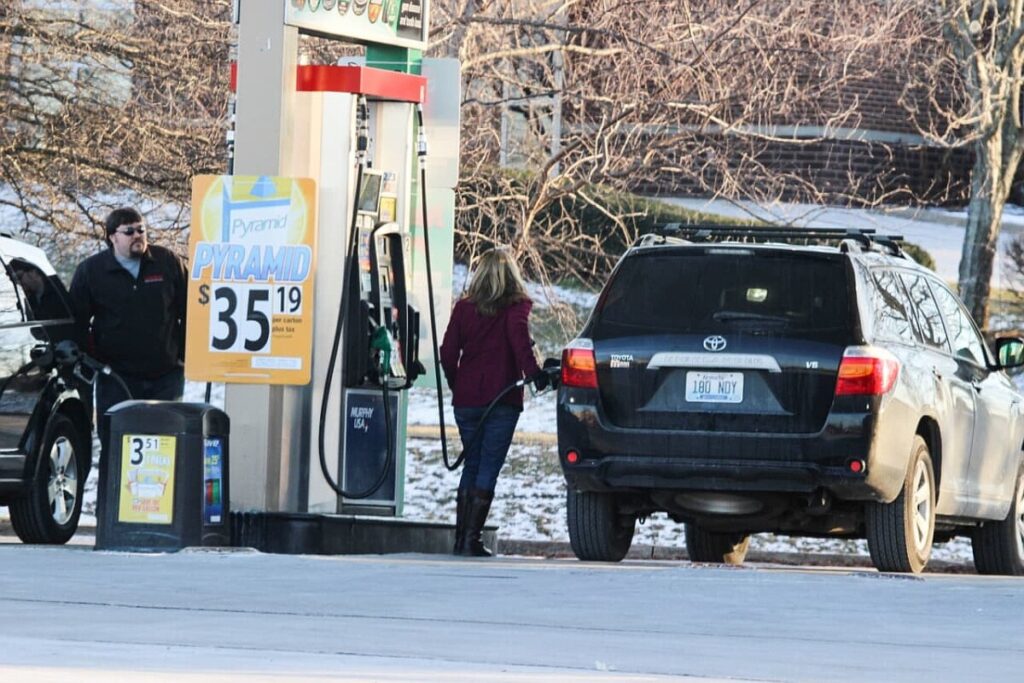
Thanksgiving gas prices could be the lowest in years — if you adjust for inflation. But consumers are still on edge.
As American consumers grapple with the ongoing challenge of rising food prices, the cost of gasoline has become a less pressing concern in their daily lives. Recent reports indicate that while grocery bills have soared, the price of fuel has stabilized, leading to a shift in consumer anxiety. According to the U.S. Bureau of Labor Statistics, food prices have surged significantly, with essentials like eggs and dairy seeing some of the steepest increases. For instance, egg prices have skyrocketed by over 30% compared to last year, largely due to supply chain disruptions and avian flu outbreaks. This relentless rise in food costs has left many households feeling the pinch, prompting a reevaluation of budgets and spending habits.
In contrast, gasoline prices have remained relatively stable, with the national average hovering around $3.50 per gallon. This stability is attributed to a combination of factors, including increased domestic production and a slight decrease in global oil prices. As a result, consumers are finding some relief at the pump, which has historically been a significant concern during periods of inflation. The divergence in these two essential commodities highlights a broader economic trend where consumers are prioritizing their spending. Many are opting for budget-friendly grocery alternatives, such as generic brands or discount stores, to mitigate the impact of rising food costs. This shift in consumer behavior reflects a growing awareness of financial management in a fluctuating economic landscape.
The implications of these trends are multifaceted. While stable gasoline prices provide some respite for American families, the ongoing rise in food costs could lead to long-term changes in purchasing habits and dietary choices. Economists suggest that as consumers adapt to these price changes, the food industry may need to respond by innovating and offering more affordable options. This situation underscores the importance of monitoring inflationary pressures and the interconnectedness of various market sectors, as shifts in one area can significantly impact consumer behavior and overall economic health. As we move forward, it will be crucial for both consumers and policymakers to navigate these challenges thoughtfully, ensuring that essential needs are met without compromising financial stability.
As American consumers continue to fret over rising food prices, the cost of gasoline is less of a worry.


