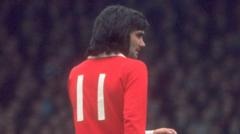
How is Best remembered by new generations 20 years on?
On the 20th anniversary of George Best’s passing, the legacy of the Northern Ireland and Manchester United football icon continues to resonate across generations, reflecting a multifaceted appreciation for his talent both on and off the pitch. Best, who passed away on November 25, 2005, is often celebrated not just for his extraordinary skills as a winger, which earned him the title of one of the greatest footballers of all time, but also for his flamboyant lifestyle and the impact he had on popular culture. For older generations, Best is remembered as a pioneer who brought flair and excitement to the game during the 1960s and 70s. His dribbling ability, combined with a natural charisma, made him a household name, and his exploits on the field led Manchester United to numerous victories, including the European Cup in 1968.
Younger fans, however, may not have witnessed Best’s brilliance firsthand but are introduced to his legacy through media, documentaries, and the stories shared by older relatives and football enthusiasts. For them, Best symbolizes a bygone era of football where artistry was celebrated as much as athleticism. The recent commemorations of his life and career have sparked conversations about his influence on contemporary players, many of whom cite him as an inspiration. For instance, footballers like Ryan Giggs and David Beckham have acknowledged Best’s impact on their own careers and the culture of football, highlighting how his style and attitude paved the way for future generations of players who blend talent with celebrity status.
The remembrance of George Best serves as a reminder of the enduring connection between football and its fans, transcending age and time. As tributes pour in from various corners of the football world, including heartfelt messages from Manchester United and fans alike, Best’s story continues to inspire discussions about talent, fame, and the personal struggles that often accompany success. His legacy is not just one of sporting excellence but also a cautionary tale about the pitfalls of fame, making him a complex figure whose life story resonates with both admiration and reflection. As the football community observes this significant anniversary, it becomes clear that George Best’s influence remains as relevant today as it was during his playing days, uniting fans across generations in their shared love for the beautiful game.
On the 20th anniversary of George Best’s death, how is the Northern Ireland and Manchester United legend remembered by different generations?