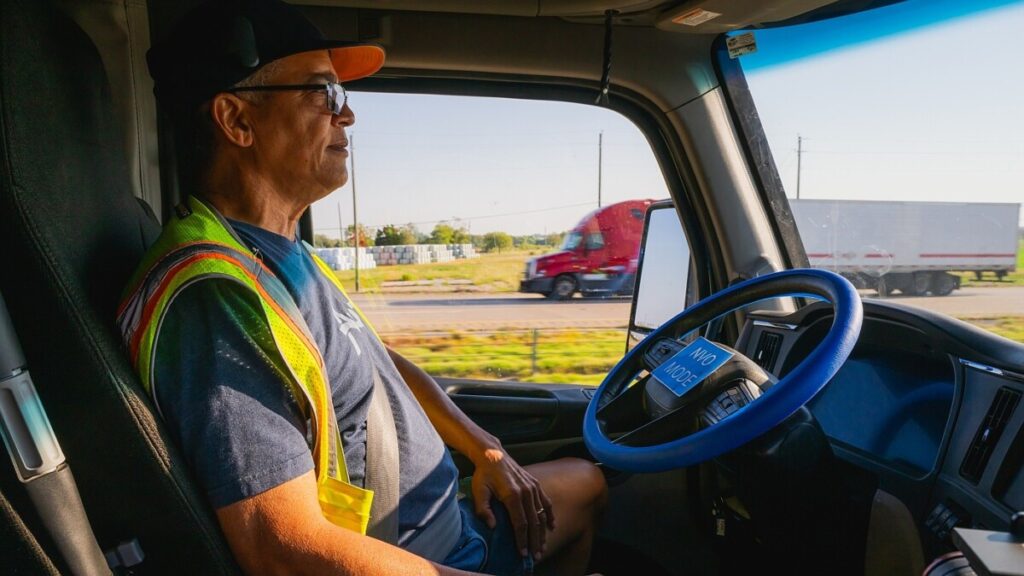
Will technology provide a boost to truck drivers — or will it replace them?
The American economy relies heavily on the trucking industry, which serves as the backbone of goods transportation across the nation. With approximately 3.5 million professional truck drivers in the U.S., the sector is essential for delivering everything from food to electronics, making it a critical component of the supply chain. However, the industry faces significant challenges, including a shortage of qualified drivers, demanding working conditions, and safety concerns on the road. In response to these issues, advancements in technology are emerging to transform the trucking landscape, particularly through the integration of new driver-assistance features designed to enhance safety and reduce the physical and mental demands on drivers.
Recent innovations in truck technology are poised to revolutionize the way drivers operate. Features such as adaptive cruise control, lane-keeping assist, and automatic braking systems are becoming more prevalent in modern trucks, providing drivers with additional support and reducing the likelihood of accidents. For example, companies are increasingly adopting systems that can detect obstacles and help prevent collisions, which not only ensures the safety of truckers but also protects other road users. Furthermore, these technological advancements aim to alleviate the strain of long hours on the road, allowing drivers to focus on their tasks while the truck assists with navigation and monitoring. This shift is particularly important given the current driver shortage, as more efficient and safer driving experiences may attract new entrants into the profession.
Moreover, the integration of technology in trucking is not just about enhancing safety; it also holds the potential to improve overall job satisfaction for drivers. By reducing the physical toll of driving and allowing for greater autonomy on the road, technology could make the profession more appealing to younger generations. As the industry continues to evolve, stakeholders are optimistic that these advancements will not only address the pressing challenges of driver shortages and safety but also contribute to a more sustainable and efficient logistics system. With the trucking sector at a critical juncture, the embrace of technological innovations could ultimately reshape the future of freight transportation in America, ensuring it remains a vital component of the economy for years to come.
https://www.youtube.com/watch?v=U8nJ89hwt_A
The American economy depends on truckers. Technology is promising to transform this industry with new driver-assistance features that are meant to make the job safer and less demanding.
(Image credit: Desiree Rios for NPR)


