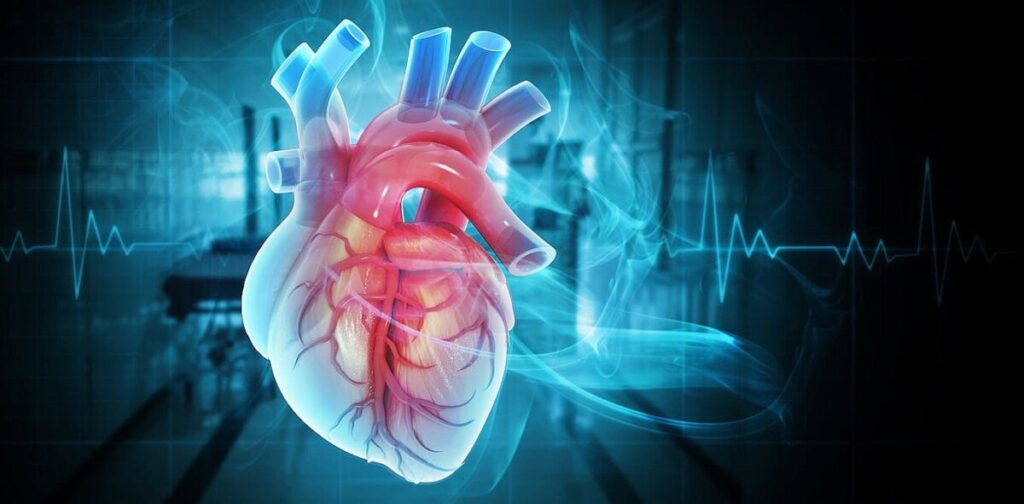
Vice President Dick Cheney’s life followed the arc of the biggest breakthroughs in cardiovascular medicine
The recent passing of former Vice President Dick Cheney on November 4, 2025, at the age of 84 has brought renewed attention to his long and arduous battle with heart disease, a struggle that spanned decades and was marked by significant advancements in cardiovascular medicine. Cheney’s experience illustrates the remarkable evolution of cardiac care over the past fifty years, highlighting how breakthroughs in medical technology not only prolonged his life but also enabled him to maintain an active political career. From his first heart attack at the young age of 37 in 1978, when the understanding of heart attacks was rudimentary at best, to the advanced treatments available today, Cheney’s journey underscores the critical role that medical innovation plays in managing heart disease.
In the late 1970s, heart attack treatments primarily consisted of pain relief and bed rest, as doctors lacked a comprehensive understanding of the underlying causes of heart attacks. Today, medical professionals recognize that heart attacks are caused by blood clots obstructing blood flow to the heart muscle, a revelation that has transformed treatment protocols. Cheney’s experience with multiple heart attacks—five in total—saw him benefit from a range of interventions, including angioplasties and the implantation of stents and defibrillators. The introduction of drug-eluting stents, for example, significantly reduced the need for repeat procedures and represented a major leap forward in cardiac care. Additionally, Cheney underwent a quadruple bypass surgery in 1988, further showcasing the advancements in surgical techniques that have improved patient outcomes.
Despite the effectiveness of modern treatments, such as medications and surgical interventions, preventive measures remain paramount. Cheney himself acknowledged that his heart disease was influenced by genetics and lifestyle choices, including poor diet and smoking. The importance of preventive strategies cannot be overstated; organizations like the American Heart Association recommend regular physical activity and a heart-healthy lifestyle as vital components in reducing the risk of heart disease. As we reflect on Cheney’s legacy, it serves as a poignant reminder that while medical advancements have significantly enhanced the quality of life for millions of heart patients, proactive measures are essential in the ongoing battle against cardiovascular disease.
Cardiovascular medical technology evolved rapidly over the past half-century.
Mohammed Haneefa Nizamudeen/iStock via Getty Images Plus
The life and political legacy of former Vice President Dick Cheney, who died on Nov. 4, 2025, at the age of 84,
has been well documented
. But his decades-long battle with heart disease may be less appreciated.
Cheney benefited from almost every
major advance made in cardiovascular medicine
. These breakthroughs enabled him to sustain an active political career and gave him additional years of an enjoyable life after he moved away from the political spotlight.
As a
cardiologist who specializes in both sports medicine and heart disease
, as well as advanced heart failure and transplant cardiology, I frequently provide care for patients who, like Cheney, are supported by powerful medicines and procedures to help support heart function.
Cheney’s passing provides an opportunity to reflect on the
rapid evolution in medical technology
, especially in the past half-century, that improved the lifespan and overall quality of life for Cheney, as well as millions of heart patients around the world.
Dick Cheney leaves George Washington University Hospital on Nov. 24, 2000, after suffering his second heart attack.
Mario Tama/Hulton Archive via Getty Images
The formative days of cardiac medicine
Cheney suffered his
first of five heart attacks at age 37
, in 1978, when the standard of care mainly
involved pain relief and bed rest
, and when medical professionals did not yet have a clear understanding of
what causes heart attacks
in the first place.
Today, doctors understand that a heart attack occurs when blood flow through an artery is blocked by a blood clot
called a thrombus
and oxygen cannot get to the heart muscle. Imagine a kink in a hose that prevents water passing through it. When the heart muscle does not receive oxygen for a long enough period of time, the heart muscle will die and a scar will form.
In the 1960s and ’70s, however, doctors thought a thrombus was the result of –
not the cause of
– a heart attack.
It is now clear that the formation of a thrombus leads to a heart attack rather than the other way around. That important lesson revolutionized the way doctors like me
treat patients with heart attacks
.
Cheney had a pacemaker and a defibrillator implanted in his chest in 2001 to monitor and regulate his heart.
Eugene Mymrin/Moment via Getty Images
Big and small breakthroughs
Today, we reopen arteries with stents. When stents are not available, we use powerful medications called thrombolytics, or clot-busters, to break down the thrombus. These kinds of treatments seem commonplace today, but it wasn’t until 1988 that a pivotal study showed combining aspirin and streptokinase, a clot-buster drug,
improved survival after a heart attack
by almost 50%.
Cheney had additional heart attacks in 1984, 1988, 2000 and 2010. Notably, all but the last were
during election years
, underscoring the detrimental effects of stress on heart health. His heart attack in 2000 occurred as the courts worked to determine whether Al Gore or George W. Bush – with whom Cheney would become vice president –
had won the presidential election
.
As technology advanced over the years, Cheney had multiple
angioplasties
– a procedure to open up narrowed or blocked arteries. During an angioplasty, a
procedure developed in the 1980s
, heart doctors would place a balloon made of flexible polymers inside an artery to open up and clear the thrombus.
While angioplasties were helpful, one of the main limitations was that the walls of the artery would quickly shrink back – known as recoiling – after the balloon was deflated.
Angioplasties are procedures used to improve blood flow by widening narrowed or blocked arteries.
Rujirat Boonyong/iStock via Getty Images Plus
How stents became mainstream
That limitation led to the concept of stents – devices that are now frequently used to treat heart attack patients.
Cheney’s first heart attack in 1978 occurred
well before the first stents
became available
.
Stents started out as metal, tubelike structures that cardiologists used to open up narrowed or blocked blood vessels. The original stents, made of stainless steel, fixed the problem of blood vessels recoiling.
But over time, cardiologists found that stents become stenotic, meaning they themselves would become narrow, making it difficult for blood to flow through them. This problem was solved with the introduction of drug-eluting stents, which have a polymer that coats the metal struts of a stent and prevents stenosis from occurring.
Drug-eluting stents were a game-changer and
reduced the need for repeated procedures
by about 50% to 70%. Like millions of Americans, Cheney received several stents during his long battle with heart disease.
While stents are helpful, sometimes patients require a surgery called
coronary artery bypass graft
. Heart surgeons perform this procedure when there are blockages that angioplasty or a stent cannot fix, or when there are too many blockages in the heart arteries.
In 1988, at age 47,
Cheney underwent a quadruple bypass operation
to help restore blood flow to his heart following his third heart attack.
Example of a stent being deployed in an artery with stenosis, or narrowing as a result of plaque buildup.
Christoph Burgstedt/Science Photo Library via Getty Images
Battling heart disease
Despite the best efforts of cardiologists, many patients with heart disease, like Cheney, go on to develop heart failure.
There are
two main types of heart failure
. One – called
heart failure with preserved ejection fraction
– occurs when the left ventricle, the largest and strongest chamber of the heart, becomes stiff and unable to relax.
The other type –
heart failure with reduced ejection fraction
– occurs when the left ventricle becomes enlarged and weakened, and fails to pump blood efficiently.
Both types of heart failure make it difficult for the heart to adequately pump blood throughout the body. Cheney, like millions of people throughout the world, suffered from a dilated and weakened heart.
Fortunately, now there are several classes of medications used to treat the kind of heart failure that Cheney suffered from.
There are four main types of drugs that heart failure cardiologists use to manage patients with this condition, which are referred to as the “
four pillars” of heart failure management
. These medications work together to reduce the amount of stress placed on the heart and to create an environment that helps a weakened heart pump blood
more efficiently throughout the body
.
Thanks to these four medication types, millions of patients with dilated, weak hearts are living much longer with a higher quality of life and staying out of the hospital. Some of these medications are also used for patients with stiffened hearts, but there is a lot of ongoing research to better understand how to take care of patients with that kind of heart failure.
Despite the use of medications to treat dilated, weak hearts, some patients suffer from continued weakening of the heart muscle and progress to
end-stage, or advanced, heart failure
. When this happens, there are only two treatment options available. These options are a mechanical pump or a heart transplant.
Heart transplantation is the gold-standard, preferred treatment option for advanced heart failure that results from a dilated, weakened heart.
In 2023, there were
about 4,500 heart transplants in the U.S.
and about 2,200 in Europe. On average, patients live well
over a decade with a heart transplant
, and many will go on to
live for 20 to 30 more years
.
Major health organizations recommend 150 minutes per week of moderate-intensity exercise as part of a heart-healthy lifestyle.
Halfpoint Images/Moment via Getty Images
An ounce of prevention is worth a pound of cure
Benjamin Franklin
famously quipped
, “An ounce of prevention is worth a pound of cure.”
In an
interview with “60 Minutes
” in 2013, Cheney said his heart disease was the result of genetics and an unhealthy lifestyle. He admitted that he drank beer, ate fatty foods and also smoked three packs of cigarettes per day.
Millions of people across the U.S. and Europe have a lifestyle that is similar to that of Cheney’s prior to his heart transplant. While heart patients benefit from medications, stents and surgeries,
preventive strategies cannot be underestimated
.
Almost all major health organizations,
including the American Heart Association
,
American Cancer Society
and the Department of Health and Human Services, recommend 150 minutes per week of moderate-intensity exercise.
This recommendation translates to a brisk walk about 30 minutes per day, five days per week. This level of exercise leads to large increases in survival and preservation of overall health throughout a lifetime.
While Cheney lived through five heart attacks, the goal for patients and their doctors is to avoid the first. Scientific advances in cardiology have led to a dramatic improvement in survival and quality of life for millions of people, but preventive measures are still by far the most effective lifesaving measure.
William Cornwell does not work for, consult, own shares in or receive funding from any company or organization that would benefit from this article, and has disclosed no relevant affiliations beyond their academic appointment.


