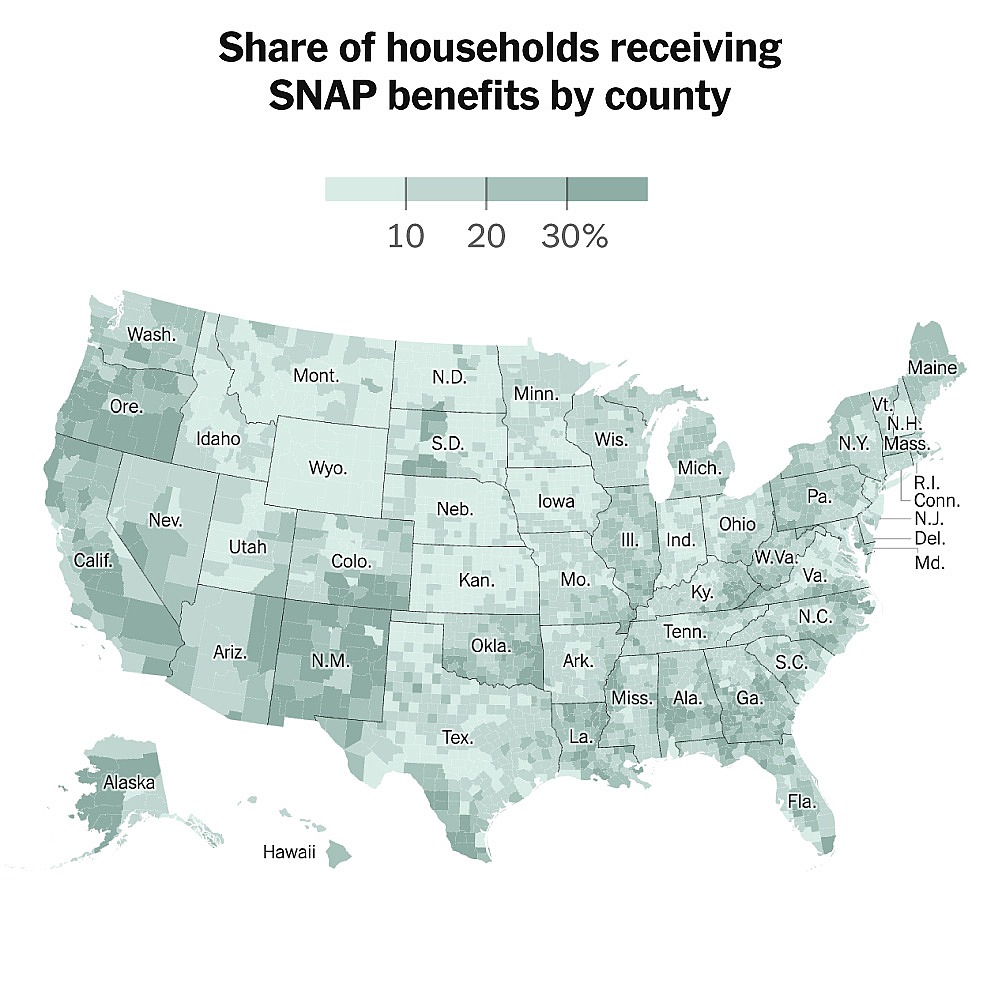
SNAP Map: Here’s Who Will Be Affected by Disruptions to Food Aid
In a recent analysis of the Supplemental Nutrition Assistance Program (SNAP), it has been revealed that a significant proportion of its beneficiaries reside in districts represented by Democratic lawmakers. This finding highlights the complex relationship between political representation and social welfare programs in the United States. While it may seem that SNAP is primarily a Democratic issue, the program’s reach extends far beyond party lines, impacting communities across the political spectrum. According to the U.S. Department of Agriculture, SNAP serves approximately 41 million Americans, providing essential food assistance to individuals and families facing economic hardships.
The data shows that while Democratic districts account for a larger share of SNAP recipients, the program is essential in Republican-leaning areas as well. For instance, states with higher poverty rates, such as Mississippi and Arkansas, have significant numbers of SNAP participants, despite being represented by Republican lawmakers. This underscores the importance of SNAP as a safety net that transcends political affiliations, providing crucial support to those in need regardless of where they live. In fact, many districts with high SNAP enrollment are rural or economically distressed areas, where food insecurity is a pressing issue.
The implications of these findings are profound, as they challenge the narrative that SNAP is solely a Democratic initiative. Instead, they illustrate that food assistance is a bipartisan concern, essential for the well-being of millions of Americans. As lawmakers continue to debate the future of SNAP and other social safety net programs, understanding the demographics of recipients and the geographic distribution of need is vital. This insight can help shape policies that ensure food security for all, regardless of political affiliation, reinforcing the notion that hunger knows no party lines.
More SNAP recipients live in Democratic districts. But the program touches every corner of the country.