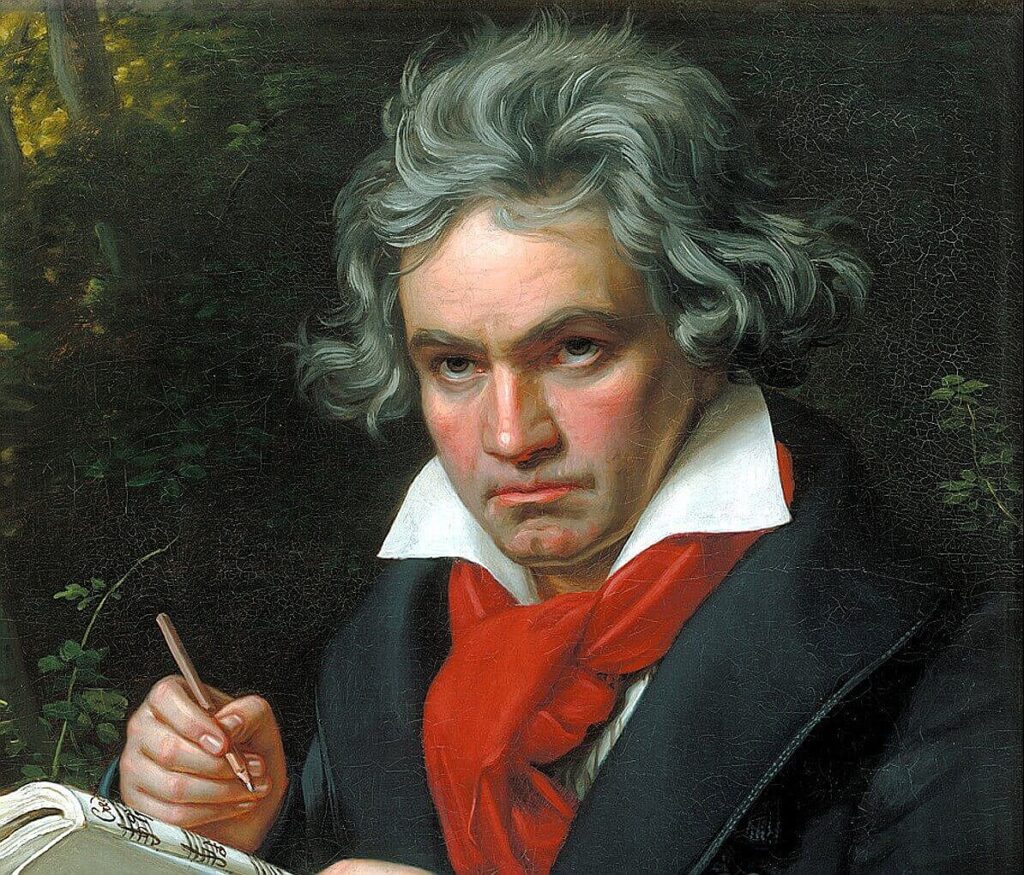
Ludwig van Beethoven
Ludwig van Beethoven, born in 1770, stands as a towering figure in the world of classical music, renowned for his transformative impact on the genre. His life and work represent a pivotal shift from the structured forms of the Classical era to the emotional and expressive depth of the Romantic period. Prior to Beethoven, composers primarily focused on music designed for religious ceremonies, educational purposes, or social entertainment. However, Beethoven broke these conventions, infusing his compositions with profound personal expression and innovative structures. His ability to convey complex emotions through music not only redefined the role of the composer but also expanded the possibilities of what music could express.
One of the key aspects of Beethoven’s work was his mastery of form and his willingness to experiment. His symphonies, such as the iconic Symphony No. 5, showcase his revolutionary approach to orchestration and thematic development, using motifs that evolve throughout the piece to create a narrative arc. This symphony, with its famous four-note opening, has become synonymous with triumph over adversity and is a testament to Beethoven’s ability to communicate universal human experiences through music. Additionally, his late string quartets and piano sonatas reveal an introspective side, often exploring themes of struggle, hope, and transcendence, reflecting his own personal challenges, including his battle with deafness.
Beethoven’s influence extends beyond his own compositions; he inspired generations of musicians and composers who followed. His works laid the groundwork for the Romantic composers who would come after him, such as Brahms, Wagner, and Mahler, who further embraced emotional expression and individualism in their music. Even in contemporary times, Beethoven’s legacy endures, with his compositions remaining central to orchestral repertoires worldwide and continuing to resonate with audiences. As we reflect on Beethoven’s contributions, it is clear that his music not only changed the trajectory of classical music but also enriched the cultural fabric of society, making him an enduring symbol of artistic innovation and emotional depth.
https://www.youtube.com/watch?v=W-fFHeTX70Q
Ludwig van Beethoven (1770 – 1827) is one of the greatest composers in history. His work marked a turning point for composers, who had previously written primarily for religious services, to teach, or to entertain at social functions. But Beethoven’s […]