Black families pay more to keep their houses warm than average American families
**Understanding the Energy Burden on African American Families: A Call for Policy Change**
As energy costs continue to rise across the United States, many families are feeling the pinch more than ever. A recent study highlights that African American households, in particular, face a disproportionately high energy burden, defined as the percentage of household income spent on energy bills. While the average American household allocates about 3.2% of their income to energy expenses, families living in majority-Black neighborhoods spend a staggering 5.1%. This disparity is alarming, especially considering that over 12 million households report adjusting their home temperatures to uncomfortable levels and 24 million have had to forgo necessities like food or medicine just to keep up with utility payments.
The roots of this energy injustice are multifaceted, with historical and structural factors playing significant roles. One major contributor is the age and condition of housing in predominantly Black neighborhoods, which tend to have older homes that are less energy-efficient. These homes often lack proper insulation and have outdated windows, leading to higher energy consumption for heating and cooling. Furthermore, a significant number of Black families live in rental properties, where they face barriers to making energy-efficient upgrades. Unlike homeowners, renters typically cannot invest in improvements like better windows or insulation, and landlords often lack the incentive to enhance energy efficiency since tenants bear the utility costs. This creates a “split-incentive” problem, where the responsibility for energy efficiency falls on those least able to effect change.
The legacy of redlining and systemic racism has compounded these challenges, resulting in underinvestment in communities of color and perpetuating cycles of poverty and poor health outcomes. Although redlining was outlawed in 1968, its effects linger, contributing to diminished property values and inadequate living conditions. Moreover, energy assistance programs, which could alleviate some of the financial strain, are often underfunded and difficult to access for those who need them most. As policymakers seek solutions to reduce energy burdens, it is crucial to recognize that a one-size-fits-all approach will not suffice. Tailored strategies that consider the unique challenges faced by different communities—such as the prevalence of older housing stock, rental dynamics, and local income levels—are essential for fostering meaningful change. Engaging with communities to understand their specific needs will be vital in crafting effective policies that can truly alleviate the energy burden on African American families and promote equitable access to energy resources.
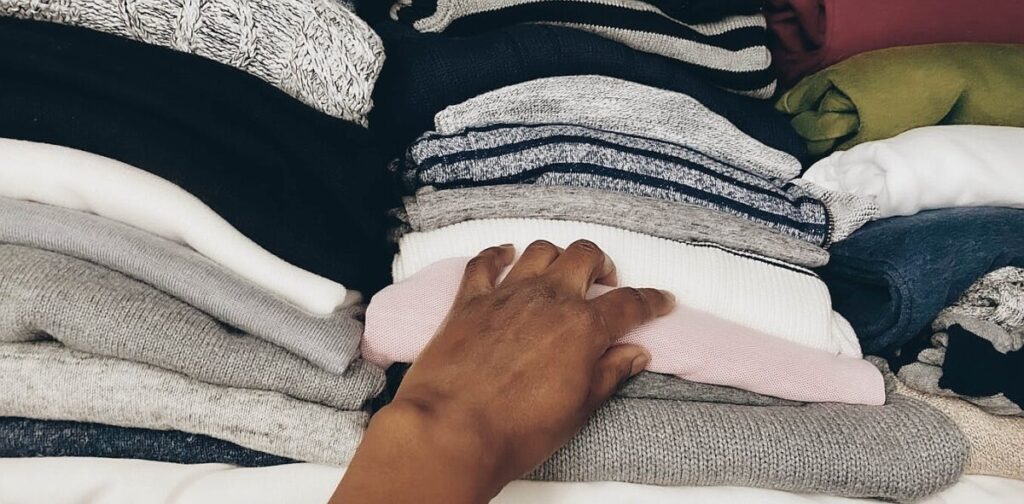
It’s not always enough to put on another sweater.
Grace Cary/Moment via Getty Images
Rising energy costs
consume a bigger and bigger chunk of family budgets in the United States. Our research has found that for many African American families, those costs take an
extra big bite out of their incomes
. This bite, the percentage of a household’s income used to pay energy bills, is called a household’s “energy burden.”
Households with high energy burdens struggle to adapt to rising prices. The U.S. Energy Information Administration reports that more than 12 million households
keep their homes either colder or hotter
than is actually comfortable, specifically in an effort to keep control of energy costs. And 24 million households report having had to
forgo food or medicine
at least once in the past year to pay utility bills.
Also, studies indicate that people facing high energy burdens often
turn to unsafe heating sources
, such as space heaters, stoves or fireplaces, and are at
higher risk of
asthma, depression, premature mortality and poor self-reported health.
Our recent study
of 2019 data found that those burdens are not spread evenly across the country or across society.
Specifically, families living in majority-Black census tracts spent
5.1% of their income on energy
– significantly higher than the 3.2% share spent by average American households. Census tracts dominated by other racial groups in our study – whites, Latinos and Asian Americans – were much closer to the overall average.
Energy injustice
Often, disparities like this are attributed to income, which is indeed a factor given that Black households have a
median income of $53,444
, while the
overall median in the U.S. is $78,538
. However, our study found that even when a majority-white and a majority-Black census tract had the
same median household income
, the average share of household income spent on energy was higher in the majority-Black census tract.
We found two possible reasons for this difference, both rooted in race and housing situations.
First, our analysis of U.S. Census Bureau data finds that African American-majority census tracts have older homes on average than other census tracts.
Older homes often have lower energy efficiency
due to less insulation, single-pane windows, and gaps and cracks in the building’s structure, especially around windows, doors and chimneys. So even if a Black family earns the same income as another family, the Black family might live in an older house, requiring them to use more energy to warm or cool their homes, cook food, heat water and so on.
Also, we found that Black families are more likely to live in rental properties, where they cannot easily make energy-efficiency upgrades – such as installing new windows, insulation or appliances. At the same time, most landlords
do not have an incentive
to spend money to improve building efficiency because tenants usually pay utility bills. In the United States,
9 in 10 rental households pay for all or some of their energy bills
and therefore face this split-incentive problem.
Cracks around windows can allow cold air inside.
Robbie Becklund/iStock/Getty Images Plus
Many of these challenges can be attributed to the structural racism inherent in
redlining
. This early 20th century practice made it harder for prospective homeowners to get mortgages to buy homes in neighborhoods with high concentrations of Black people, immigrants or other minorities. That left more of the homes in those communities
owned by landlords and occupied by tenants
.
Even though redlining was banned in 1968, it left a
legacy of underinvestment
in properties,
decreased property values
and
worse health outcomes
.
Intersecting inequities
Other factors also likely intersect to impose a higher energy burden on Black families. Many of these were beyond the scope of our study but are well documented. For example,
energy support programs are notoriously underfunded and often hard to access
, especially for families without the time or connections to know about them or understand application requirements.
These are just some possible factors that increase the energy burden for Black families. The main lesson for policymakers is that communities are complicated. Energy efficiency upgrade programs that also seek to alleviate high energy burdens cannot be one-size-fits-all. A program for middle-class families in one neighborhood may not work in another community with older housing stock or large numbers of rental units.
To be successful, local officials designing programs that are aimed at families’ energy burdens will have to learn about the different challenges facing each distinct community – whether it’s leaky older homes, outdated water heaters, low incomes or rental split incentives. Reducing energy burdens for Black families will take more than technical fixes; it will take policies based in community engagement to build a deeper understanding of place.
The authors do not work for, consult, own shares in or receive funding from any company or organization that would benefit from this article, and have disclosed no relevant affiliations beyond their academic appointment.


