Texas files emergency Supreme Court petition after Trump-backed congressional map blocked by federal judges
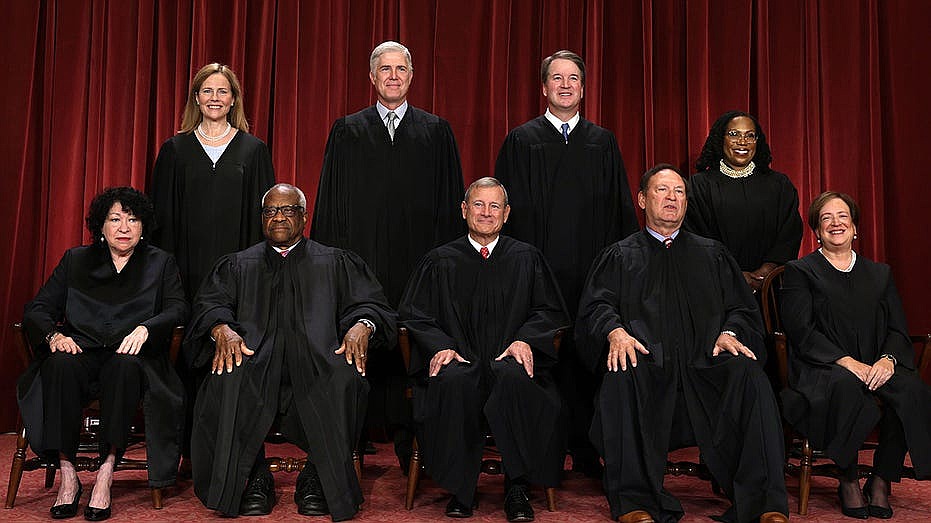
On Friday, Texas filed an emergency petition with the U.S. Supreme Court following a ruling from a panel of federal judges that deemed the state’s newly redrawn congressional map as “racially gerrymandered.” This ruling represents a significant setback for Texas Republicans, who aimed to leverage the redistricting to gain additional seats in the upcoming 2026 midterm elections. The Supreme Court, reacting swiftly, issued an administrative stay by Justice Samuel Alito, which temporarily halts the lower court’s decision and allows Texas to continue using its redrawn map while the appeal is considered. Texas officials highlighted the urgency of their situation, emphasizing that congressional primary elections are already in progress, which adds pressure to resolve the matter quickly.
The controversy surrounding Texas’s redistricting efforts is not isolated; it reflects a broader national trend where various states are engaging in mid-decade redistricting, often seen as a strategic move to bolster partisan power. The panel’s ruling, led by U.S. District Judge Jeffrey V. Brown and supported by Judge David Guaderrama, pointed to substantial evidence of racial gerrymandering in the map’s design, indicating that while political motivations were present, racial considerations played a significant role as well. In contrast, Judge Jerry Smith dissented from the majority without providing an explanation, highlighting the division among the judges. This ruling comes at a critical time for the Republican Party, as they seek to maintain and expand their slim majority in the House of Representatives, especially with similar redistricting efforts underway in states like Missouri, North Carolina, and Ohio.
The implications of this case extend beyond Texas, as both Republican and Democratic states engage in redistricting to gain electoral advantages. For instance, California voters recently approved a redistricting plan that could potentially counteract Texas’s new map. Texas Attorney General Ken Paxton has framed the ruling as part of a larger narrative, accusing Democrats of using accusations of racism to undermine Republican efforts at redistricting. This ongoing battle over congressional maps underscores the contentious nature of American politics, where the drawing of district lines can significantly influence electoral outcomes and party power dynamics. As the Supreme Court prepares to review Texas’s appeal, the outcome could set important precedents for future redistricting battles across the nation.
https://www.youtube.com/watch?v=t5dvCMWrItk
Texas on Friday filed an emergency petition with the
U.S. Supreme Court
after a ruling by a panel of federal judges blocked the state from using its redrawn congressional map, calling it “racially gerrymandered.”
Shortly after filing the petition, Justice Samuel Alito issued an administrative stay, temporarily putting the lower panel’s decision blocking Texas’ new maps on hold.
The state asked the high court for an administrative stay on the lower court ruling, noting Texas has an “election already in progress,” referring to congressional primary elections in March.
The Supreme Court most recently blocked lower court rulings related to redistricting cases in Louisiana and Alabama.
Texas redrew its congressional map last summer in a President
Donald Trump
-backed effort that could help Republicans gain five seats in next year’s midterms.
REPUBLICANS PUSH BACK OVER ‘FALSE ACCUSATIONS OF RACISM’ IN BLOCKBUSTER REDISTRICTING FIGHT
U.S. District Judge Jeffrey V. Brown
, a Trump appointee, joined by U.S. District Judge David Guaderrama, an Obama appointee, in the majority ruling said, “The public perception of this case is that it’s about politics.
“To be sure, politics played a role in drawing the 2025 map,” the judges said. “But it was much more than just politics. Substantial evidence shows that
Texas racially gerrymandered the 2025 map
.”
Judge Jerry Smith, a Reagan appointee and the third of the three-judge panel, dissented without explanation.
REPUBLICANS PROTEST DOUBLE STANDARD AFTER JUDGES CALL TEXAS REDISTRICTING PLAN ‘RACIALLY GERRYMANDERED’
The ruling was a significant blow to the Trump administration. It comes as Trump and his
Republican allies
have raced to pad the party’s razor-thin House majority in the run-up to the 2026 midterm elections, including by imploring some states to launch rare, mid-decade redistricting efforts.
Missouri, North Carolina and Ohio have redrawn their congressional maps as well, and other states like Florida and Kansas are weighing similar efforts.
Democratic states
are also considering redrawing their maps to counteract Republican efforts.
Most prominently,
California voters
approved by a wide margin earlier this month a plan to redistrict the state in an effort that could wipe out Texas’ new map.
Texas Attorney General Ken Paxton vowed on Tuesday to appeal to the Supreme Court.
“For years, Democrats have engaged in partisan redistricting intended to eliminate Republican representation,” Paxton said. “But when Republicans respond in kind, Democrats rely on false accusations of racism to secure a partisan advantage.”