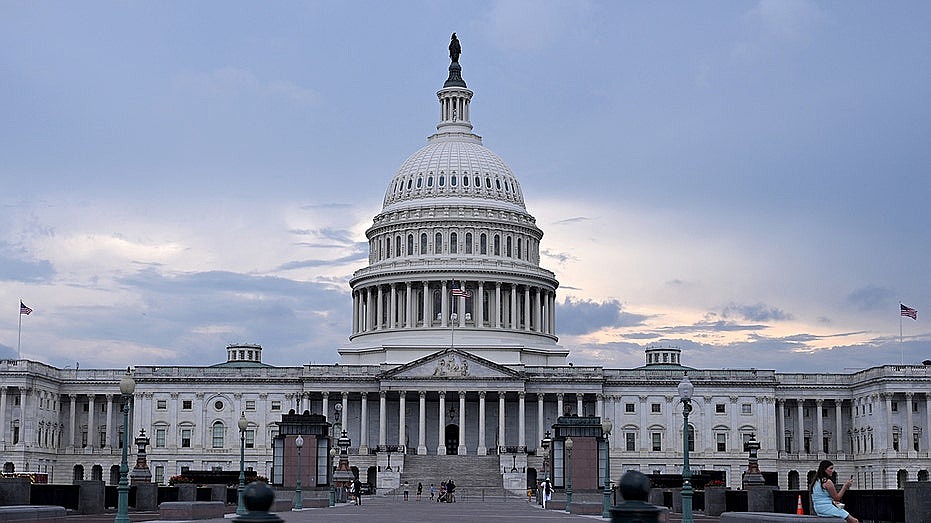
It won’t get any better: Washington faces another looming government shutdown
As the dust settles from a record 43-day government shutdown this fall, the prospect of another closure looms ominously on the horizon. Lawmakers face a critical deadline on January 31, when the majority of the federal government could shut down again if they fail to address unresolved issues that led to this year’s turmoil. While Congress has managed to pass three of the twelve necessary appropriations bills to keep the government running, this only covers a fraction of federal spending, leaving nine bills still pending. With Congress out of session for the holidays and only a short window to negotiate, many are skeptical about the chances of averting another shutdown.
The political landscape complicates matters further. Key bills, such as the “Labor-H” bill that funds the Department of Labor and Health and Human Services, are fraught with contentious issues, including debates over Obamacare health subsidies. Senate Majority Leader John Thune has promised a vote on extending these subsidies, but uncertainty looms over the details, with some Republicans embracing them while others aim to reform or dismantle the program entirely. Adding to the tension, former President Trump has threatened to veto any legislation extending these subsidies, heightening the stakes for both parties. The potential for a coalition of some Democrats and Republicans to keep the government afloat could lead to significant internal strife within the Democratic Party, as calls for leadership changes could arise if they are perceived to have compromised too much.
Looking ahead to the 2026 midterms, both parties face significant challenges. Democrats, who see an opportunity to gain control of the House and possibly the Senate, must navigate the fallout from potential shutdowns and internal divisions. Meanwhile, Republicans risk alienating voters if they resist extending health care subsidies, a key issue highlighted during the recent shutdown. With both parties grappling with their respective political dilemmas, many observers are bracing for a turbulent few months in Washington, where the specter of another government shutdown could overshadow legislative efforts and set the stage for a contentious election year. As the January deadline approaches, all eyes will be on Congress to see if they can overcome their differences and prevent another crisis.
https://www.youtube.com/watch?v=bFnGdbiQkvI
It’s not going to get any better.
The
government closed down
for a record 43 days this fall. And if you thought you’d seen the worst of Congress, it truly won’t get any better when the majority of the federal government could shut down in the wee hours of January 31st.
That’s right. Lawmakers have yet to address the very issues which sparked this year’s astonishing shutdown. Some of those are legislative. Some are policy related. And the biggest problems are political.
Frankly, the political ones may be the most challenging.
Let’s start with the most obvious ways to extinguish a wintertime crisis in Washington.
SHUTDOWN IS OVER, BUT WASHINGTON’S BUDGET BRAWL IS JUST GETTING STARTED
Included in the interim bill to reopen the government were three bills to fund major sections of the federal government through September 30, 2027 – the end of the current fiscal year. Congress adopted three of the 12 appropriations bills which run the government every year. Those are Legislative Branch for Congress, Military Construction/VA for military building programs, and the Department of Veterans Affairs and the Department of Agriculture. Even though that’s three of the 12 annual spending bills, it’s not anywhere close to a “quarter” of all spending which Congress appropriates annually. More than half of all Congressionally-controlled spending goes to the
Pentagon alone
. So the House and Senate must pass all nine of the remaining nine annual bills in order to avoid a repeat of this fall at 12:00:01 on Saturday, January 31.
That is a tall order. But leading appropriators from both sides of the aisle and both sides of the Capitol say there’s been marked progress on these bills. Still, syncing everything up in a little more than two months – with Congress now out of session again this week and slated to be out for Christmas and New Year’s – strikes some as doom date with destiny. Keep in mind that Congress did not stay in session in late July and August to tackle some of those same bills. One wonders why anything will be different now.
And we haven’t even gotten to nettlesome questions which lurk in the individual bills themselves.
SHUTDOWN IGNITES STRATEGIST DEBATE: WILL TRUMP AND GOP PAY THE POLITICAL PRICE IN 2026?
The “Labor-H” bill, which funds the Department of Labor along with Health and Human Services is always a political thicket. Imagine how tough that bill will be this time, with both sides sparring over policies dictated by Health and Human Services Secretary
Robert F. Kennedy Jr.
, about vaccines and other controversial health statements. That’s to say nothing of the core issue which prompted Democrats to oppose funding the government in September: an extension of Obamacare health subsidies.
Senate Majority Leader John Thune
, R-S.D., is now promising a vote related to an extension of those tax credits to defray spiking health care cost premiums. But no one knows what that package will look like. Some Republicans, like Rep. Marjorie Taylor Green, R-Ga., are now embracing the subsidies. She’s now retiring in January. Other Republicans are looking at ways to reform the program. Democrats might balk at that. And still other conservatives are using this as an opportunity to possibly torpedo Obamacare – the bane of their existence since 2009.
That could be the grandest political irony of all. Imagine a world where Republicans tried from 2009 through 2017 to repeal and replace Obamacare – yet stumbled at every turn. Then in 2025, Democrats refused to vote to fund the government in an effort to prop up Obamacare – and that’s finally what unwound the program.
Wow.
Moreover, President Trump is threatening to veto any bill which extends the
Obamacare subsidies
.
So we could already find ourselves barreling toward another government shutdown unless Democrats relent from their tactics this fall.
Much of what we’ve discussed addresses the legislative and policy disputes which lawmakers must resolve before late January. But the political challenges dwarf those issues.
Imagine a coda of what unfolded this fall. Most Democrats refuse to fund the government. But a coalition of some Democrats and most Republicans keep the government afloat to prevent another shutdown.
Recriminations inside the Democratic Party will be staggering. Anticipate epic infighting about Democrats executing yet another strategy. There will be calls for the ousters of Senate Minority Leader Chuck Schumer, D-N.Y., and House Minority Leader Hakeem Jeffries, D-N.Y., — even though both sided with most Democrats to refrain from funding the government unless there was a deal on health care money.
GOVERNMENT SHUTDOWN BECOMING LONGEST IN US HISTORY AS DEMOCRATS DIG IN ON OBAMACARE
Democrats could find themselves entering a civil war in the early days of 2026 – just as they see opportunities to vanquish Republicans at the polls in the
2026 midterms
. On paper, Democrats stand a very good chance to win control of the House. The Senate is a reach based on a map which heavily favors the GOP. But Democrats think they could be within striking distance if they hold the seats of retiring Sens. Gary Peters, D-Mich., Jeanne Shaheen, D-N.H. Sen. Jon Ossoff, D-Ga., would have to win reelection in a competitive state. Democrats would then need to flip the seat of retiring Sen. Thom Tillis, R-N.C., plus flip Ohio and maybe pull an armadillo out of a hat in Texas. It’s not impossible. But very challenging.
Internecine squabbling could trip up Democrats on that very narrow Senate pathway. The same with the House. Democrats must appear united heading into the 2026 midterms. But bickering about government shutdown #1 or government shutdown #2 does the party no favors.
Republicans aren’t inoculated from tricky politics in 2026 which are tethered to the shutdown(s).
Democrats made this fall’s shutdown about health care. And if Republicans don’t bend to the Democrats’ demand to extend the health care subsidies, the GOP may find itself upside down with voters on the topic. If so, Democrats may not have won the government shutdown battle. But perhaps they prevail in the war: the 2026 midterms.
That’s why few exhaled after Congress voted to re-open the government last week. Everyone who is dialed into Capitol Hill knows things probably won’t get any better over the next nine weeks.
And as bad as this fall was, things may only get worse.