Indigenous People Take the Stage at COP30 Climate Talks in Belém, Brazil
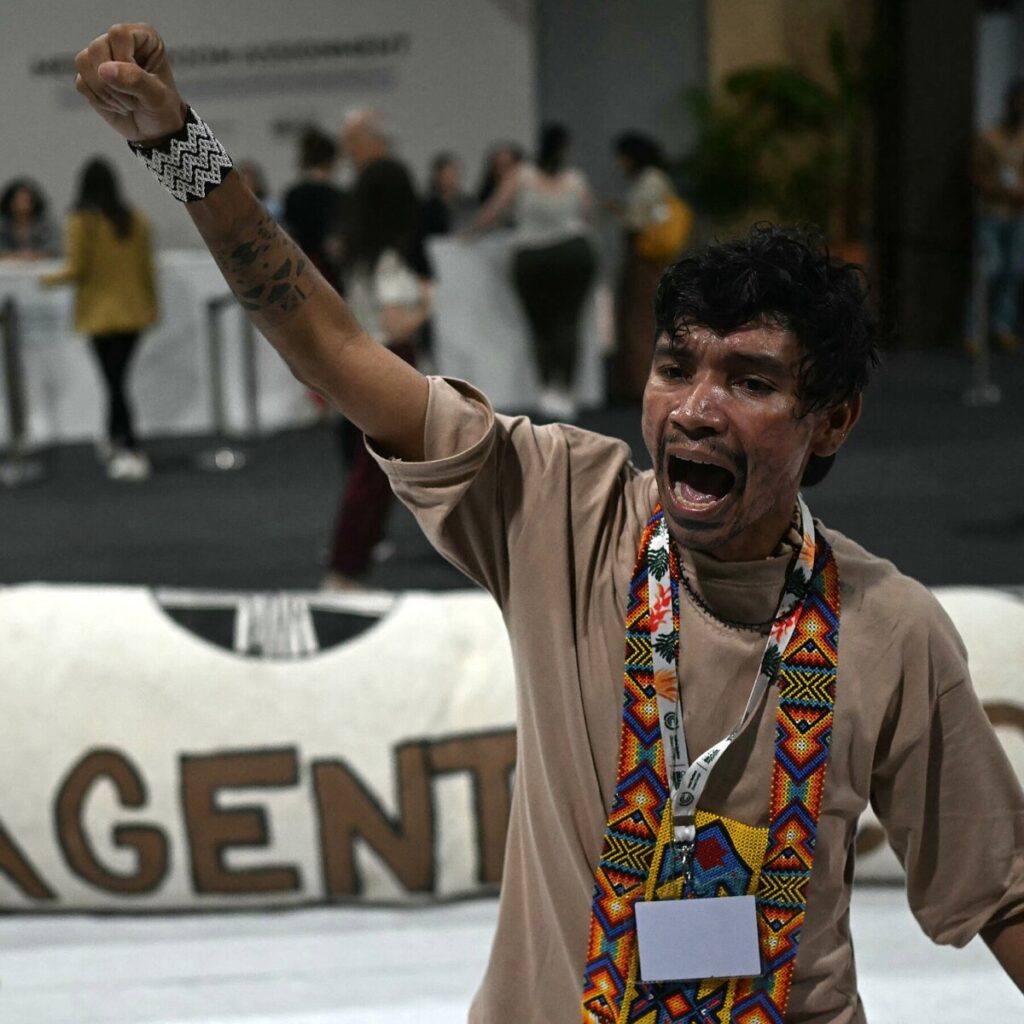
On Thursday, Belém, Brazil, became the epicenter of a powerful Indigenous rights demonstration that captured the attention of the nation and beyond. Organized by Indigenous leaders and activists, the event aimed to raise awareness about the ongoing struggles faced by Indigenous communities in Brazil, particularly in the context of environmental degradation and land rights. The demonstration featured a striking prop—a large, symbolic snake—representing both the challenges and resilience of Indigenous peoples in the face of encroaching development and exploitation of their ancestral lands. This visual metaphor resonated deeply with the crowd, emphasizing the interconnectedness of nature, culture, and the fight for justice.
The backdrop of this demonstration is critical, as Brazil has seen a surge in deforestation and land conflicts in recent years, exacerbated by government policies that prioritize agribusiness and mining over Indigenous rights. Activists highlighted the alarming rates of deforestation in the Amazon, which not only threaten biodiversity but also the livelihoods and cultures of Indigenous peoples who have stewarded these lands for generations. The snake, often associated with wisdom and transformation in various Indigenous cultures, served as a reminder of the need for a profound change in how society values and protects these vital ecosystems. By bringing attention to their plight, the demonstrators called for solidarity and support from the broader community, urging citizens to recognize the importance of Indigenous rights in the fight against climate change and environmental destruction.
This demonstration is part of a larger movement across Brazil and Latin America, where Indigenous communities are increasingly vocal about their rights and the need for sustainable practices that honor their traditional knowledge. As Brazil prepares for significant policy discussions on environmental protection and land rights, the voices of Indigenous peoples are more crucial than ever. The event in Belém is not just a local protest; it is part of a global call to action, reminding us that the fight for Indigenous rights is intrinsically linked to the health of our planet. The snake, as a powerful symbol, encapsulates the urgency of this movement, urging all of us to reflect on our relationship with nature and the imperative of supporting Indigenous sovereignty.
An Indigenous rights demonstration on Thursday in Belém, Brazil. The snake in the background was a prop with a meaning.


