Black student unions are under pressure – here’s what they do and how they help Black students find community
In recent years, Black student unions (BSUs) have faced unprecedented challenges, particularly in states like Utah and Alabama, where anti-diversity, equity, and inclusion laws have led to significant cuts in institutional support, funding, and campus space. These unions, which have been pivotal for Black college students for over six decades, are now grappling with the ramifications of a political climate that increasingly marginalizes their existence. Originally born out of the Black Campus Movement in the late 1960s, BSUs were created to advocate for the needs and rights of Black students, providing a sense of community and belonging in predominantly white academic environments. However, recent policy shifts have stripped these organizations of crucial resources, forcing student leaders to fill the gaps left by diminishing support from their universities.
The implications of these cuts are profound. With funding for events, meetings, and advocacy efforts drying up, BSUs are now expected to operate without the financial backing that once allowed them to flourish. This shift not only threatens the vitality of these unions but also places an undue burden on student leaders, who often find themselves engaging in unpaid labor to maintain community and support services for their peers. For example, universities have been known to leverage the visibility of Black student leaders for promotional purposes, showcasing diversity without adequately investing in the infrastructure that supports it. This dynamic highlights a troubling trend where Black students are utilized to enhance a university’s image while simultaneously being denied the resources necessary for their own success and well-being.
As Black student unions navigate this new landscape, they continue to embody resilience and creativity in advocating for their communities. Despite the challenges, these organizations remain a crucial lifeline for Black students, fostering a sense of belonging and engagement on campus. The ongoing struggle for recognition and support underscores a larger narrative about the value placed on Black student experiences in higher education. As institutions grapple with their priorities, the future of BSUs will depend on their ability to adapt and find new ways to advocate for their needs, ensuring that they continue to serve as vital spaces for Black student life and community building.
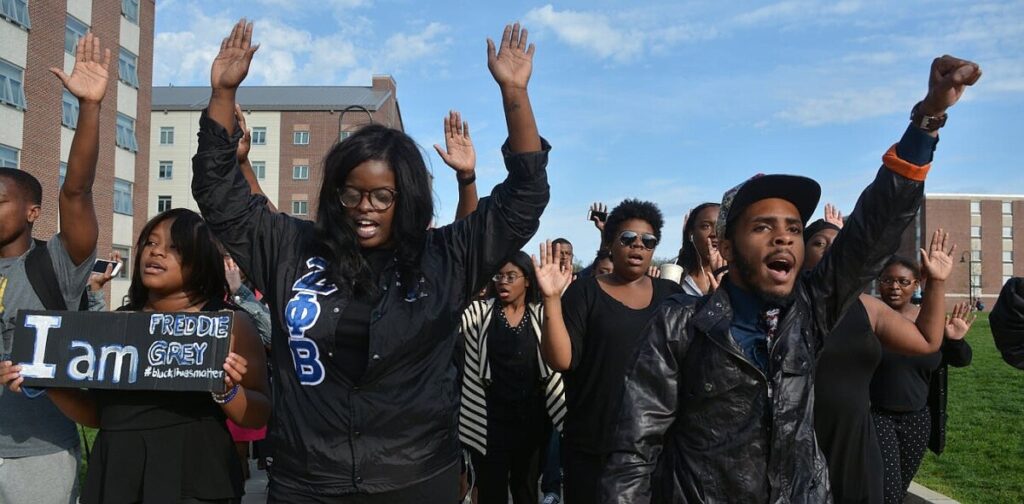
Members of the Black Student Union at Kutztown University in Kutztown, Pa., march in a protest in April 2015.
Ben Hasty/MediaNews Group/Reading Eagle via Getty Images
Black student unions have been a vital part of many Black college students’ lives for more than 60 years. But since 2024, Black student unions have lost their institutional support, campus space and funding with the rise of anti-diversity, equity and inclusion laws
in Utah
and Alabama
.
Black student unions now face a new wave of pressure, as
more than 400 colleges
and universities under the Trump administration have rebranded or eliminated programs and centers that promote diversity, equity and inclusion.
Amy Lieberman, education editor at The Conversation U.S., spoke with
Antar A. Tichavakunda
, a scholar of race and higher education, to better understand what Black student unions are and how they influence Black students’ experiences in higher education.
Members of the Black Student Union at Johns Hopkins University pose for a portrait in Baltimore in 2004.
JHU Sheridan Libraries/Gado/Getty Images
Why are Black student unions important, particularly for Black students?
Aside from Black fraternities and sororities, Black student unions were among the first ethnic student organizations at colleges to be established. A group of students started the first Black student union in 1968 at San Francisco State University. This happened during the
Black Campus Movement
, when Black college students advocated for themselves, making demands for resources, respect, spaces and programs to
support Black student life
. At the time,
Mariana Waddy
, a student at San Francisco State University and the first president of a Black student union, said, “This college had done little for Black students except try to whitewash them.”
Black students wanted to make the school more engaging and responsive to their needs.
Today, these student unions are essential for Black student life on college campuses. They offer a place of belonging, where Black students can figuratively exhale from a predominately white campus or student environment. Black student life on campus isn’t a given – just because there are Black students, it doesn’t mean there is a Black student community. These unions allow Black students to come together as a community.
What do these unions look like and do, day to day?
Black student unions largely operate independently. They have various events, like cookouts and parties. If a campus is dealing with an issue or some kind of racist occurrence, for example, Black student union leaders will come to the forefront to be an advocate for Black students. They try to engage with students and university leaders on whatever is happening.
How are political pressure and policy shifts influencing these unions?
The
University of Utah
and the
University of Alabama
announced in 2024
that they would no longer fund or support their schools’ Black student unions. Universities typically give these unions a certain amount of money, as they do with other student-led groups. With this funding pulled, it is going to make it harder for Black student unions to exist. Where are they going to meet? Will they have to pay for a place to meet off campus?
And if you want to encourage students to come to Black student events, you will likely want to have food for them. If you want to arrange a trip to a conference or host a movie night, those things cost money and require space.
These cuts have drained time, energy and resources from Black student unions.
Now,
Black student leaders
are
filling gaps
where funding, staff, spaces and infrastructure used to exist to support and meet the needs of Black student life.
The Trump
administration’s attempts
to
remove funding
from and shut down diversity, equity and inclusion programs could lead Black student union leaders to act as
unpaid diversity workers
if and when these positions at universities are eliminated.
This work also involves organizing social events and support services for Black students. It means continuing to creatively advocate for Black student needs.
Full-time students leading Black student unions now find themselves doing unpaid labor that helps sustain Black communities and the universities that profit from them.
How exactly are universities profiting from Black student unions’ work?
Here’s one example:
I observed
a university tapping student leaders from a Black engineering group to represent the university’s school of engineering at public events. These leaders might have had to skip class or lose study time to be available for this event. But the university wanted other people, including prospective Black students, to know that there were already Black students at this school.
Black students in these positions have mentioned to me that sometimes administrators will pressure them to show up for panels and other events as a form of marketing. I think most of these requests are well-meaning. But I also know that Black student representatives and leaders place pressure on themselves to also show up for their community and school.
Their presence and visibility help universities have a more welcoming environment. They have an active, vibrant community because of Black student unions and leaders. Organizations like this create community and lead to more positive experiences for students. This
joy can lead
to more students staying in school.
If I am a Black parent touring a college with my child and don’t see any Black students participating in the tour or on campus, that sends a message to a prospective Black student – will I, or my child, belong here?
What message are Black student unions receiving with these policy shifts?
I think the message to Black student unions is that you all have to fend for yourselves. That is what inequality is all about, having different expectations for different students.
Cuts to diversity, equity and inclusion work signals to Black students that they are not valued and that, if they want to have meaningful experiences as a Black student community, they will have to do this work themselves. You can discern an institution’s values in their budget priorities. If there is nothing being materially invested in Black students, how can you say you support them?
My research shows that Black students act independently to achieve their goals. They create
places of joy
and belonging
for themselves and others,
navigating institutions
to create full, dynamic lives.
Black students have historically played the cards they were dealt, even if they were inequitable. They have worked to create traditions and lives within and outside of higher education’s campus walls. Some Black student unions may look different going forward, but I have full faith they will continue.
Antar A. Tichavakunda does not work for, consult, own shares in or receive funding from any company or organization that would benefit from this article, and has disclosed no relevant affiliations beyond their academic appointment.


