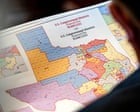
Supreme court blocks order that found Texas congressional map was likely racially biased
In a significant development regarding congressional redistricting in Texas, the U.S. Supreme Court has issued a temporary stay on a lower court ruling that deemed the state’s 2026 congressional map likely discriminatory based on race. This ruling, which was initially handed down by a federal district court, found that the redistricting plan, heavily influenced by former President Donald Trump and the Republican Party, could potentially dilute the voting power of minority groups. The Supreme Court’s order, signed by Justice Samuel Alito, effectively pauses the enforcement of the lower court’s decision while the justices deliberate on whether to permit the new congressional map to be utilized in the upcoming midterm elections.
The implications of this ruling are profound, as the new congressional map is considered advantageous for Republicans, potentially reshaping the political landscape ahead of the elections. The controversy surrounding redistricting in Texas is not new; it has been a contentious issue for years, often leading to allegations of gerrymandering—where district boundaries are manipulated to favor one party over another. Critics argue that the proposed map would unfairly diminish the electoral influence of communities of color, particularly in areas where demographic shifts have occurred. As the Supreme Court weighs its options, the temporary hold on the lower court’s ruling leaves Texas in a state of uncertainty regarding its electoral framework, raising questions about fairness and representation in the democratic process.
This case highlights the ongoing national debate over how electoral districts are drawn and the extent to which race and political affiliation influence these decisions. The Supreme Court’s eventual ruling could set a precedent for similar cases across the country, making it a pivotal moment not only for Texas but for the broader landscape of American politics. As the court considers its next steps, stakeholders on both sides of the aisle are closely monitoring the situation, aware that the outcome could have lasting ramifications for the balance of power in Congress and the integrity of the electoral process itself.
Temporary hold on lower court ruling will remain in place while supreme court considers whether to allow new map
The
US supreme court
on Friday temporarily blocked a lower court ruling that found Texas’s 2026 congressional redistricting plan pushed by
Donald Trump
likely discriminated on the basis of race.
The order, signed by Justice Samuel Alito, will remain in place at least for the next few days while the court considers whether to allow the new map, which is favorable to Republicans, to be used in the midterm elections.
Continue reading…


