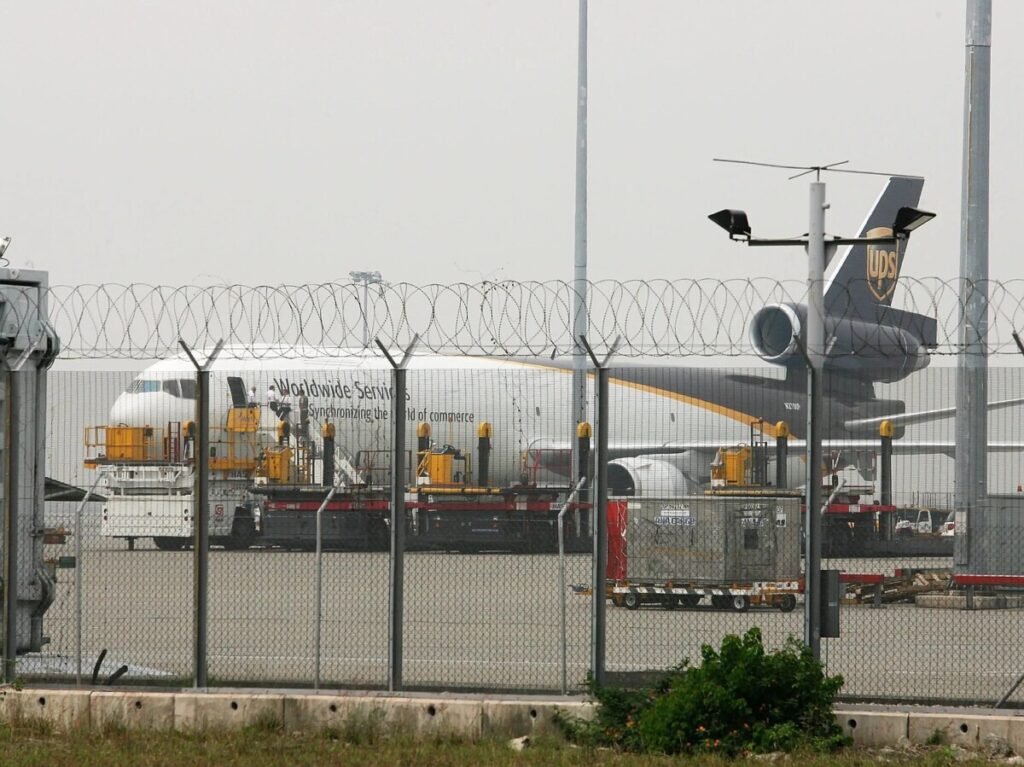
The initial investigation into the UPS plane crash shows similarities to a much-deadlier 1979 crash
The recent crash of a UPS cargo jet in Louisville, Kentucky, which tragically claimed the lives of 14 individuals, including three crew members and 11 people on the ground, has been linked to metal fatigue in the engine hardware. A preliminary report from the National Transportation Safety Board (NTSB) revealed that the engine, manufactured by General Electric, detached from the aircraft’s wing during takeoff due to fatigue cracks and overstress failures in the engine’s attachment hardware. The incident, which occurred as the plane attempted to take off for Honolulu, led to a catastrophic series of events, with the aircraft hitting a UPS warehouse and several other structures before being engulfed in flames.
In the wake of the crash, the Federal Aviation Administration (FAA) promptly grounded the entire MD-11 fleet, which is utilized by both UPS and FedEx. This incident has raised significant concerns about the safety of older aircraft, as the MD-11 involved was a 34-year-old model that had been in service since 1991. While crashes attributed to metal fatigue are infrequent, historical precedents highlight the potential dangers; for instance, the devastating 1979 crash of American Airlines Flight 191, which resulted in 273 fatalities after an engine detached during takeoff. More recently, incidents involving Southwest Airlines have underscored the risks associated with engine failures linked to metal fatigue.
As the NTSB continues its investigation into this tragic event, the findings serve as a stark reminder of the importance of rigorous maintenance and safety protocols in aviation. The thorough examination of the wreckage, including detailed frame-by-frame analysis, aims to provide crucial insights into the factors that led to this disaster. The aviation community is closely monitoring developments, as the implications of this investigation could lead to significant changes in operational procedures and regulations for aging aircraft fleets.
https://www.youtube.com/watch?v=CTjIGTd75eg
An NTSB probe found that the engine of the plane came off its wing because of metal fatigue and stress in the hardware.
Robert Ng/South China Morning Post via Getty Images
The NTSB says the UPS plane crash in Louisville was caused by metal fatigue in the engine hardware.
The crash killed 14 people and led to the grounding of the MD-11 fleet by the FAA.
Metal fatigue-related plane crashes are rare but have occurred in previous airline incidents.
A federal investigation into the crash of a
UPS cargo jet
that killed 14 people in Louisville, Kentucky, earlier this month found that the engine of the plane came off its wing because of metal fatigue and hardware stress.
A preliminary accident report published by the National Transportation Safety Board on Thursday showed frame-by-frame images of the General Electric-made
engine completely coming off
and then smashing into the body of the Honolulu-bound plane as the aircraft took off. It also included photos of the wreckage being studied in the NTSB lab.
The probe “found evidence of fatigue cracks in addition to areas of overstress failure” in a part that attached the McDonnell Douglas MD-11 freighter’s left engine to the wing, the report said.
The three crew members on the plane and 11 people on the ground were killed, the report said. Another 23 people on the ground were injured. The
plane crash
left a trail of destruction in an industrial area near Louisville’s Muhammad Ali International Airport, satellite images in the report showed.
The report added that the plane initially climbed to about 30 feet above ground and cleared a fence at the end of a runway before its main landing gear hit the roof of a UPS warehouse at the edge of the airport. The plane then hit a storage yard and two other buildings, including a petroleum recycling facility, and was mostly consumed by fire.
Metal fatigue crashes
The MD-11 involved was a 34-year-old tri-engine widebody jet that was first delivered to Thai Airways in 1991, before being acquired by UPS in 2006. Boeing merged with McDonnell Douglas in 1997.
The Federal Aviation Administration grounded the MD11 fleet, which UPS and FedEx use, in the wake of the crash.
Plane crashes caused by metal fatigue are rare, but similar accidents have occurred before.
Thursday’s report referenced a similar but much deadlier crash in 1979. American Airlines flight 191, a McDonnell-Douglas DC-10-10 aircraft, crashed into an open field at the end of a runway at Chicago-O’Hare International Airport.
During takeoff, the left engine on the left wing separated from the airplane and fell onto the runway. The airplane was destroyed in the crash and subsequent fire, and 273 people, including two people on the ground, were killed.
More recently, in 2018, Southwest Airlines Flight 1380 experienced an uncontained engine failure in the left engine after departing from New York’s LaGuardia Airport en route to Dallas. The incident killed a window seat passenger.
In 2016, a Southwest flight blew an engine as it flew from New Orleans to Orlando, and shrapnel tore a five-by-16-inch hole just above the wing. The plane landed safely. The NTSB said a fan blade had broken off because of metal fatigue.
In Thursday’s report, the NTSB said its investigation of UPS flight 2976 is ongoing.
Read the original article on
Business Insider