The End of the American Empire
In the latest episode of *The David Frum Show*, David Frum delves into the implications of recent gifts given to former President Donald Trump by the Swiss government, likening the situation to historical instances of powerful leaders currying favor through lavish presents. Frum highlights a personalized Rolex desk clock and a solid gold bar inscribed with Trump’s presidential terms, which were presented during a delegation visit to Washington, D.C. He argues that these gifts are emblematic of a troubling trend where foreign nations seek to influence U.S. policy through personal favors, reflecting a departure from traditional diplomatic norms and the United States’ role as a global leader. This shift, he suggests, positions the U.S. more like an “extractive predator state,” where foreign policy is dictated by personal relationships rather than principles or international consensus.
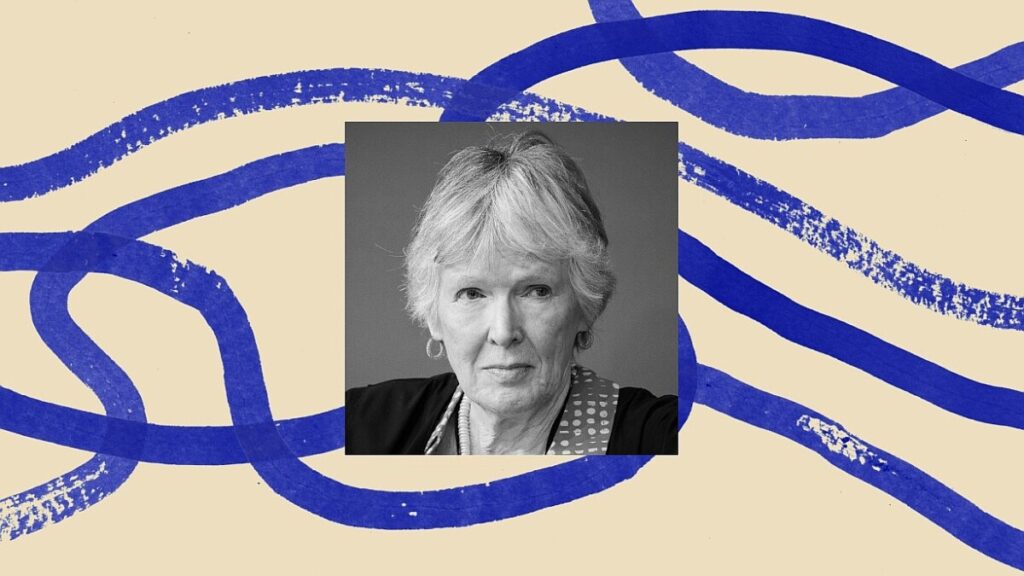
Frum is joined by historian Margaret MacMillan, who discusses the concept of a “post-American” world order, exploring the ramifications of the U.S.’s retreat from its historical leadership role. They examine how Trump’s presidency has redefined American foreign relations, moving away from a system based on mutual respect and collaboration towards one characterized by unilateral actions and self-interest. MacMillan emphasizes the dangers of this new approach, warning that without adherence to international norms and cooperation with allies, the U.S. risks becoming reminiscent of past empires that operated through coercion rather than consent. The conversation culminates in a poignant reflection on the changing nature of American identity and the potential consequences for global stability, particularly in regions like Latin America and beyond, where the absence of U.S. influence may lead to increased volatility and the rise of alternative powers.
In a thoughtful conclusion, Frum shares insights from Charles Dickens’ *The Old Curiosity Shop*, using the narrative to explore themes of grief and the enduring impact of loss. He draws parallels between the emotional weight of Dickens’ characters and the current state of American society, suggesting that the U.S. must reckon with its evolving identity in a world that increasingly views it through a lens of skepticism rather than admiration. The episode serves as a reminder of the complexities of power, the importance of historical context in understanding contemporary issues, and the need for a renewed commitment to the ideals that once defined American leadership on the global stage.
https://www.youtube.com/watch?v=jb_2J7-Es6g
Subscribe here:
Apple Podcasts
|
Spotify
|
YouTube
On this episode of
The David Frum Show
,
The Atlantic
’s David Frum opens with his thoughts on the recent gifts given to President Donald Trump by the Swiss government. He argues that the incident is yet another example of Trump’s favor being won through personal gifts and another sign of how his administration has forced the United States to abandon its traditional leadership role in the global order, reshaping American foreign policy into something closer to that of an extractive predator state.
David is then joined by Margaret MacMillan, emeritus professor of history at the University of Toronto and emeritus professor of international history at Oxford University, for a conversation about what a “post-American” world order might look like. They examine the United States’ retreat from global leadership under Trump, and consider whether the U.S. functions as an empire and whether that empire is now in decline
Finally, David closes with a discussion of what Charles Dickens’
The Old Curiosity Shop
can teach us about grief.
The following is a transcript of the episode:
David Frum:
Hello, and welcome to
The David Frum Show
. I’m David Frum, a staff writer at
The Atlantic
. My guest this week will be Margaret MacMillan, the eminent historian and scholar of international relations. Our topic is the end of the American empire. My book this week will be
The Old Curiosity Shop
, by Charles Dickens, and I hope you’ll stay to the end of the program to hear that discussion. But first, some preliminary thoughts on some recent events.
I’m going to open with an ancient story that has, I think, some points of familiarity with modern-day Americans. I think you’ll see what I mean as I go along. Well, let me start with the story. In the year 448 of this era, a Roman writer named Priscus accompanied his friend Maximin on an embassy to the camp of Attila the Hun. They were sent by the Roman emperor Theodosius the II, who reigned in Constantinople, the capital of the eastern domains of the Roman Empire. And they were sent on a mission laden with lavish gifts for the benefit of Attila: There was gold. There was silver. There were spices. There were silks. There was all the wealth of the highly developed Roman realms, all on their way to the Cross Danubian camp of the terrifying barbarian chief.
Now, at the time, 448, Attila commanded probably the most formidable military force on the entire European continent. It had ravaged the domains of the Western Romans, and the Eastern Romans were terrified that this weapon would be turned on them. And so they sent the gifts to propitiate Attila—as I said, gold, silks, spices, everything you could want. Priscus recorded his recollections of the visit, and that recording still survives; you can read it online to this day. He described what it was like to meet Attila, to watch Attila eat, and he described delivering—he described his friend, rather, Maximin, delivering a letter from the Roman emperor full of good wishes for Attila’s health and prosperity, and pleading for Attila’s grace and favor, a humiliating thing for a Roman emperor but necessary under the circumstances.
As I say, all of this is recorded, and it came to mind when I read the
story
in
Axios
of the government of Switzerland sending a delegation to Washington, D.C., bearing gifts for President Donald Trump: a personalized Rolex desk clock; a solid gold bar, apparently a kilogram in weight, worth $130,000, inscribed with the numbers 45 and 47, so it was the two terms of Donald Trump’s presidency, so personalized to Donald Trump, the gold bar—nice touch if you’re Swiss. And profusions of flattery and good wishes from the government of Switzerland to Donald Trump.
And, as with Attila, it paid off. Shortly afterwards, it was announced that the American tariff imposed by Donald Trump on Swiss goods would be cut from 39 percent to 15 percent. So if you enjoy your coffee in Nespresso pods, good news for you: The tariff on Nespresso pods will drop. Other Swiss goods—chocolate, watches—those will all be cut too. And good news for Switzerland, good news for American buyers of Swiss goods, good news for the world economy.
But as I read the story and recalled Priscus’s visit to Attila, I found myself wondering,
What do the Swiss really think after they buy Donald Trump’s favor with a clock and a gold bar?
Switzerland is a highly developed country with strict rules and standards of behavior. Swiss government officials do not accept gifts. They don’t take gold bars. I don’t know much about Swiss law, but I’m guessing that that would be frowned on by Swiss rules and by Swiss public opinion; they would not accept that
their
government accept these kinds of lavish personal presents. But in the United States, it seems to be okay. Does Switzerland respect the United States more after buying Donald Trump’s favor with a gold brick, or does it respect it less? Is there—as there was with Priscus’s account of the visit to Attila—a kind of quaint, mixed with the fear, certain condescension and contempt of people of a superior cultural level to people of a lower cultural level: barbarians who accept bribes?
Now, the theory of the gift to Donald Trump is that these gifts, the gold bar and the clock, will someday go to the Donald [J.] Trump Presidential Library, and that makes them legal. Remember, the United States Constitution forbids presidents—forbids anyone, but forbids presidents—to accept gifts from foreign powers, except with the express consent of Congress. And, of course, there are all kinds of anti-corruption statutes that apply even to the president where he can’t take bribes and gifts. But the library has become a loophole, and it’s to the library that, for example, the jumbo jet that the government of Qatar has given Donald Trump is supposedly going to go.
When people heard about the gift of the jet from Qatar to the library—when people who wish to defend Donald Trump, that is—they recalled that there’s an old Air Force One in the Reagan Library in California. But that Air Force One, which was the plane flown by presidents from John F. Kennedy to Ronald Reagan, was decommissioned; it doesn’t fly anymore. It’s on the ground, and tourists can enter and walk around and see it as it was, but it can’t be used anymore. It can’t fly. But the jet that the Qataris are going to give Donald Trump to his library is apparently going to remain operational. And the idea is, yeah, it will belong to the Trump so-called library, but Trump will be able—and his heirs, in their turn—to fly around in it and to use it until such time as it too ultimately meets whatever fate it has. But for now, it’s an operational airplane that has been given to the library, along with the gold bar, along with all the other benefits that are sluicing through Washington.
The
New York Times
recently
reported
that Pakistan had bought itself a lot of goodwill and a lower tariff rate than India by splashing benefits around the Trump circle. There’s just money upon money, gift upon gift flowing from all the allies and all the dependents of the United States into Trump’s Washington, making many people very comfortable and some very rich.
This is not how a Republican system of government is supposed to work. As I said, the Constitution contemplated this fate and tried to forbid it. But that provision, like so many others, has just gone out the window. And it’s also illegal for the president to impose tariffs. Tariffs belong to Congress. And it’s also illegal for the president to withhold money that Congress has appropriated. The Supreme Court has ruled that the president cannot refuse to spend money that Congress appropriated. He cannot withhold the funds. He cannot pocket veto them. That’s the law—in the same way that Donald Trump cannot spend money, he cannot say,
I’m taking this money from the tariffs and giving it to the farmers or whoever else I like
.
That’s a power of the purse; that belongs to Congress—or, at least, that’s what the Constitution says. That’s what it used to be. But, as I said, with the gifts, with the tariffs, the emoluments, all of it out the window. It’s a different kind of regime.
The theme this week is the end of the American empire. And what I mean by that is not that the United States is diminishing so very rapidly in power and wealth. But the United States has always been something more than a system based on power and wealth. It’s been an idea in the minds of people. It symbolized something. And that something has been very important and very powerful—it’s part of the power and wealth of the United States, but it’s also bigger than wealth or power. There’s a kind of belief that people all over the world have had. It’s a reason why people migrate to the United States. It’s a reason why people who are not Americans still look to the United States with trust and hope when they get in trouble and they need protection against aggression or violence or domination. There’s something about America that is supposed to mean more. It’s an idea in the minds of human beings, not just battalions and divisions and entries in a Federal Reserve credit book.
The United States is, right now, amassing in the Caribbean the largest military force, naval force, seen in that sea since, apparently, the Cuban missile crisis—or so it’s reported. Apparently, President Trump contemplates deploying this power in some way against Venezuela, a dictatorship under a crooked leader, for sure—Nicolas Maduro—that’s involved in all kinds of bad activities, from money laundering to drug smuggling; associated with Cuba and with Russia. And it is hated by its own people. There’s a lot of reasons why the United States would regard Venezuela as a legitimate object of concern.
But a military expedition against Venezuela would require, normally—again, on the same theory that the president’s not supposed to take gifts—it would require the consent of Congress, and it would be wise and well for the United States to mobilize regional allies to join with it in any project involving Venezuela. The United States has always advertised itself as something more than just another big power that throws its weight around. It represents some idea of international law and consensus, and to demonstrate that, to make that vivid, when it deploys power on a large scale, it does so in association with others. The allies are there both because they bear risks and pay costs, but also because they create a legitimacy and so show,
This is not just one powerful country or one powerful man acting out its wishes; this is some kind of representation of a consensus of many nations
.
I think we would all have one view of what was happening in Venezuela if, right now, President Trump had gone to Congress and obtained some kind of authorization, had assembled Colombia and Mexico and Brazil and other regional neighbors to cooperate with the United States—whether they sent literal military forces or not, that they would have some stake. And if he were explaining his plan for the future of Venezuela, some system of moving toward elections, recognizing some kind of legitimacy, creating some kind of path of development so that the many millions of Venezuelans who have had to flee their country—the single largest number of them in Colombia, but in other countries too—could hope to return home, and a way to forge or rebuild a democratic and successful Venezuela for the future.
The plan seems to be just to either hit them from the air, probably, or intimidate them into replacing Maduro with the next thug in line—no elections, no authorization, no plan, no consent by neighbors, just an expression of dominance and force, as if the United States were some imperial power of the past, exercising gunboat diplomacy to replace this dictator, who’s obnoxious to the gold-bar-receiving president of the United States with another dictator less obnoxious to the gold-bar-receiving president of the United States. That’s a change in what America was, and it’s something that everybody has to accommodate in their thinking.
When Donald Trump was elected the first time, friends of the United States could say,
Well, that was kind of a fluke. It was a good run
.
And the American people wanted Hillary Clinton—that’s pretty clear; she won by a big margin. Had Hillary Clinton won the Electoral College, the popular-vote margin would not have been considered an especially close one. But the system is ancient and glitchy, and it produced this one weird result. But the American people spoke in the congressional elections of 2018. They replaced Trump’s party in the House with a Democratic majority, and then they ejected Trump himself in 2020. Everybody can breathe a deep sigh and get back to normal
.
But it happened again. It happened a second time, and this time with a popular vote back behind it. And everybody—whether they wish America well or ill—has to accept this is really an expression of some kind of American preference, and if it happened twice, it can happen three times. And the whole world has to adjust to a new kind of United States, where the president takes gold bars, where the president’s administration is perforated and permeated by foreign gift giving, and where power is used without much regard to what the formal letter of the Constitution says, and where power can be used—or military power can be deployed—without Congress, without allies to replace one dictator with another dictator at the whim and wish of the president of the United States. It’s a different kind of country.
So regardless of whether or not American power, in any objective sense, is ebbing or waxing or waning, it’s clear the American idea is ebbing. What America meant, what it means is ebbing and changing and evolving, and the United States is becoming something a little less special and a lot more like, well, like empires past.
When Attila died in 453—he died five years after the meeting with Priscus. The Huns left nothing behind. There are no buildings. There’re not even any documents. We don’t even really know exactly what language they spoke. There was a language called Hunnic that people refer to, but whether it was Turkish in origin or Mongol or what, no one really knows because they wrote nothing down. There are no cultural remains. There are no achievements of the Hunnic empire. It was just a system of attack, aggression, domination, exploitation, predation, and then Attila died, and the whole thing fell apart, and he’s gone, dead. That’s it. Nothing more to say about the Huns.
The mark of a civilization is that it does leave something behind. It creates in its time and then it leaves behind something better for others to build upon. That’s what we thought the United States was: not some extractive regime like Attila’s, but an ongoing civilization committed to ideals, of which democracy was one, but many others—respect for the decent opinion of mankind. It’s in the Declaration of Independence that the United States would show respect for the opinions of others, and that was said when the United States was small and weak, but it remained a factor in American thinking even as the United States became great and powerful: respect for the opinion of mankind. If you’re going to invade somebody, you do it with some idea of making the situation better. You do it with the permission of your Congress. You do it in association with allies. You do it with a clear vision of the end state. Otherwise, you’re just another vanished historical predator.
I don’t think literally the United States is an empire, exactly, and I don’t think it’s on its way out, exactly. But it’s changing into something I don’t recognize anymore, and I think a lot of people feel the same way. I grew up in Canada, where the United States represented a powerful ideal of security and something to admire, something you could rely upon. I don’t think there are many Canadians who feel that now. I don’t think there are many Danes who feel that now. I don’t think there are many true friends of America who feel it now. But I think there are a lot of enemies of the United States that feel relieved and grateful that the United States no longer pretends to be more, but has agreed under Donald Trump to be less—hence the gold bar: useless, shiny, gonna be put in a vault somewhere, not do anything except endure as a kind of memento of shame and disgrace of this once so admired, gleaming democracy.
And now my dialogue with Margaret MacMillan. But first, a quick break.
[
Break
]
Frum:
Margaret MacMillan is one of the modern world’s leading historians of war and peace. Many will know her from her best-selling books about the beginning and the end of the First World War, [
The War That Ended Peace:
]
The Road to 1914
and
Paris 1919:
[
Six Months That Changed the World
]. She has also written important histories of global conflict, of women in British India, and of the [Richard] Nixon–Mao Zedong relationship as well.
Margaret MacMillan has divided her career between her native Canada and the United Kingdom, where she served, among many distinguished roles, as warden of St. Antony’s College at Oxford University. I’m very grateful and delighted to welcome her today to
The David Frum Show
.
Thank you, Margaret.
Margaret MacMillan:
Well, thank you too.
Frum:
Let me start by taking us all back on 101 International Relations. The lesson that we all thought we had learned from historians like you about the 20th century is that we tried to put together a stable peace in 1919 without the United States—well, they didn’t know it was going to be without the United States, but that’s the way it turned out. And that project completely failed: the Great Depression, Second World War. And the lesson that leaders of the world took from the Second World War is that stable peace depends on American presence. And that lesson held for, by international-relations standards, a reasonably long time, but it seems to be becoming unstuck now.
In the Obama years, there was a phrase that went round about a “post-American world.” And the idea there was: that would be a post-American world because India and China and others would get so big and powerful that they would overtake the United States. What no one ever seemed to contemplate was a return to your Paris 1919 situation and a post-American world because America withdrew. Can you reflect on that experience, the comparisons then and now, and what lessons we ought to have learned and seem to be failing to learn?
MacMillan:
Well, I suppose what we should always remember is that any international order or any international system is only as good as the parties in it. And so, unless you have the most powerful nations in the world willing to support a stable international order, you’re in trouble.
And I think where the League of Nations did have problems—I wouldn’t agree with you it was a complete failure; I think it did actually do some very good things—but where it was in trouble was that it didn’t have the United States in it, and it also, for a long time, didn’t have the Soviet Union—two very big powers, indeed.
And the Second World War, I think, brought a recognition that, if you wanna build an international organization and an international order, then you’ve gotta get the good powers in if you possibly can. And so the United States under President Franklin Delano Roosevelt was very determined to get the United States in, to win over American public opinion, to get the United States into the United Nations and all the Bretton Woods organizations, but also to get the Soviet Union in. And I think that’s what helped to make the post–World War II system work better, that there was a commitment by the big powers, and eventually, of course, Communist China came in as well.
Frum:
We do seem to have, in the present day, a kind of American abdication, an American withdrawal, not just from a role in the system, but also from the rules of the system. Right now, we’re poised on, apparently, the verge of a United States war on Venezuela with no authorization by Congress, no partners, no allies, no real stated cause of the war, and no idea of what the United States hopes to achieve. It’s just acting like a pirate state. And again, it may all fizzle out, but it looks like there’s a kind of completely roleless, ruleless American war coming.
MacMillan:
I think you’re expressing very much what I feel as well: that the United States is playing a role which we didn’t expect it would play, because it has, in fact, played a very significant role in keeping a world order. And we don’t have to agree with everything it’s done—and I wouldn’t agree with everything it’s done since 1945—but it’s been key in keeping the world on an even keel. And I think what’s been very important is that the United States and other powers have obeyed the rules; there are international treaties, international laws, international conventions. They’ve also followed the norms, that nations behave in certain ways if they’re responsible and don’t behave in other ways. And we now see a United States, under this present administration, which really doesn’t seem to care about any of that, that makes its own rules, breaks whatever norms and rules and ignores whatever values it doesn’t like.
And once you get a great power doing that, perhaps the key power in the international system, then others will follow along. And we’ve already seen Russia beginning to abdicate any responsibility for the international order, beginning to break the rules, beginning to invade its neighbors. And we’re now seeing a United States which I don’t think is planning to invade its neighbors anytime soon, but is certainly not upholding a system where everyone is expected to obey the rules, and I find this very dangerous indeed. And in the case of Venezuela, it’s not at all clear what the United States wants to do—that’s the other worrying thing: What is their purpose, and what is their goal, and what are their plans? Very unclear.
Frum:
Yeah. Well, a caveat to the question about not attacking their neighbors: Greenland isn’t literally a neighbor of the United States, but there does seem to be a fairly developed plan to attack Greenland. I’m guessing that, as experienced players of the board game Risk know, that to secure North America, you need Venezuela, Greenland, and Kamchatka, so the pattern here is going to be a little disturbing if we find ourselves at war with Kamchatka. There are American troops in Greenland, under NATO arrangement, but the United States wants more and more and more, and aggression against Greenland would be a very feasible project.
MacMillan:
I don’t see the point of it myself, because the United States can get everything from Greenland that it wants. It’s had a base there since the end of the Second World War.
In fact, it used to have more bases, but it closed a couple of them down. It can get whatever minerals it wants from Greenland. The Danish government, I think, is very willing to work with the United States. The Greenlanders themselves, I think, have made it very fairly clear in the last election that they don’t want to become part of another empire. They would rather come out of the Danish empire and have their independence, but they certainly don’t wanna be part of an American empire. And what I find about a lot of the Trump administration’s policies is I just don’t get the point. I don’t see what they’re gaining from the actions they’re taking. In fact, if anything, they’re creating pushback, which is, presumably, not what they want.
Frum:
Yeah. Well, I think, in Greenland, I think I do see a glimmer of what they want. I think the American presence in Greenland goes back
before
the Second World War—it starts before the United States enters the Second World War, in 1941, with the consent of Greenland. Denmark was, of course, occupied by the Nazis, there was a government in exile in Greenland, and they welcomed the American presence in the same way that Iceland welcomed a British presence to keep the northern sea lanes free from Nazi submarines.
But I think the logic I do see is, yeah, you can mine in Greenland, but you’re subject to Danish law, and it’s hard to bribe people in Denmark. Whereas if Greenland were annexed, then mining in Greenland could be subject to American law, and as we see, America has a much looser approach to bribery among its leading officials. (
Laughs
.) That seems to be a motive. But as you say, otherwise, aside from the question of bribery, there’s not a lot of point to it. Greenland is part of Denmark, and Denmark is a country where people can and do successfully do business.
MacMillan:
Well, I think the same thing’s happening with Canada. The United States has always had access to Canadian resources, it’s had a quiet neighbor on its northern border, and we’ve had our disagreements. But why do what the present administration is doing and alienate Canada unnecessarily? I don’t see that this is benefiting the United States. What it is doing is creating a lot of mistrust out there in the world of the United States and its motives. And once you lose trust, I think, it is very difficult to restore it.
Frum:
I think this administration likes the idea of being able to do whatever it wants, regardless of other people. And in fact, that may be the real fun of it. It doesn’t have to make sense; it just has to make the people running the policy feel empowered and dominant. Because in some ways, I think, Trumpism—and this goes back to the points I wanted to ask you about at the beginning—Trumpism is a psychological coping mechanism for feelings of weakness. I talked before about the post-American world concept that was circulating in the 2010s, and the idea then was China and India were going to get so big, America would seem reduced in comparison.
And so Trumpism is about self-assertion, but self-assertion on a much smaller scale, which is: We’re giving up on Asia. We’re giving up on Europe. We’re going to have a Western Hemisphere zone of influence, stretching from Argentina to Greenland, that will be dominated—it’ll run much more like a 19th-century zone of influence than like the American idea of a world order governed by rules. But it will be America’s, and America will otherwise retreat. And the more boastfully America conducts itself, the less people will notice—I think Trump feels, and others around him hope—the less people will notice that America’s actually reducing its position in the world.
MacMillan:
Well, the Chinese will notice, won’t they? And a number of others will notice. And I think you have a China which is spending more and more on defense; which is talking, really, more and more openly about how it sees a future role for China as a dominant power, certainly in East Asia, perhaps further afield; and a China which is, at least as far as we can tell, beginning to surpass the United States in very key technological developments. And so the idea that the United States can sort of pull up the drawbridge, even in the 19th century, that was becoming a rather old idea. And the United States has always been protected by two big oceans, but we are living in a very globalized world, with
highly
advanced weapons that can travel very, very fast, in some cases. The idea that the United States can somehow put a moat around itself, I think, simply doesn’t work anymore. It hasn’t worked, actually, for decades, since the end of the Second World War.
And I think, also, the idea that the United States can have a zone of influence—this whole idea of zones of influence, which seems to be revived now, I think, is a formula for instability because what you get is always the points where the zones meet, and you always get meddling in each other’s zones. If the United States tries to dominate the whole of the Western Hemisphere, I would predict, and I think it wouldn’t be a difficult prediction, that other powers—China, for example, which is already making inroads into Latin America, already building ports, already winning friends and influencing people—will continue to do it. And there will be points at which the Chinese zone of influence—in the Pacific, for example—clashes with the American zone of influence. And so the idea that you can have these neat little boxes and just ignore the rest of the world, it seems to me, is unrealistic.
Frum:
Well, a lot of it comes from too much looking at maps and not a lot enough looking at economic realities. So the idea that Brazil is the largest country in South America, the most powerful. It’s also a major agricultural exporter, like the United States. Its economy isn’t very complementary to the United States; it’s more competitive. If you’re gonna have a Western Hemisphere behind high tariff walls, what does Brazil do for a living? I guess it can sell coffee to the United States, but who takes its soybeans? Who takes its beef? Who takes its other agricultural products? The Americans produce those. And the whole idea of a multilateral free-trade system is you don’t make your partners your prisoners. In a multilateral system, Brazil can be a member of the American security alliance system while still selling its agricultural products to other people who need them, which will not be the United States.
MacMillan:
Yeah. No, I think Brazil is increasingly selling its products to Asia, and certainly, the countries on the West Coast of Latin America are dealing with Asia. I was in Chile fairly recently and met someone there who had a fruit farm, and she told me that most of her products go to China now because the Chinese have an enormous appetite, with their population, for the products of Latin America. And what also the danger of zones of influence, of course, is that the peoples within them don’t always choose to be there and don’t always like it, so not only do you have, always, the threats from outside, the tensions with the other zones of influence, but you also have [an] arrested population who don’t like the fact that they’ve ended up under your domination.
Frum:
Well, that is such an important point; I’m very grateful to you for making it. Because, for those who wanna take pride in the American role in the world, Europe and northwest Asia, Germany, Japan, those are good stories; the Latin American story is not a good story. And even its best chapters aren’t that great, and its worst chapters are some of the darkest chapters in American history and pretty bad even by world standards. You mentioned Chile. The [Augusto] Pinochet coup in 1973, it wasn’t the doing of the United States, but it wasn’t stopped by the United States, and the United States certainly had the power to stop it if it wanted to. And Argentina, possibly even worse, their dictatorship in the ’70s, even worse than the Pinochet—I mean, certainly more crazy. I think the death toll was bigger in Argentina than in Chile, but Argentina’s a bigger population, but there seemed to be a kind of sadism and cruelty and stupidity and insanity to the Argentine program, whereas the Chilean was sort of more cold and ruthless and purposeful, not to make that any kind of justification.
So those are bad chapters, and a lot of them have to do with, as you say, Latin Americans saying,
If this is gonna be a zone of American empire, we want out
.
And the United States saying,
Well, then we will back the people who will lock you in by whatever means they need to lock you in
.
MacMillan:
It’s a very grim prospect, and what will happen in Venezuela? Will Maduro go, and if he goes, will someone even worse take over? There are a lot of very nasty people around him who, presumably, will have some control over the military, or will there be chaos, which won’t benefit the very unfortunate people of Venezuela, who’ve already been through so much torment and through so much poverty, and so much unnecessary poverty? One of the richest countries in the Americas and it’s been reduced to sort of a basket case by incompetent rulers.
But I think what the American policies are doing is reawakening the anti-Americanism which is always there under the surface in Latin America. And sending the gun boats, it’s back to the pre–World War I period, or post–World War I period, where the Americans thought they could bring in Latin America under control by sending in the military. And it didn’t work then, and I don’t think it will work now.
Frum:
Well, while you were in Chile, I was in Mexico last week, and I spoke to a lot of people about the Maduro regime. Now, the present government of Mexico, under President Claudia Sheinbaum [Pardo], is very Castroite, or emotionally—I mean, they run a fairly conservative domestic policy, but there’s a lot of lip service to the glorious ideals of the [Fidel] Castro revolution abroad, and Mexico ships subsidized oil to Cuba to keep it afloat. So the government has, or the leaders of the government have, kind of an emotional connection to Venezuela. But most Mexicans have little love for the Maduro regime, which has sent 8 million or so refugees spilling all over the world. The largest group of Venezuelan refugees are in Colombia, and there’s a big number that ended up in Mexico, as well as, of course, the United States.
But what they’re terrified of is unilateral American action. They want some deference to the concept that the United States respects the other countries of Latin America. If you wanna intervene, do so in a multilateral way, get some buy-in and consent, and reassure everyone that the goal is to restore the Venezuelan democracy that existed before [Hugo] Chávez and Maduro, and not to appoint the next thug in line who will do business with Trump and avoid some of the provocations that Maduro has indulged in.
MacMillan:
Yeah. No, I agree with you completely, and I think we’ve seen, in recent history, regime change doesn’t always go well. I think great powers often have this illusion that, because they’re so powerful, they can control everything. And it’s a temptation and a snare. And you can’t control events once they start to happen on the ground, and you don’t always get the results you want. Look at Afghanistan today. I don’t think any American government would have wanted what’s happened in Afghanistan, but that’s what they’ve got now; they’ve got a Taliban government again.
Frum:
Let’s go back to the year 1919, which seems to be such a mystic turning point. I think one of the things that Americans don’t remember enough about their history—everyone, I think, is taught in high school the story of the U.S. decision not to join the League of Nations. But I don’t think enough people, because it’s a little technical, understand what it meant that the United States, in 1919—or actually, a little later: 1921 and ’23—decided to return to its high-tariff policies that prevailed before the First World War.
Europe was ravaged. Europe needed to export. Europe needed to earn dollars. And the United States said,
No, we are withdrawing
.
And in a way I won’t go into here, for complicated reasons, that isolation triggered both the artificial 1920s boom in the United States, but also the 1930s Depression. And Americans remember the boon, and they think,
Oh, that’s our good policies
.
And they remember the 1930s Depression and say,
I guess something happened on Wall Street
,
but it’s very complicated
. And they don’t see that the two are linked together. But the people who lived through it understood that that must never be repeated. And so after the Second World War, the United States integrated itself with the economies of Europe and northwest Asia.
And now, it’s 1919 again.
MacMillan:
Yeah, it’s sort of beggar your neighbor, isn’t it? And we’ve seen these tariff wars before, and this idea that, somehow, you can protect your own economy—well, there are times when protecting your economy and protecting infant industries works. It worked for the Asian Tigers. They protected domestic production—for a time—until their domestic industries were capable of competing. But in the end, what they did is lower the tariffs. And I think the idea that you can protect your economy by putting up tariffs, especially if you haven’t got the basis to develop industries, I don’t know. Do you really think that Americans are gonna go back to producing things in fat, massive factories which are now being produced in Asia or elsewhere? Is this the way the American economy is going to go? I don’t see it myself.
Frum:
Yeah. And tariffs on bananas and chocolate and coffee.
MacMillan:
Well, and the use of tariffs to do non-economic things, the use of tariffs to force political change or the use of tariffs just to punish someone you don’t like. Canada got another tariff slapped on when the premier of Ontario did an advertisement with Ronald Reagan’s making a speech that President Trump didn’t like.
Frum:
Yeah. Well, that sends a message to the world, and this is something we need to underscore, that one of the ways that the United States is going backwards is, in those years from the end of the Second World War to Trump, there was a thing called the United States that was bigger and different from the president of the moment, and that in many, many important areas of the United States’ relationships with the world, it didn’t matter that much who was president. NATO went on being NATO. The U.S.-Japan arrangement went on being the—sometimes it was a little bumpier, sometimes a little smoother. And sometimes there was some difference, that sometimes Democrats were more comfortable with one country than another, and the Republicans were more comfortable with one country than another. But basically, you did not depend on the moods of the president. And that’s also part of going backwards. It makes the United States feel more like a semi-developed country that the moods of the president matter so much.
MacMillan:
Or an absolute monarchy. I’ve always found it an irony that the United States had a revolution in the 18th century to get rid of a king, and they’ve ended up—and long before this president—they’ve ended up with a president who has more powers than poor old George III, who was king at the time in England, ever had.
But I think what always gave the United States a lot of strength—it was, by far, the biggest economic power in the world after the Second World War, and it was the major military power; it had assets that the Soviet Union couldn’t even begin to compete with. But what gave it a great deal of influence, I think, was the fact that people looked up to it; they thought the United States represented a better kind of society, a better kind of politics, a hope for the world.
I think, also, a lot of people had a belief that, if the United States makes a mistake, as all nations do, it will correct itself because that’s what democracies can do. And so what the United States had, and I think there was a very wise—I think he was from one of the Scandinavian countries, a historian called Geir Lundestad, and he said the Americans built an “empire by invitation.” And it was the invitation coming from the people who wanted to be part of it. The Western European countries wanted American leadership; they wanted American protection. And the Japanese did too, a number of Asian countries. So this gave the United States tremendous power, far more than the Soviet Union ever had. The Soviet Union’s empire was empire by sheer brute force, and as soon as people could get out, they did, whereas the United States had great moral authority, as well as great power.
And that, I see, is something that it really is losing now. And it seems to me, again, extraordinary that a power would throw away obvious advantages. And what I’m struck [by], also, is that a great power—and I’ve asked all my fellow historians about this, and we can’t think of other examples—a great power would throw away dependable allies. You get rid of the ones you can’t count on. But getting rid of the dependable ones, like Denmark, like Canada, why would you do it? It doesn’t gain you anything, really.
Frum:
It’s so imbecile that when you try to think,
Is there something deeper going on?
, as I said, the theory that I come to is this is a coping mechanism. What is happening to the United States is retreat under pressure, that many in American life feel they can’t compete with new rivals—China and India—they’re retreating, but in order to conceal their retreat, especially from themselves, that they then are more boastful, more obnoxious, more aggressive.
But as you say, where power meets power, the United States suddenly isn’t there. If you’re Vietnam or Indonesia, the United States was the most important factor in your life in 1995. Since 1995, there’s been more and more competition, and that competition seems to be ending on Chinese terms, that the United States is receding from those places. And indeed now, after—you never know whether these things last, but at least as of this speaking, Trump’s latest mood swing has tariffs on Vietnam higher than the tariffs on China. So what’s the message to them?
MacMillan:
Well, I don’t get it, because we know that Vietnam has a long and complicated history with China. It was part of the Chinese empire for a thousand years and then broke free. And the Chinese have never been regarded in Vietnam as, I’m exaggerating, but they’ve usually been regarded as not a very benevolent power, something the Vietnamese want to steer clear of. And the Vietnamese, in spite of the Vietnam War—and this is, I think, quite extraordinary—really look to the United States, admired the United States, have traded with the United States, and yet the United States policies at the moment seem to be driving them towards China, which, I suspect, is not where the Vietnamese leadership or the Vietnamese people want to go. But it’s a result of American policies. And the Americans are doing the same thing to South Korea. That raid on the factory, when the technicians were rounded up and accused of being illegal immigrants, this was a factory being built by—it was Hyundai, I think, wasn’t it? They’re being built in the United States.
Frum:
I forget which firm, but it was more than 300 people, I believe, were detained and without warrants and under inhospitable conditions, and—
MacMillan:
Yeah. And that did not go down well in South Korea. The South Korean press there covered it. And the Japanese, again, I think, who have been firmly in the American camp, are now finding themselves sort of pushed at arms length. So, again, I don’t get it. I think your explanation that, perhaps, it’s a way of covering up a sense of unease may be part of the story. I just don’t see what the United States is getting out of it.
Frum:
Well, the new South Korean president made his first trip abroad to Tokyo. He came to power in June, made his first foreign trip to Tokyo—unheard of. Every South Korean president since the coming of the democratic regime has made the first visit to Washington. As you know well, the Japan–South Korea relationship is fraught. South Korea was a Japanese colony for a long time, and it was a very brutal occupation. And South Koreans looked to the United States as their protector, principally against North Korea and China, but not a little also against Japan. And now they’re having to make the best deal they could, because, again, the United States just seems gone.
MacMillan:
Yeah. And, again, I speak as a Canadian—you’re Canadian too, and you’ve been in Canada recently—but the shock. It’s just shock and disbelief, actually:
What have we done to deserve this?
And I was in Oshawa fairly recently, and people there said,
Everything has shifted. Things we took for granted has just changed
. And I said,
Do you think it’ll go back?
One of the people I was talking to said,
No. Once things shift like this, they don’t go back easily
. And it doesn’t help that we seem to have an American ambassador in Ottawa who behaved like sort of a kindergarten teacher, ticking us off the whole time and telling us to behave better.
Frum:
Yes, a former congressman from Michigan, so somebody who should know better, you would think.
MacMillan:
Yeah, I know. I’m surprised because—but he did the same thing, I gather, in the Netherlands, so perhaps this is just a characteristic.
Frum:
Or maybe they’re chosen for obnoxiousness.
Canada’s had a very peculiar kind of national—it’s vast terrain, not a big population, never been a major military power, although it certainly has a very distinguished chapter of military history in two world wars, but always in alliance with others. But Canada’s always benefited from a security guarantee from the great power of the day. And so, in the 19th century, one of the ways—I think a lot about the compare and contrast of Canadian and Mexican history, that even though Canada was also on the American border and even though it also was, at interval, subject to depredations, that the Americans always knew, ultimately, behind Canada in the 19th century stands Great Britain, which is the dominant military power in the world, certainly the dominant naval power. So handle with care.
And then Canada seamlessly transitioned from British protection to American protection. And it’s a shock to the national outlook that the British protection is long gone, and the American protection has been withdrawn, and they’re now meeting their neighbor that is behaving to Canada the way it’s behaved to many of its Latin American neighbors. And it’s building the same kind of feelings in Canada, and pushing, I think, in my opinion, Canada to some destructive ideas about being more self-sufficient in industry which are not feasible, but which, certainly, are emotionally appealing.
MacMillan:
It’ll be interesting to see how far it goes. I think what Canada is doing, something that perhaps it should have done before, is it’s upping its defense spending and it’s thinking more about how it can find partners elsewhere. It’s been very comfortable to be protected by great powers—not always, but it has, on the whole, been comfortable. And I think we’ve got used to it, and I think we got used to the idea that we didn’t need to do much to defend ourselves because Britain or the United States would always be there. And now we really are having to think about where we fit in the world and how we deal with our situation in the world. And I think, certainly, our prime minister has been paying more attention to the Europeans, and he’s also been going to Asia. And I think this is something that, perhaps, is necessary. But it’s going to be a very hard adjustment for Canada.
Frum:
I was gonna ask you a question drawing on your academic expertise. So you are both an historian and a teacher of international relations, two disciplines that normally are engaged in a constant—speaking of clashing zones of interest—the historians always saying,
The international-relations people with their models and their generalities
,
and the historians saying,
No, it’s different
. There’s an academic game, I think, of lumpers and splitters, and international-relations people are lumpers and historians are splitters. So drawing on both those clashing zones of expertise, do you think it’s meaningful to ask the question: “Was, is the United States an empire?” And if it’s a meaningful question, how would you answer it?
MacMillan:
It’s always worth asking those sorts of questions because we got used to the idea the empire was dead and gone. The winding up of the European empires after the Second World War, we thought then,
Well, that’s it. We won’t have that again
. We should have looked more closely at Russia—or the Soviet Union, as it was—because it remained an empire, and it’s still an empire today, in fact: one ethnicity ruling over a lot of other ethnicities who don’t necessarily want to be there. But I think [the] empire never really disappeared; we simply got informal empires—or we got, in the case of China, the Chinese moving into Tibet and absorbing, or attempting to absorb, Tibetan culture into Chinese culture. So I think empires never really disappeared, and we’re seeing it back again with a vengeance.
Frum:
You didn’t answer the question, though.
MacMillan:
Of what? That—is—
Frum:
Was, is the United States an empire?
MacMillan:
—United States an empire? Yes, I think it was. It behaved like an empire. Well, look, I don’t think empires are necessarily malevolent. The Roman Empire had both good and bad things about it. The people within the Roman Empire got stability and security, and people far more moved into the Roman Empire than moved out, because of that. The Austro-Hungarian empire managed to provide stability for a lot of different ethnicities, religions, peoples. And so empires can bring a lot of peoples together. It depends how they’re ruled. It depends whether—in our day, we’d prefer that they have more democracy. But the United States has certainly ruled over other people who are not what Americans would consider Americans. The fact they never made Puerto Rico a state, I think, indicates something of the American attitude, that they don’t really regard Puerto Ricans as being fully Americans in the sense that they define it. And the United States has behaved like an empire in the Caribbean. It’s behaved like an empire in Mexico, to actually absorb large bits of Mexico, conquering them and bringing in people. So I would say the United States has been an empire and, in many ways, still behaves like an empire, not that Americans would probably agree with me.
Frum:
If it was or if it is, what would it mean for that empire to end, and how would we know?
MacMillan:
How do we know when empires end? When the peoples who are in the empire no longer want to be part of it, and they leave or they rebel. The British empire was based partly on force, but also on consent from a lot of the people who were being ruled over, because they saw no alternative. And once the British themselves, once Britain began to weaken, and once it began to become less willing to bear the costs of empire, ’cause empires can be expensive, then the number of the peoples within the British empire saw a chance to seize their independence. We did, as Canadians; we were already moving to independence, and we achieved it fully, I would argue, in 1930. But India, Indian politicians, nationalists led by [Mahatma] Ghandi, saw an opportunity during and after the Second World War, and India became independent. So you decide the price of being in the empire is not worth it any longer, you’re not getting anything out of it, you see a chance for independence, and you see the imperial power weakening.
So will the United States begin to see parts wanting to break away? I don’t know. The Hawaiian Islands were brought into the American empire, but they seem to be content as a state.
But will the countries of Central America, the Caribbean begin to push against the United States? Not at the moment, when the United States still was powerful in its own neighborhood.
Frum:
Yeah, I think the United States will always remain powerful in its own neighborhood. I’m not sure how I would answer that question. I’ve thought about it a lot, and I have a complicated answer and not a completely useful one, but what does seem to be happening is that the network, the latticework of agreements on which American power was based since World War II, those seem to be dissolving. And the American presence, which reached its apogee in the 1990s and early 2000s, it seems to be in retreat, and it’s moving fast. And your point about the empire of invitation, a lot of the British empire in India grew because, basically, the British offered a better deal to people in India than the previous rulers had done—more security at lower cost. And local landed and mercantile elite said,
I like the British deal of security at cost better than I like the old previous Mughal deal, and anyway, the Mughal deal’s no longer available. They’ve cracked up. Their power’s gone. So if I want security, the British are offering a lot of security at a reasonable price. I’ll take it
. And then that lasted as long as it lasted, and then local elite said,
You know what? We don’t want the British here anymore
. And then everyone discovered the British had always been there only because the Indians put up with them, and the moment the Indians decided not to put up with them, the British had to go.
But I think there’s something like that, that the United States has offered these guarantees to everybody, and it’s cost the U.S. Treasury military spending, but it’s benefited the American economy enormously. But Trump’s theory is the American economy doesn’t benefit—he’s wrong, but he believes that—and so, therefore, why should the Treasury pay for the military costs, which are much less than the economic benefits? And so it all begins to shrink and wither, and everybody has to then make their own independent arrangements. And some people have no choice. Canada has no choice. Mexico may have a little bit more choice than it thinks, although Mexico has to worry about American violence in a way, direct violence, in a way that it suffered before and may suffer again.
MacMillan:
Yeah. I think a lot of Americans forget just how much of the southern United States was once Mexican. The Mexicans don’t forget it. But I think you’re right. I think you get some people within empires. I’s partly a confidence trick—I think that’s what George Orwell said—that the people who rule it believe they have the right to rule; the people who are ruled accept that.
But I think what also begins to change empires is when you get the notion of self-determination and democracy and people within empires who have put up with rule because they’ve always put up with rule from different rulers—they’ve never had a say in who the rulers are—suddenly begin to think they should. And I think that also made a difference in countries like India, is that the idea that the Indians themselves should choose their own rulers, which hadn’t happened in the past and hadn’t happened with the British, now began to take root. And ideas can be, as we know, can be very, very powerful.
Frum:
Well, if the American arrangement, or whatever system, is receding, some people will be sad. The allies in continental Europe will be sad. Canadians will certainly be sad. Some people will be relieved. I think many in South America will be relieved. But many, like in Southeast Asia—Vietnam, Malaysia—[will say],
We’ll just have to make our new deal with the new arrangement. That’s the eternity of politics, and there seemed to be this moment when the United States offered us a world built by law, but they rejected law even for themselves, and they certainly can’t give the benefit of law to us. And so we have to make our own new deal with our own new regional overlords, whoever they may be—China or India
.
MacMillan:
Yeah, and it’s very difficult to see how it will shape out. Will the Chinese be a benevolent overlord? The record so far isn’t all that good. The way they’ve treated Xinjiang and the way they’ve treated Tibet and the way they’re treating Hong Kong now doesn’t give me much hope that the Chinese will allow different cultures and different areas to flourish and have a certain degree of autonomy.
And what you had in a lot of the empires in the past is you did have various degrees of autonomy, and then you did, actually, in some cases have protections for minorities. The British empire, the Ottoman empire, the Austro-Hungarian empire were actually very good on minorities, and the Ottomans treated Jews and Christians better than many states, which were a single religion. Empires are often better at treating minorities.
Whether this will happen as we see a new world, or perhaps an area dominated by China—the Russian treatment of its minorities is not very encouraging. And I do think what is worrying and is, I think, keeping some Europeans up at night is what’s gonna happen to Europe itself if the United States pulls out support for Europe. The Europeans are a long way, I think, from being able to replace American power, American weapons, American technology. They’re moving in that direction, but it’s gonna take a while. And there, they’ve got Russia right on their borders.
Frum:
Well, on the day we are speaking, Monday, November 17, there are reports of a major act of sabotage inside Poland, presumably by Russian or Russian agents.
MacMillan:
Oh, I didn’t—no, I hadn’t heard that.
Frum:
They blew up, apparently, an important train line with some kind of complicated device, and it’s a very undeniable act of aggression against a NATO state. The Russians have carried out, with more deniability, attacks on defense installations in Europe before; they’ve tried to commit assassinations of European defense executives. This seems to be a new level. And a lot of the permission seems to be because it’s happening at a time when the Trump administration is preparing to withdraw American presence from Poland and Romania, where it’s been forward deployed. So, yeah, we may discover that post-American world is not just a topic for think tanks and seminars—it may be our reality, and it may be a lot less pleasant than the world it replaced.
Margaret MacMillan, thank you so much for making time for me today. I’m so grateful to you.
MacMillan:
Thank you. I’m not sure we’ve cheered ourselves up, but it’s been a pleasure to talk to you.
Frum:
(
Laughs
.) Bye-bye.
MacMillan:
Bye.
[
Music
]
Frum:
Thanks so much to Margaret MacMillan for joining me today on
The David Frum Show
.
Now, my book of the week. As I mentioned at the top, the book is
The Old Curiosity Shop
, by Charles Dickens.
The Old Curiosity Shop
is, these days, probably one of Dickens’s less-well-read books. It is kind of a mess, and it’s not very much to modern tastes. Many people who have not read the book will know it from a famously mean-spirited quip by Oscar Wilde. The central character of
The Old Curiosity Shop
is an angelic girl-child named Little Nell. Little Nell heartbreakingly dies in the course of the novel, and Oscar Wilde is supposed to have said—the remark was recorded years after his death; it was not recorded in his lifetime, but it’s from a pretty good source, a friend of his who wrote it in her memoirs in 1930—Oscar Wilde was supposed to have said it would take “a heart of stone to read the death of Little Nell without laughing.”
Now, the death of Little Nell, in fact, sent all of England and many in America weeping. It was a tremendously moving scene, and I think, if you read it today, you will still find it moving. But it is more sentimental than modern readers tend to like, and the whole novel has gone into kind of eclipse as a result of it. And yet, it made a big impression on me, and I wanna talk about it this week for a very particular reason.
The Old Curiosity Shop
, as I said it, it’s kind of a mess. It was originally published in serialized form in 1840, ’41, and it was published in book form in 1841. And it was an emotional response to a catastrophic event in the life of Charles Dickens. Charles Dickens lived in his large and growing household with, among other people, his wife’s younger sister Mary Hogarth, to whom he seems to have had a very intense romantic attachment. The relationship seems not to have been physically consummated, but it came darn close. Mary Hogarth died age 17 in 1837, died with Dickens in the room. It was a heartbreaking event for him, deeply moved him, and its impact is felt in many, many of his books–there are characters based on Mary Hogarth throughout Dickens’s corpus, especially the early part of it. Little Nell is also based very much on Mary Hogarth. And
The Old Curiosity Shop
,
for all of its messiness and sentimentality, is Dickens’s attempt to reckon with early death.
And what brings it back to my mind was a tragic event in our outer world in the past week. Dear friends of ours lost a child—a daughter, beautiful daughter—at age 18 to an unexpected health catastrophe. I was on a visit to Mexico City. I got word of this catastrophic event. I was on a little bus going from one conference room to another conference room, and I stepped outta the bus, and there I was, sitting on Paseo de la Reforma, the big traffic artery in central Mexico City, on a park bench, just sobbing, while pigeons stared at me as if,
Who is this crazy gringo who can’t control himself on a park bench in the Paseo de la Reforma?
And it sent me back to the book to try to make sense of this kind of unexplained, unexplicable catastrophe. And one of the themes of the book, and what is actually my favorite scene—and this came very much to mind—is how death folds time in a curious way. The dead remain unchanged at who they were at the moment of death, while we, the living, carry on. And there’s a scene in
The Old Curiosity Shop
—and if you’ll indulge me, it’s 300 words long, but I’d like to read it because it speaks to me, and it may speak to any of you who have had encounters with this kind of loss.
Little Nell is on her wanderings, and she comes into an old country churchyard and looks at the tombstones. And here’s what she says: “She was looking at a humble stone which told of a young man who had died at twenty-three years old, fifty-five years ago, when she heard a faltering step approaching, and looking [round] saw a feeble woman bent with the weight of years, who tottered to the foot of that same grave and asked her to read the writing on the stone. The old woman thanked her when she had done, saying that she had had the words by heart for many a long, long year, but could not see them now. ‘Were you his mother?’ said the child. ‘I was his wife, my dear.’ She was the wife of a young man of three-and-twenty! Ah, true! It was fifty-five years ago. ‘You wonder to hear me say that,’ remarked the old woman, shaking her head. ‘You’re not the first. Older [folk] than you have wondered at the same thing before now. Yes, I was his wife. Death doesn’t change us more than life, my dear.’ ‘Do you come here often?’ asked the child. ‘I sit here very often in the summer time,’ she answered. ‘I used to come here once to cry and mourn, but that was a weary … while ago, [bless] God!’ ‘I [pluck] the daisies as they grow, and take [them] home,’ said the old woman after a short silence. ‘I like no [flowers] so well as these, and haven’t for [five-and-fifty] years. It’s a long time, and I’m getting very old.’ Then growing garrulous upon a theme which was new to one listener though it were but a child, she told her how she had wept and moaned and prayed to die herself, when this happened; and how when she first came to that place, a young creature strong in love and grief, she had hoped that her heart was breaking as it seemed to be. But that time passed by, and although she continued to be sad when she came here, still she could bear to come, and so went on until it was pain no longer, but a solemn pleasure, and a duty she had learned to like. And now that five-and-fifty years were gone, she spoke of the dead man as if he had been her son or grandson, with a kind of pity for his youth, growing out of her own old age, and an exalting of his strength and manly beauty as compared with her own weakness and decay; and yet she spoke about him as her husband too, and thinking of herself in connexion with him, as she used to be and not as she was now, talked of their meeting in another world, as if he were dead but yesterday, and she, separated from her former self, were thinking of the happiness of [that] comely girl who seemed to have died with him.”
We remember Xanthe Foreman Barton in grief and love.
Thanks so much for watching and listening to
The David Frum Show
. See you next week.
[
Music
]
Frum:
This episode of
The David Frum Show
was produced by Nathaniel Frum and edited by Andrea Valdez. It was engineered by Dave Grein. Our theme is by Andrew M. Edwards. Claudine Ebeid is the executive producer of
Atlantic
audio, and Andrea Valdez is our managing editor.
I’m David Frum. Thank you for listening.


