Hubble Seeks Clusters in ‘Lost Galaxy’
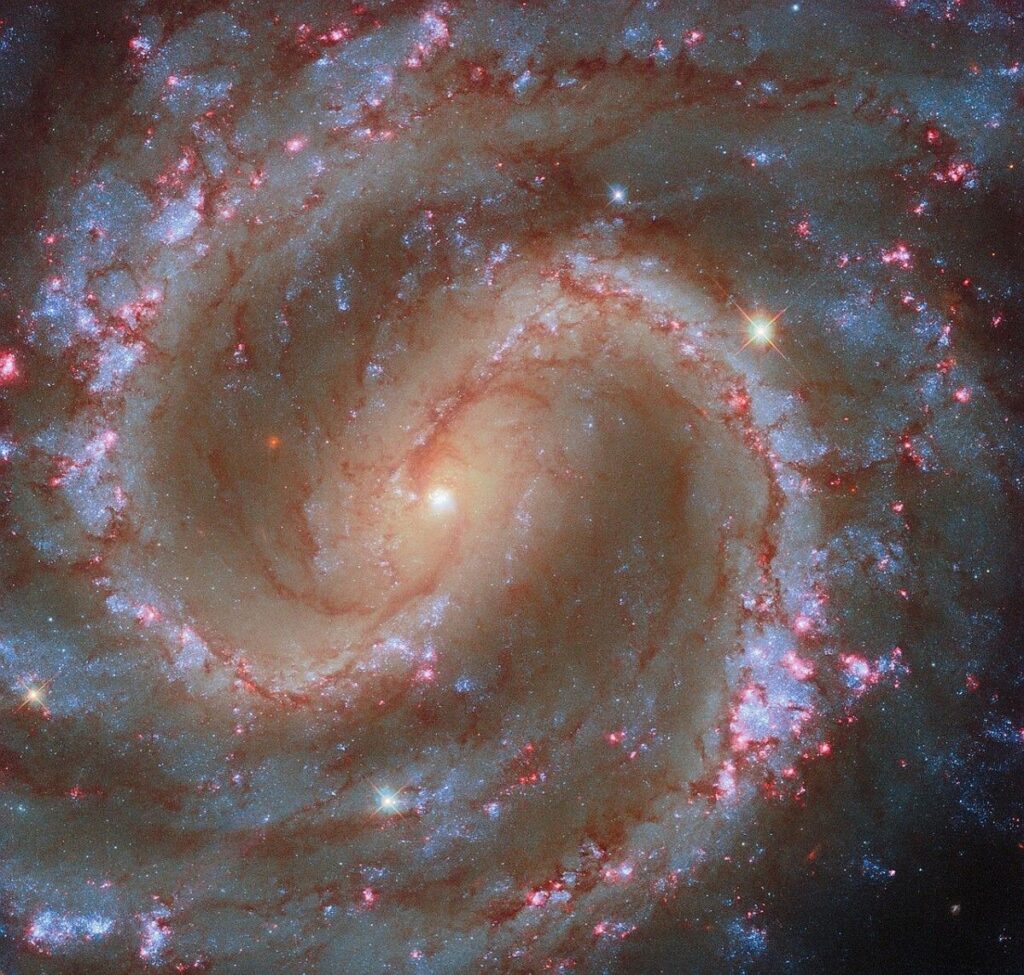
The Hubble Space Telescope continues to unveil the mysteries of the universe, with its latest observations focusing on the spiral galaxy NGC 4535, located approximately 50 million light-years away in the constellation Virgo. Known colloquially as the “Lost Galaxy” due to its faint visibility through smaller telescopes, NGC 4535 showcases stunning features that Hubble can easily discern thanks to its advanced technology and positioning above the Earth’s atmosphere. This recent image highlights the galaxy’s vibrant young star clusters, which are surrounded by glowing pink clouds known as H II regions. These regions signify the presence of young, hot, and massive stars that emit high-energy radiation, playing a crucial role in the galaxy’s dynamic environment.
The data gathered from NGC 4535 is part of the PHANGS (Physics at High Angular resolution in Nearby Galaxies) observing program, which aims to catalog around 50,000 H II regions in nearby star-forming galaxies. This initiative not only enhances our understanding of star formation but also investigates the intricate relationships between young stars and the cold gas that fuels their birth. The latest captures from Hubble build on a previous image taken in 2021, adding depth to our knowledge of NGC 4535 by illustrating the brilliant red glow of nebulae surrounding massive stars in their early life stages. As Hubble continues to push the boundaries of astronomical research, it remains an invaluable tool for scientists seeking to unlock the secrets of the cosmos.
The impact of Hubble’s discoveries extends beyond scientific knowledge; they also contribute to cultural and technological advancements, fostering a deeper connection between humanity and the universe. As it celebrates over three decades of groundbreaking research since its launch in 1990, Hubble has transformed our comprehension of galaxies, stars, and the fundamental workings of the universe. With ongoing missions and collaborations, Hubble is set to continue its legacy, inspiring future generations of astronomers and space enthusiasts alike.
Explore Hubble
Hubble Home
Overview
About Hubble
The History of Hubble
Hubble Timeline
Why Have a Telescope in Space?
Hubble by the Numbers
At the Museum
FAQs
Impact & Benefits
Hubble’s Impact & Benefits
Science Impacts
Cultural Impact
Technology Benefits
Impact on Human Spaceflight
Astro Community Impacts
Science
Hubble Science
Science Themes
Science Highlights
Science Behind Discoveries
Universe Uncovered
Hubble’s Partners in Science
AI and Hubble Science
Explore the Night Sky
Observatory
Hubble Observatory
Hubble Design
Mission Operations
Science Operations
Astronaut Missions to Hubble
Hubble vs Webb
Team
Hubble Team
Career Aspirations
Hubble Astronauts
Multimedia
Images
Videos
Sonifications
Podcasts
e-Books
Online Activities
3D Hubble Models
Lithographs
Fact Sheets
Posters
Hubble on the NASA App
Glossary
News
Hubble News
Social Media
Media Resources
More
35th Anniversary
Online Activities
2 min read
Hubble Seeks Clusters in ‘Lost Galaxy’
This NASA/ESA Hubble Space Telescope image features the spiral galaxy NGC 4535.
ESA/Hubble & NASA, F. Belfiore, J. Lee and the PHANGS-HST Team
Today’s NASA/ESA
Hubble Space Telescope
image features the spiral galaxy NGC 4535, which is situated about 50 million light-years away in the constellation Virgo (the Maiden). Through a small telescope, this galaxy appears extremely faint, giving it the nickname ‘Lost Galaxy’. With a mirror spanning nearly eight feet (2.4 meters) across and its location above Earth’s light-obscuring atmosphere, Hubble can easily observe dim galaxies like NGC 4535 and pick out features like its massive spiral arms and central bar of stars.
This image features NGC 4535’s young star clusters, which dot the galaxy’s spiral arms. Glowing-pink clouds surround many of these bright-blue star groupings. These clouds, called H II (‘H-two’) regions, are a sign that the galaxy is home to especially young, hot, and massive stars that blaze with high-energy radiation. Such massive stars shake up their surroundings by heating their birth clouds with powerful stellar winds, eventually exploding as supernovae.
The image incorporates data from an observing program designed to catalog roughly 50,000 H II regions in nearby star-forming galaxies like NGC 4535. Hubble released a previous image of
NGC 4535 in 2021
. Both the 2021 image and this new image incorporate observations from the
PHANGS observing program
, which seeks to understand the connections between young stars and cold gas. Today’s image adds a new dimension to our understanding of NGC 4535 by capturing the brilliant red glow of the nebulae that encircle massive stars in their first few million years of life.
Facebook logo
@NASAHubble
@NASAHubble
Instagram logo
@NASAHubble
Media Contact
:
Claire Andreoli
(
claire.andreoli@nasa.gov
)
NASA’s
Goddard Space Flight Center
,
Greenbelt, MD
Share
Details
Last Updated
Nov 21, 2025
Editor
Andrea Gianopoulos
Location
NASA Goddard Space Flight Center
Related Terms
Hubble Space Telescope
Astrophysics
Astrophysics Division
Galaxies
Goddard Space Flight Center
Science Mission Directorate
Spiral Galaxies
Star Clusters
Stars
The Universe
Keep Exploring
Discover More Topics From Hubble
Hubble Space Telescope
Since its 1990 launch, the Hubble Space Telescope has changed our fundamental understanding of the universe.
Hubble Science Highlights
Hubble Images
Hubble News


