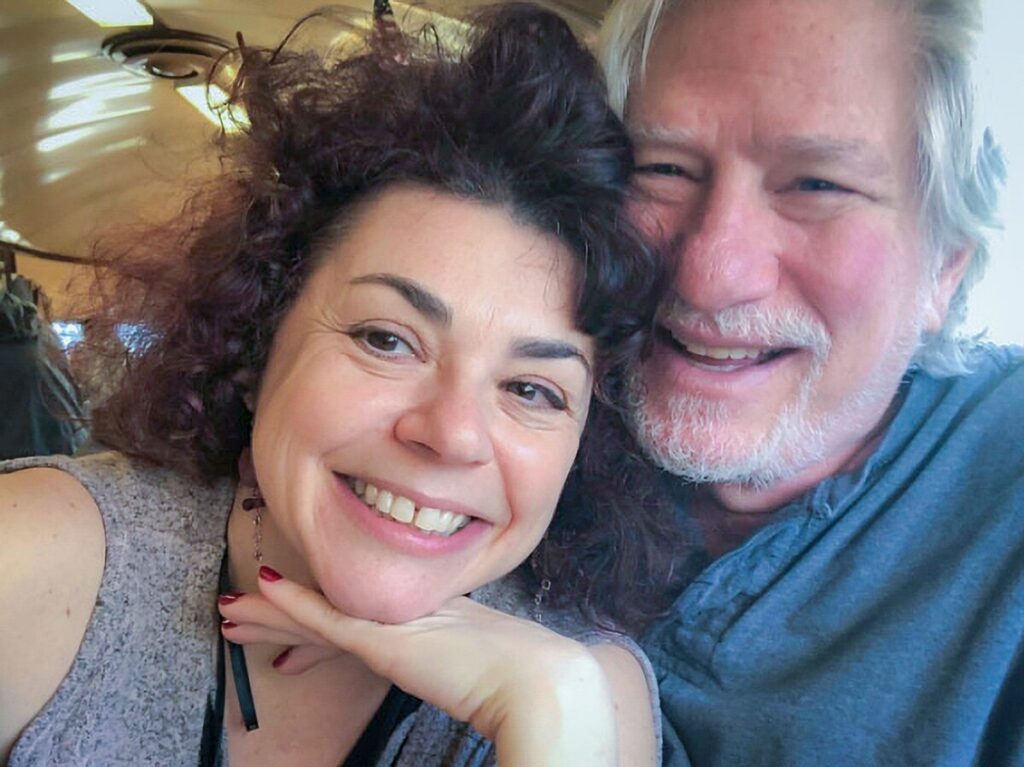
We’re in that chapter between parenting and grandparenting. We left our permanent address to travel the world.
In a refreshing take on life after parenting, authors Andy Hoffman and his partner Deb have embarked on an adventurous journey they call “rotational living.” At ages 69 and 58, respectively, they have embraced a gap year that began in January 2025, but without a fixed end date. This decision comes after their children have all flown the nest, allowing them the freedom to explore the world without the constraints of a permanent address. They have already spent time in vibrant cities like São Paulo and Montreal, as well as the serene landscapes of rural Vermont, and they have plans to travel to Brazil again, followed by destinations in Europe, South Africa, and the Middle East in the upcoming year.
Their approach to travel emphasizes living like locals rather than just visiting as tourists. As both writers and consultants, Andy and Deb have discovered that traveling together requires not only a deep appreciation for each other but also an acceptance of the unpredictability that comes with exploring new places. They’ve learned to navigate the challenges of rotational living by prioritizing rest and allowing for spontaneity in their daily lives. This lifestyle shift has brought them closer to the joys of cultural immersion, culinary delights, and artistic inspiration, all while maintaining a flexible schedule that accommodates their professional commitments.
Financially, their decision to adopt rotational living is also strategic. Having previously lived in a costly Boston suburb, they realized that maintaining a conventional home was not only expensive but also limiting. By opting for short-term rentals in various locales, they can enjoy a more affordable lifestyle while experiencing diverse cultures. For instance, they can rent comfortable apartments in Brazil for under $1,000 a month, making it a viable option for extended stays. Their journey has inspired them to document their experiences through a blog titled “Breakfast: A Love Story,” where they share their adventures and the joys of this new chapter in their lives. As they look forward to future travels and the eventual transition to grandparenthood, Andy and Deb exemplify a modern approach to living life to the fullest, embracing both freedom and exploration.
The author and his partner are taking a gap year around the world.
Courtesy of the author
My partner is 58, and I am 69, and our kids have all left our home.
We are between parenting and becoming grandparents, so we decided to explore the world.
We call it rotational living, and are giving ourselves time to figure out where to live next.
My partner Deb, 58, and I, 69, are
taking a gap year
that began in January 2025. Except, we have no hard ending — we call it rotational living.
We gave up our fixed address, a rental too large and expensive for our needs, while we
explore the world
. We spent several weeks in São Paulo, about the same amount of time in Providence, and a few days in rural Vermont, watching spring settle into the mountains. We lived in Montreal for a month and a half this summer and depart for three months in Brazil again the first week in December. We look forward to Europe, South Africa, and the Middle East next year.
Rotational living works for us in part because we both
prefer travel
as though living in a new place. When one trip ends, another begins, in a different city, state, or country.
We learned a lot from our travels
We’ve learned a few things while traveling together. First, you have to truly
enjoy your partner
. We’re both writers and consultants, so we create work in similar ways. We’ve realized how much we rely on the predictable — the same coffee maker, clocks you don’t have to search for, all the different shoes — and how exhausting unpredictability can become.
We accommodate these challenges by
going to bed early
and leaving room in our days for uncertainty. These few negatives of rotational living don’t detract much from the pleasures. Not knowing lies at the core of exploration, and so we have learned to master uncertainty, embrace adventure, and love freedom.
We had talked about living this way for years. Then my mother died in the fall of 2024 after a long and glorious life. The kids — my two in their 30s, Deb’s three in their 20s — have launched, all of them in careers they trained for, and none of them have children yet. This little gap, between parenting and grandparenting, arrives like a gift. We look forward to becoming our
future grandkids
‘ default babysitters and embracing a fixed address when that moment arrives. But in the meantime, we contemplate where to go next.
We are spending less money
Our decision also has a financial underpinning, although the professional freedom Deb and I enjoy might have led us to this choice anyway.
We lived outside Boston, in a community for people who moved there for the top-notch schools. Our large apartment cost an absurd sum compared to our needs, but nothing within a two-hour radius saved us much money. In truth, we don’t yet know where we want to live, so rather than spend thousands a year on rent for a place we don’t love, why not spend less and live everywhere?
Calculating the cost of rotational living clarified that a conventional home led to a life at the edge, whereas rotational living brought us the luxuries we most desire: learning new cultures, eating well, time with friends and family, and artistic inspiration. We started a blog called
Breakfast: A Love Story
to share this joy with the world.
When we visit Brazil, we can rent comfortable apartments for under $1,000 a month, pretty much whenever we want to go. The same goes for India, another destination on our list. We’re looking for an open month for Europe, where we will mostly stay with friends. Work obligations sometimes set our travel map. Just as often, we imagine places we want to experience, such as Japan and Australia. The moment we make friends in those places, we will go.
Andy Hoffman began writing professionally as a teenager and has founded several businesses, largely in educational technology. He currently lives everywhere.
Read the original article on
Business Insider


