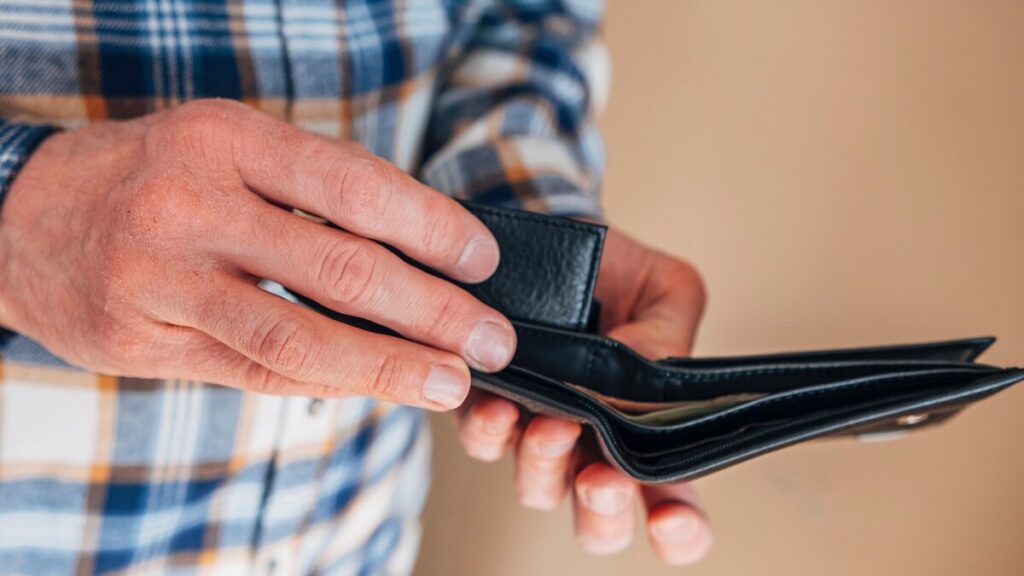
The new iPhone feature that could make wallets obsolete
Apple is making significant strides toward a future where physical wallets could become obsolete with its newly announced feature, “Digital ID.” This innovation allows users to store a mobile version of their passport directly in the Wallet app on their iPhone or Apple Watch. Travelers can now seamlessly present their Digital ID at TSA security checkpoints in 250 airports across the U.S., enhancing the convenience of air travel. Moreover, this feature is expected to expand its utility, potentially serving as a comprehensive authentication tool for various applications and websites requiring age verification. As Apple continues to integrate digital identification into its ecosystem, the concept of carrying a physical wallet may soon become a relic of the past.
The process of uploading a passport to the Digital ID feature is designed to be user-friendly and secure. Users start by photographing their physical passport and scanning its embedded chip. Following this, they take a selfie and perform specific head movements, similar to facial recognition setups. This information is then sent to the issuing government authority for verification, which typically takes just a few minutes. Once verified, users can easily access their Digital ID by holding their device near a reader at TSA checkpoints, where a selfie is again requested to confirm identity. All data remains securely stored on the user’s device, ensuring that Apple cannot access it, thereby addressing some privacy concerns.
However, the introduction of Digital ID raises important questions about security and privacy. While the convenience of digital wallets is undeniable—with reports indicating that nearly half of U.S. adults have used digital wallets recently—privacy advocates caution against the rapid rollout of such systems without robust regulatory frameworks. Critics argue that increased digital interactions could lead to more frequent sharing of sensitive information, heightening the risk of cybercrimes. Additionally, there are concerns about accessibility, as not everyone may own or feel comfortable using mobile devices. Despite these challenges, Apple’s Digital ID represents a significant shift towards a more digital-centric lifestyle, suggesting that as technology advances, the way we manage our identities and personal information will evolve dramatically.
Apple users are one step closer to being able to viably travel around the country with nothing but an iPhone in their pocket.
On Wednesday, the company
announced “Digital ID,”
a new feature that lets users store a mobile version of their passport in the Wallet app. Once uploaded, iPhone and Apple Watch users can present their Digital ID to pass through TSA security checkpoints at 250 airports in the US. The feature may also soon serve as a one-stop authentication tool for accessing an increasing number of apps and websites
requiring age verification
.
With the addition of Digital ID, Apple users can store digital versions of passports,
driver’s licenses
,
credit cards
, and even
car keys
in the app. Similar efforts from
Google
and
others
means mobile devices may play an even more central role in daily life. That may come as a welcome change for some, but it also introduces thorny, unresolved questions around security and privacy.
Turning a phone into an ID
Digital ID works similarly to
Apple Pay
. To upload passport details, users first need to use their phone to take a photo of their physical passport. They are then prompted to scan the chip located on the back of the passport book. Next, the app asks the user to take a selfie and complete several head movements, similar to the process of setting up facial recognition to unlock the device.
A still frame from that video is sent to the government issuer, who checks whether the image matches the one on file.This process appears to be mostly automated but
Apple notes
there are circumstances where a human reviewer from an issuing authority may request additional details. In this case, it’s the government, not Apple, that verifies the ID. Apple says the verification process typically takes just a few minutes.
Once verified, a traveler passing through a TSA security checkpoint can hold their device near a reader, which automatically pulls up the Wallet app. Apple then asks for a selfie to ensure the person holding the device is its actual owner. (This should prevent people from accessing your ID information if they steal your phone.) Once authorized, the iPhone or Apple Watch establishes a direct, end-to-end encrypted connection with the reader to transfer the requested data. Apple says all Digital ID information is stored locally on a user’s device, meaning Apple can’t access the data even if it wanted to. And because the process connects wirelessly to the reader, users don’t have to physically hand their device to a TSA agent or law enforcement officer to verify their identity.
Digital ID can be used to pass through TSA airport checkpoints and to verify identity on age-baited websites.
Image: Apple
When using Digital ID for online age verification, apps that require proof of identity will present users with a consent sheet outlining the specific information being requested, such as date of birth. Once authorized, the Apple device transmits an encrypted payload containing the approved data to the app or website. Apple says this payload includes a digital signature from the Digital ID card’s issuing authority, which ultimately verifies the user’s identity. In theory, Digital ID could serve as a kind of “passport” for the web.
“Digital ID brings this secure and convenient option to even more users across the country, as they can now add an ID to Wallet using information from their U.S. passport,” Apple Vice President of Apple Pay and Apple Wallet Jennifer Bailey
said in a statement
.
Digital ID isn’t available to everyone. The feature only works on iPhone models 11 or later. Devices must also be running iOS 16.1 or newer and have Face ID, Touch ID, and two-factor authentication enabled. It also won’t be available to all travelers. For now, physical passports are still required for international travel and border crossings. Even in places where it is accepted, it’s probably wise to have the physical copy accessible. Users also notably can’t make changes to or renew their passport through the device; for that, they’ll still need to contact the document’s issuing authority.
Related: [
Annoyed by tap-to-pay? Try shaking your credit card
.]
Digital IDs are convenient. But are they safe?
Digital services from both Apple and Google may soon make physical wallets feel like relics. As of this writing, licenses and passports stored on iPhones can be used in 25 states and at TSA checkpoints in 250 U.S. airports. These efforts build on the growing success of digital wallets as payment platforms. Globally, Capital One
estimates
around 4.3 billion people have used digital wallets. In the U.S., a March 2024
report
from J.D. Power found that nearly half (48 percent) of adults used a digital wallet in the past three months.
And while digital versions of driver’s licenses and state IDs are relatively new, early data suggests they’re being met with similar enthusiasm. Public records
obtained by
Government Technology
show that, as of March 2024, at least five million people had signed up for mobile driver’s licenses across 11 states.
But not everyone agrees that’s a good thing. Though digital forms of cards and IDs are certainly convenient, some privacy advocates worry their rapid introduction is outpacing well-thought-out regulatory safeguards. There’s also concern that these systems could increase how often people share sensitive information with third parties, which in turn raises the risk of cybercrimes.
Writing in a
blog post
, the Electronic Frontier Foundation’s Director of Engineering Alexis Hancock notes the average person might take out their physical driver’s license or passport only a few times a week. Digital IDs, by contrast, could “expand the scenarios” in which businesses and government agencies request personal information, especially if used for age verification purposes.
“Our personal data will be passed at more frequent rates than ever, via frequent online verification of identity per day or week with multiple parties,”
Hancock said
. “This privacy menace far surpasses the minor danger of a bar bouncer collecting, storing, and using your name and address after glancing at your birth-date on your plastic ID for 5 seconds in passing.”
Other critics have
expressed concern
that these digital ID systems, which are pitched primarily for their convenience factor, could become so widely used that they are made mandatory, which presents accessibility concerns for those who either don’t own a mobile device or who are uncomfortable using them.
But, if recent tech history is any guide, it’s usually not a winning strategy to bet against convenience. Chunky wallets, in other words, may be on their way out.
The post
The new iPhone feature that could make wallets obsolete
appeared first on
Popular Science
.


