OpenAI is beating its own forecasts, adding more fuel to the AI investment supercycle, analysts say
OpenAI’s recent performance has surpassed its own revenue forecasts, according to a comprehensive analysis from Barclays, marking a significant milestone for the company at the forefront of the generative AI revolution. Analysts led by Ross Sandler noted that OpenAI’s revenue growth is approximately 15% above its 2025 projections and a staggering 50% ahead of its 2027 targets. This rapid acceleration is attributed to a combination of factors, including a surge in user growth, effective conversion from free to paid subscribers, and the scaling of OpenAI’s enterprise and application programming interface (API) businesses. CEO Sam Altman has indicated that OpenAI is on track to achieve an impressive $100 billion in annual recurring revenue by 2027—about a year earlier than previously anticipated.
The Barclays report also highlighted essential performance indicators that OpenAI must meet to sustain this momentum. These include maintaining a monthly increase of 50 million in weekly active users, keeping the free-to-paid conversion rate around 4%, and raising the average monthly revenue per user from $30 to $55 through new premium offerings. Additionally, the API business, which allows developers to integrate OpenAI’s GPT models into their applications, is expected to grow sixfold. The report emphasizes the potential of new revenue streams, such as advertising on the free version of ChatGPT and an “Agents-as-a-Service” model, which could provide businesses with digital employees capable of handling various tasks. The introduction of a shopping referral fee through the Instant Checkout feature in ChatGPT also signifies new monetization avenues.
This robust growth trajectory is projected to drive an increase in compute demand, with OpenAI’s compute budget expected to exceed $450 billion from 2024 to 2030, alongside total obligations of around $650 billion. Barclays analysts suggest that these developments could extend the AI investment supercycle rather than signal a slowdown. They predict that other tech labs will continue to invest heavily in AI, and major cloud service providers (hyperscalers) are likely to maintain their spending levels despite prevailing market concerns. Overall, this analysis paints a picture of a thriving and rapidly evolving AI landscape, with OpenAI at its helm, poised for unprecedented growth in the coming years.
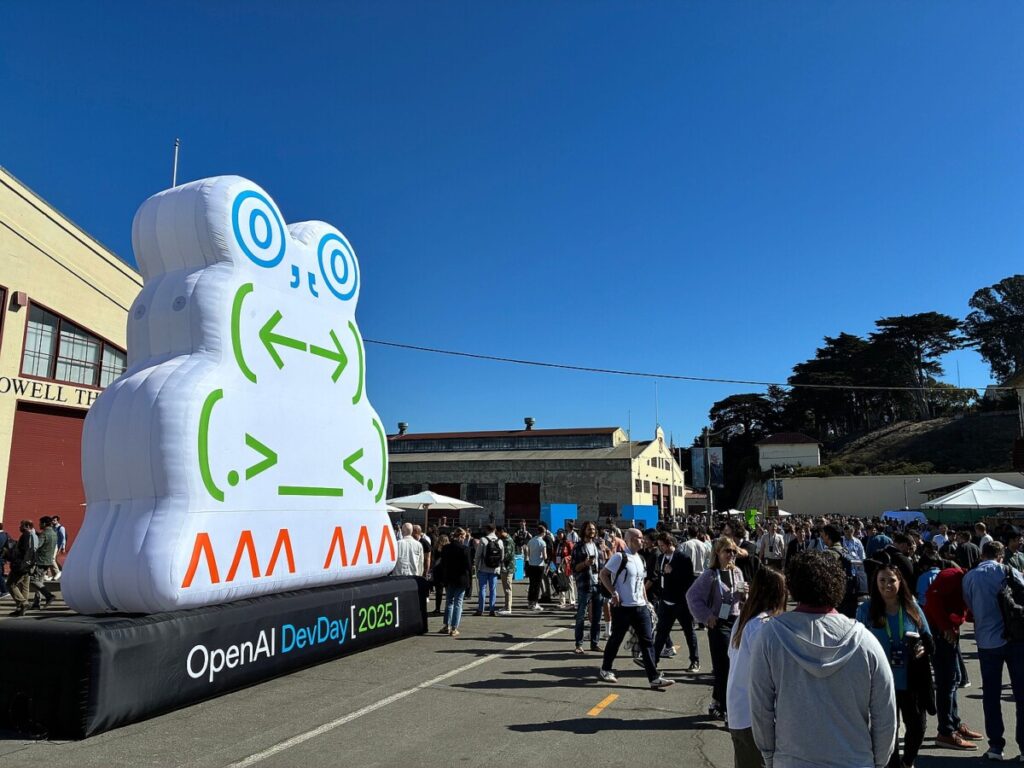
OpenAI’s DevDay conference in San Francisco
Alistair Barr/Business Insider
OpenAI revenue growth is surpassing its own forecasts, according to a deep dive by Barclays.
New revenue streams like advertising and AI agents could boost OpenAI’s revenue.
These signs of acceleration could fuel AI infrastructure spending, the analyst said.
OpenAI
is “running ahead” of its own revenue targets, a signal that the company driving the generative
AI
boom is expanding faster than even its backers expected.
That’s according to a new deep dive from Barclays tech analysts, led by Ross Sandler. They wrote this week that OpenAI’s better-than-expected growth trajectory reinforces the AI infrastructure investment wave rather than slowing it, despite mounting concerns over capital intensity and potential market bubbles.
OpenAI’s revenue performance is roughly 15% above 2025 forecasts and 50% ahead of 2027 projections, according to analysts’ estimates, based on CEO Sam Altman’s recent comments that the company is on pace to reach $100 billion in annual recurring revenue by 2027. That’s about a year earlier than previously expected.
The Barclays analysts attributed the outperformance to user growth, steady conversion from free to paid subscribers, and the rapid scaling of OpenAI’s enterprise and application programming interface (API) businesses.
Their research note outlined key performance indicators that OpenAI must hit to keep this revenue momentum going:
Maintaining a 50 million monthly increase in weekly active users (WAUs)
Keeping free-to-paid conversion rates near 4%
Growing average monthly revenue per user from $30 to $55 through new, higher-tier offerings
The API business, which provides access to GPT models, needs 6x growth
New sources of revenue must emerge, such as advertising and AI agent services
If ChatGPT grows to about 2 billion weekly active users by 2028, that could help OpenAI generate $100 billion in annual recurring revenue, depending on how many of these users subscribe to paid versions of the chatbot service, the analysts estimated.
The research note also pointed to new revenue streams, including advertising on the ChatGPT free tier and an emerging “Agents-as-a-Service” model (effectively digital employees that can handle tasks for businesses). The analysts say both businesses could meaningfully expand monetization over the next two years, while the API business continues to grow as adoption broadens.
There’s also a shopping referral fee revenue stream that comes with OpenAI’s recently launched Instant Checkout feature in ChatGPT, the analysts wrote.
This revenue expansion means increased compute demand. OpenAI’s compute budget is now projected to exceed $450 billion from 2024 through 2030, with total obligations of around $650 billion, some of which extend beyond 2030, according to Barclays research.
The analysts wrote that these signs of acceleration, rather than signaling a coming slowdown, could extend the AI investment supercycle.
“We would expect the other labs to continue to keep their foot on the gas,” Sandler and his colleagues wrote in their note this week. “And hyperscalers are likely to keep their spending levels up, despite concerns.”
Sign up for BI’s Tech Memo newsletter
here
. Reach out to me via email at
abarr@businessinsider.com
.
Read the original article on
Business Insider


