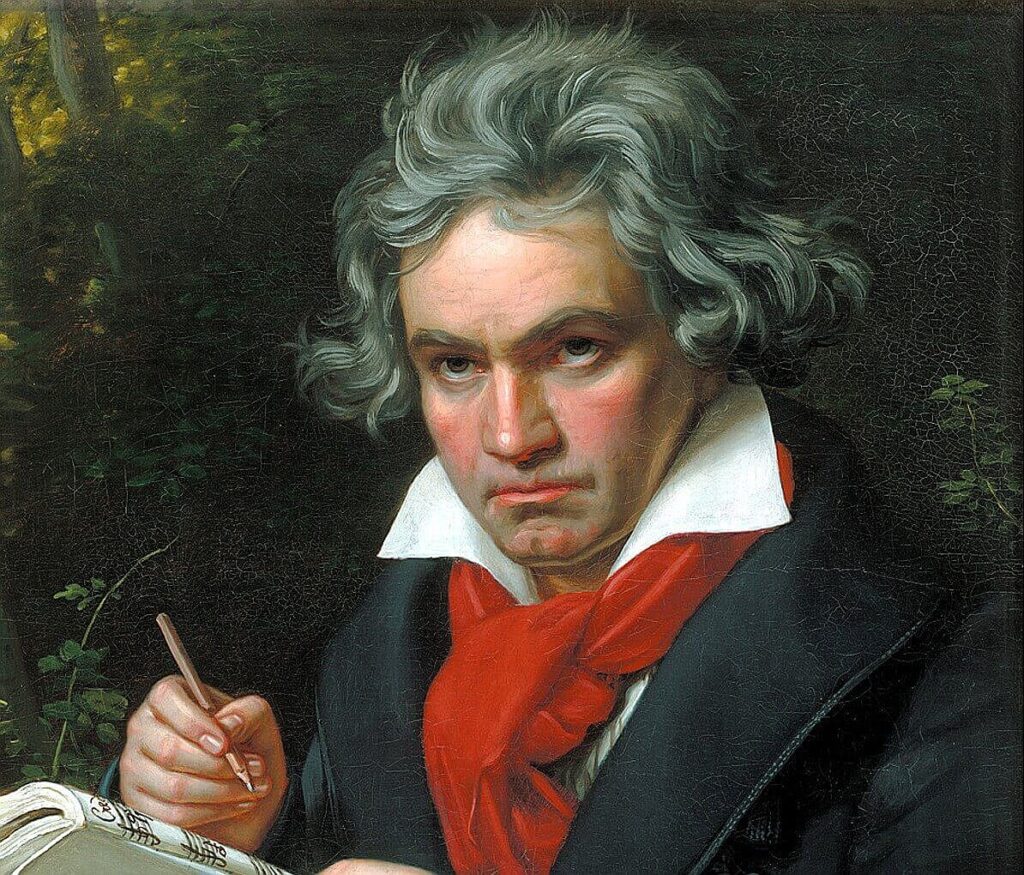
Ludwig van Beethoven
Ludwig van Beethoven (1770 – 1827) is widely regarded as one of the greatest composers in history, revolutionizing the landscape of classical music and paving the way for future generations of musicians. His compositions marked a significant transition from the Classical era to the Romantic era, reflecting a profound shift in the purpose and expression of music. Unlike his predecessors, who largely composed for religious services, educational purposes, or social entertainment, Beethoven infused his works with deep emotional resonance and personal expression. This marked a departure from the more structured forms of the Classical period, allowing for greater individualism and innovation in composition.
One of Beethoven’s most notable contributions to music is his ability to convey complex emotions through his compositions. His symphonies, sonatas, and concertos often reflect the tumultuous experiences of his life, including his struggle with deafness and personal hardships. For example, his Symphony No. 9, which features the famous “Ode to Joy,” is not only a monumental work in terms of its scale and orchestration but also serves as a universal anthem of brotherhood and joy, transcending cultural and temporal boundaries. Beethoven’s late string quartets, particularly the late quartets, showcase his daring exploration of form and harmony, pushing the limits of musical expression and challenging performers and listeners alike.
Beethoven’s influence extends beyond his own compositions; he set a new standard for what music could achieve. His works inspired countless composers, from Brahms to Mahler, and continue to be celebrated and performed around the world today. The emotional depth and innovative spirit of Beethoven’s music resonate with audiences, ensuring his legacy remains vital in the classical music canon. As we reflect on his contributions, it is clear that Beethoven not only changed the course of music history but also enriched the human experience through the power of sound. His journey from a young prodigy in Bonn to a revolutionary figure in Vienna exemplifies the enduring power of creativity and resilience in the face of adversity.
https://www.youtube.com/watch?v=W-fFHeTX70Q
Ludwig van Beethoven (1770 – 1827) is one of the greatest composers in history. His work marked a turning point for composers, who had previously written primarily for religious services, to teach, or to entertain at social functions. But Beethoven’s […]