3I/Atlas isn’t deep space aliens and didn’t ‘change color’
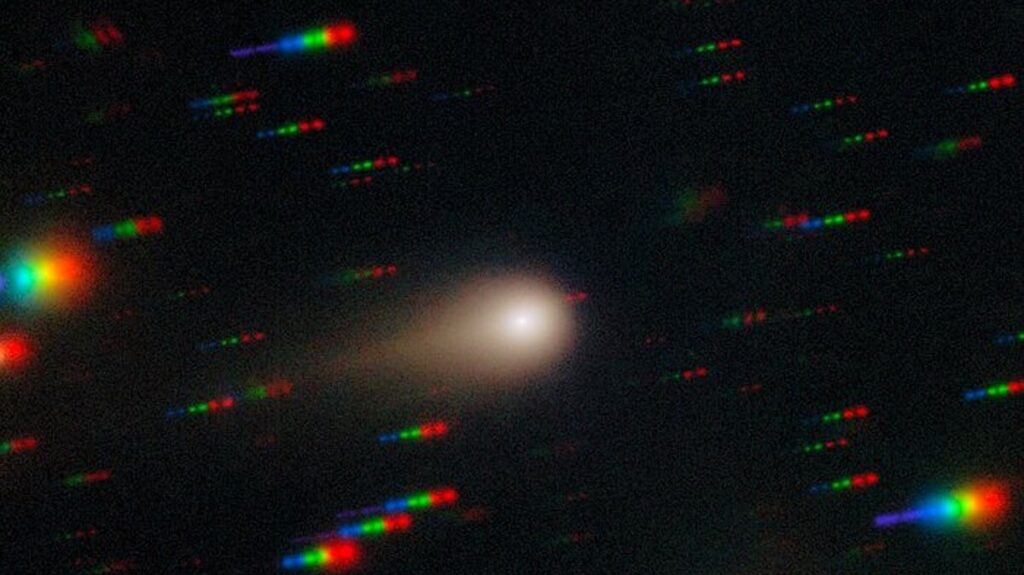
In early July, the cosmic object 3I/ATLAS burst onto the astronomical scene, quickly earning its status as a celestial celebrity. This remarkable comet is only the third known interstellar visitor to traverse our solar system, and it holds the record for being the fastest comet ever recorded, hurtling through space at an astonishing speed of approximately 130,000 mph. The comet’s recent close approach to the sun on October 30 provided an extraordinary opportunity for three spacecraft to study this ancient, icy body up close. Initial observations revealed a significant “rapid brightening” of 3I/ATLAS’s gas coma—an area of sublimated debris that forms as the comet nears the sun—compared to other comets at similar solar distances. While early reports suggested the comet appeared red, further analysis indicated that it is actually “distinctly bluer than the sun,” leading to widespread intrigue and speculation about its nature.
As fascination with 3I/ATLAS grew, so did the spread of misinformation regarding its characteristics and origins. Some outlets suggested that the comet had undergone a sudden and inexplicable transformation, fueling conspiracy theories about its potential extraterrestrial identity. Qicheng Zhang, a coauthor of a study from Arizona’s Lowell Observatory, expressed frustration over the propagation of these unfounded claims, particularly those linked to Harvard astronomer Avi Loeb, who has speculated about “alien tech” being responsible for the comet’s unusual coloration. Zhang clarified that the perceived color change of 3I/ATLAS was merely a result of the brightening of its gas coma as it approached the sun, a phenomenon that had been occurring since early September. He emphasized that there is no evidence to support the conspiracy theories and criticized the misinterpretation of scientific data by those in the academic community.
Despite the sensationalism surrounding 3I/ATLAS, Zhang hopes that the comet will inspire greater interest in understanding the peculiar behaviors of comets rather than fueling unfounded speculation. With NASA’s operations currently limited due to the U.S. government shutdown, additional images of the comet are pending, but the excitement is expected to build as 3I/ATLAS nears its closest approach to Earth on December 19, where it will pass by at a distance of approximately 167 million miles. As the astronomical community continues to study this remarkable interstellar visitor, the anticipation of new insights and discoveries surrounding 3I/ATLAS remains high, reminding us of the wonders that our universe holds.
3I/ATLAS
has quickly earned celestial celebrity status since
its discovery
in early July. It’s only the third known object to visit our solar system from deep space, and at around 130,000 mph, it’s also the fastest comet ever clocked. 3I/ATLAS’s closest pass to the sun so far occurred on October 30, offering three spacecraft an unprecedented chance to document the ancient, icy cosmic rock.
Early examinations noted the comet’s gas coma–the cloud of sublimated debris formed as it passes near a star–experienced a “
rapid brightening
” compared to previously observed comets at similar distances from the sun. While earlier observations indicated 3I/ATLAS appeared red in color, additional analysis has led astronomers to
note in a preprint study
it’s actually “distinctly bluer than the sun.”
Multiple outlets
asserted our interstellar visitor had suddenly, and perhaps inexplicably,
changed in appearance
. Meanwhile, the internet has done what it does best: generate a
deluge of misinformation
about the comet’s “true” extraterrestrial identity. But according to study coauthor Qicheng Zhang at Arizona’s Lowell Observatory, the conspiracies aren’t worth your time.
“We don’t have any evidence for the gas coma changing colors,” Zhang told
Space.com
on November 7. “Our result just showed that the gas coma is likely still around and contributing substantially to the overall brightness.”
Speaking with
Popular Science
, Zhang adds he’s more frustrated with the people pushing unsubstantiated ideas than the conspiratorial thinking itself. He specifically cites Avi Loeb, a Harvard University astronomer and frequent proponent of various unidentified aerial phenomena (UAP) theories. Loeb has repeatedly suggested that “
alien tech
” may explain the comet’s coloration.
“I think my main source of annoyance though is just that so much of it has been propagated by someone with a background in science who should know better,” Zhang tells
Popular Science
. “A large fraction of the misinformation I’ve seen floating around can be directly traced back to him misinterpreting [or] not fully reading the papers or data he comments on.”
Technically speaking, 3I/ATLAS only “changed color” when the coma brightened as it sped closer to the sun. That doesn’t mean the reported hue shift was particularly striking. Zhang made clear that this brightening also actually started occurring by early September. There are even
multiple photos
from hobbyist astronomers around that time that already show 3I/ATLAS possessing a
bluish-green gas coma
.
So, no, the United States didn’t
orchestrate a government shutdown
to cover up E.T tourists–but that doesn’t mean the comet isn’t worth your admiration. NASA has yet to release additional photos due to limited operations during the US government shutdown, but there is still a chance the agency will reveal images taken by its
Mars Reconnaissance Orbiter
on October 3. Even more glimpses of the comet are assured to ramp up as 3I/ATLAS reaches its closest approach to Earth on December 19, when it will soar past us from only around 167 million miles away.
“On a more optimistic note, I do hope more people will begin see how the anomalies of this comet are just weird things comets do, and perhaps driving more interest to understand them better,” says Zhang.
The post
3I/Atlas isn’t deep space aliens and didn’t ‘change color’
appeared first on
Popular Science
.


