TikTok wants to help you spot AI on the platform, filter it out
In a growing backlash against AI-generated content, social media users are expressing their dissatisfaction with what has been colloquially dubbed “AI slop.” As concerns about the quality and authenticity of AI-created material rise, major platforms are beginning to respond to this sentiment. Pinterest recently took the lead by introducing a feature that allows users to filter out AI content entirely. Following suit, TikTok has announced its plans to implement tools that will enable users to identify and limit their exposure to AI-generated content. This move reflects a broader trend in the social media landscape, where user preferences are increasingly shaping platform policies.
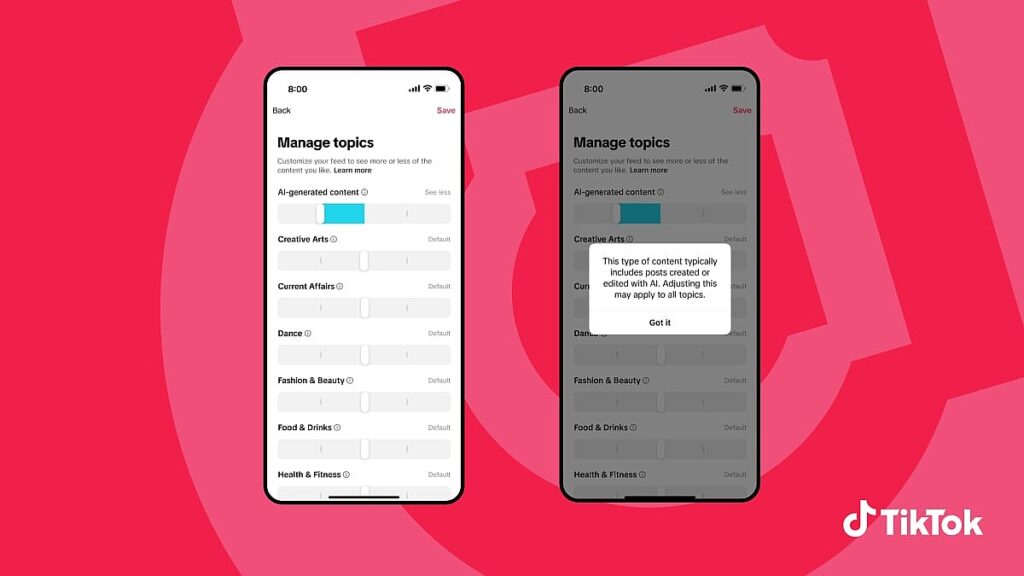
TikTok’s forthcoming feature will be integrated into its “Manage topics” section, which currently allows users to customize their feeds based on specific interests, such as health, fashion, and current events. The new AI-generated content control will be unique in that it spans all categories, focusing specifically on the nature of the content’s creation. While TikTok emphasizes its belief in the potential of AI to enhance creativity and user experience, the platform is also committed to transparency. To bolster this commitment, TikTok is testing an “invisible watermarking” solution, which aims to improve AI content labeling and provide users with clearer indications of which materials are AI-generated. Additionally, TikTok is establishing a $2 million AI literacy fund and joining the non-profit Partnership on AI to promote ethical practices in AI development.
The introduction of these content controls by TikTok may signal a significant shift in how social media platforms approach AI-generated content. As users increasingly demand more control over their online experiences, other platforms may soon follow TikTok’s lead in implementing similar filtering options. The question now isn’t whether other platforms will adopt these measures, but rather which ones will be next to cater to the growing desire for a more curated and authentic social media experience. As this trend unfolds, it will be crucial for social media companies to balance innovation with user satisfaction, ensuring that the integration of AI enhances rather than detracts from the user experience.
https://www.youtube.com/watch?v=6zq71Nr_DnA
Social media users seem to be getting sick and tired of AI-generated content on their favorite platforms. And the backlash against AI-created content, or “AI slop” as it’s often referred to, is growing.
The big social media platforms appear to have noticed this anti-AI sentiment. Last month, for example, Pinterest launched a new feature that completely
filters out AI content
if users choose to do so.
Now,
TikTok just announced
that it is soon launching its own tools to help its users spot AI-generated content and see less of it if they choose to do so.
According to TikTok, the company is currently testing out a new content control in the “Manage topics” feature that will allow users to specifically adjust how much AI-generated content they see on the platform.
SEE ALSO:
How to vote for the TikTok Awards 2025 — plus date, nominees, and how to watch
The “Manage topics” feature already gives users the ability to tell TikTok’s algorithm what type of content they want to see in the For Your feeds as it pertains to a specific content category like “Current Affairs,” “Health & Fitness,” or “Fashion & Beauty.” The AI-generated content topic control is different then all those as it appears to be the first that spans all of TikTok’s topic categories and explicitly deals with
how
the content is created.
TikTok makes it pretty clear in its announcement that the company itself isn’t anti-AI, saying it “believes AI can transform how people share their creativity, discover new passions, and stay safe on our platform, when used transparently and responsibly” and that it “invests in AI-powered experiences that create value for our community.”
However, the company also stresses multiple times that it’s important to be transparent to users.
To aid in that transparency, TikTok is also testing an “invisible watermarking” solution to help bolster its current AI label policies. TikTok says this “invisible watermark” will help “add another layer of safeguards to our current AI-generated content transparency measures.”
In addition to that, TikTok is also launching a new $2 million AI literacy fund and joining the non-profit Partnership on AI, which studies and develops best practices for ethical AI.
TikTok’s AI content controls announcement may just open the floodgates for other social media platforms to filter out AI-generated content for users who choose to do so. In fact, the question may not be will they do it but which platform is next to do it?