Opium may have been a daily habit for Ancient Egyptians
Recent archaeological research suggests that opium use may have been a common part of daily life in ancient Egypt, potentially spanning across various socio-economic classes as far back as 3,000 years ago. This revelation comes from a study published in the *Journal of Eastern Mediterranean Archaeology*, led by Andrew Koh from the Yale Peabody Museum. The findings challenge previous assumptions about the sporadic use of opium in ancient cultures, indicating that it was a significant fixture in the lives of both common Egyptians and royalty. Koh emphasized that their research shows opium was not merely an occasional indulgence but rather a regular aspect of ancient Egyptian society.
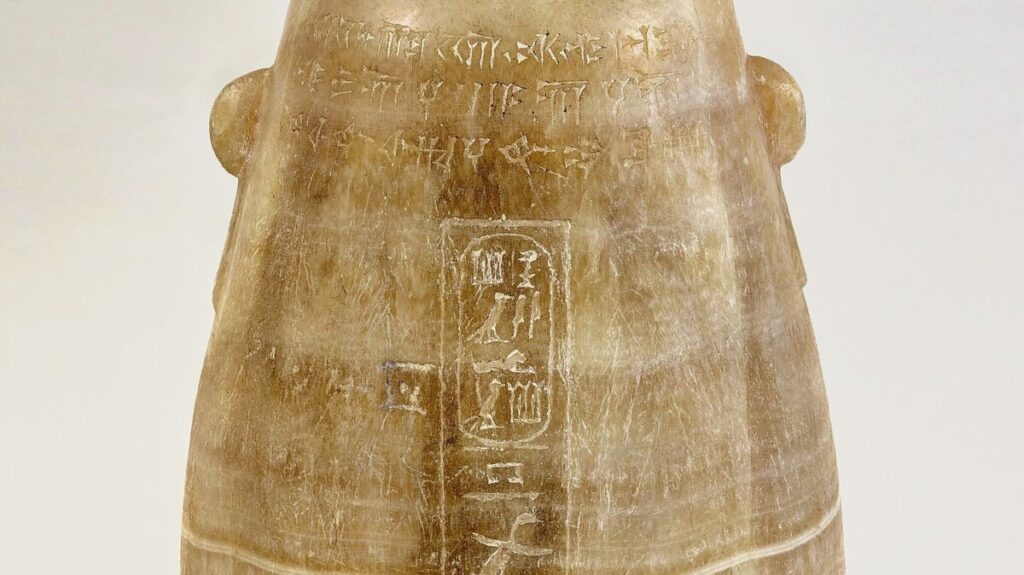
The study centers on a 2,500-year-old alabaster vase, one of fewer than ten intact examples discovered worldwide, which was found in various archaeological sites, including the tomb of Pharaoh Tutankhamun. This particular vase features inscriptions in four languages directed to Xerxes I, the Achaemenid emperor who ruled Egypt during the 5th century BCE. Koh’s team identified dark brown, aromatic residues inside the vase, which were chemically analyzed and confirmed to contain opium biomarkers such as noscapine, thebaine, and morphine. Notably, evidence of opium use was not restricted to elite classes; previous findings indicated that opium residues were also present in vessels belonging to merchant families during the New Kingdom period (16th to 11th century BCE). Koh likened these vessels to modern cultural markers, suggesting they were recognizable symbols of opium consumption, similar to how hookahs are associated with shisha tobacco today.
The implications of this research are profound, as they provide a glimpse into the daily practices and cultural habits of ancient Egyptians. Koh draws on earlier studies, including a 1922 analysis by chemist Alfred Lucas, who was part of the team that uncovered King Tut’s tomb. Lucas noted the presence of dark organic residues in alabaster vessels, speculating they were not perfumes but possibly related to opiate use—a theory that Koh and his colleagues are now exploring further. They aim to analyze similar artifacts housed in the Grand Egyptian Museum in Giza, which could yield additional insights into the role of opium in ancient Egyptian life. This ongoing research not only enriches our understanding of ancient cultures but also highlights the complex relationships people have had with substances like opium throughout history.
Ancient Egyptians
may have used opium a
lot
. Based on recent examinations,
archaeologists
now say the drug may even have been a near-daily recreational habit. Opium might have even been widely used across socio-economic classes as long as 3,000 years ago. The evidence is detailed in a study recently published in the
Journal of Eastern Mediterranean Archaeology
, and offers a glimpse into the daily lives of regular Egyptians and royalty alike.
“Our findings, combined with prior research, indicate that opium use was more than accidental or sporadic in ancient Egyptian cultures and surrounding lands. [It] was, to some degree, a fixture of daily life,” Yale Peabody Museum researcher Andrew Koh
explained in a university announcement
.
Koh and his colleagues believe the historical revisions are likely required after examining a roughly 2,500-year-old alabaster vase. The relic is one of less than 10 similar, intact examples found from dig sites around the world. Crafted from calcite, the artifacts were discovered across various archaeological sites, including the famed tomb of the
Pharaoh Tutankhamun
. In this particular case, the vessel features inscriptions engraved in four languages–Egyptian, Akkadian, Elamite, and Persian. The various sentences are written to
Xerxes I
, ruler of the Achaemenid Empire from 486 to 465 BCE. As king, Xerxes I oversaw Egypt, as well as vast portions of Mesopotamia, Anatolia, Eastern Arabia, Central Asia, and the Levant.
“Scholars tend to study and admire ancient vessels for their aesthetic qualities, but our program focuses on how they were used and the organic substances they contained,” said Koh, adding that such findings help reveal information about ancient daily life.
Koh first became interested in this specific vase after spotting unknown dark brown, aromatic residue inside the container. A subsequent chemical analysis confirmed the presence of noscapine, thebaine, papaverine, hydrocotarnine, and morphine–all clear opium biomarkers. In their study, the authors noted that their find is only the latest of many similar artifacts. Opium-laced vessels like these weren’t limited to royalty, either. Archaeologists previously identified opium residue in jugs belonging to a merchant class family’s tomb dating back to the New Kingdom (16th to 11th century BCE).
“We now have found opiate chemical signatures that Egyptian alabaster vessels attached to elite societies in Mesopotamia, and embedded in more ordinary cultural circumstances within ancient Egypt,” said Koh. “It’s possible these vessels were easily recognizable cultural markers for opium use in ancient times, just as hookahs today are attached to shisha tobacco consumption.”
As further possible evidence, the study authors cited a nearly 100-year-old analysis from chemist Alfred Lucas. In 1922, Lucas was a member of the team led by Howard Carter that discovered
King Tut’s tomb in the Valley of the Kings
. Lucas performed a brief chemical study of similar alabaster vessels in 1933, and detailed their sticky, dark brown, organics. Although he couldn’t pinpoint the aromatic remains, Lucas concluded that most were not perfumes or similar scented products.
“We think it’s possible, if not probable, that alabaster jars found in King Tut’s tomb contained opium as part of an ancient tradition of opiate use that we are only now beginning to understand,” said Koh.
In the future, Koh hopes to perform the same analysis on the historic artifacts, all of which are now housed in the Grand Egyptian Museum in Giza, Egypt.
The post
Opium may have been a daily habit for Ancient Egyptians
appeared first on
Popular Science
.


