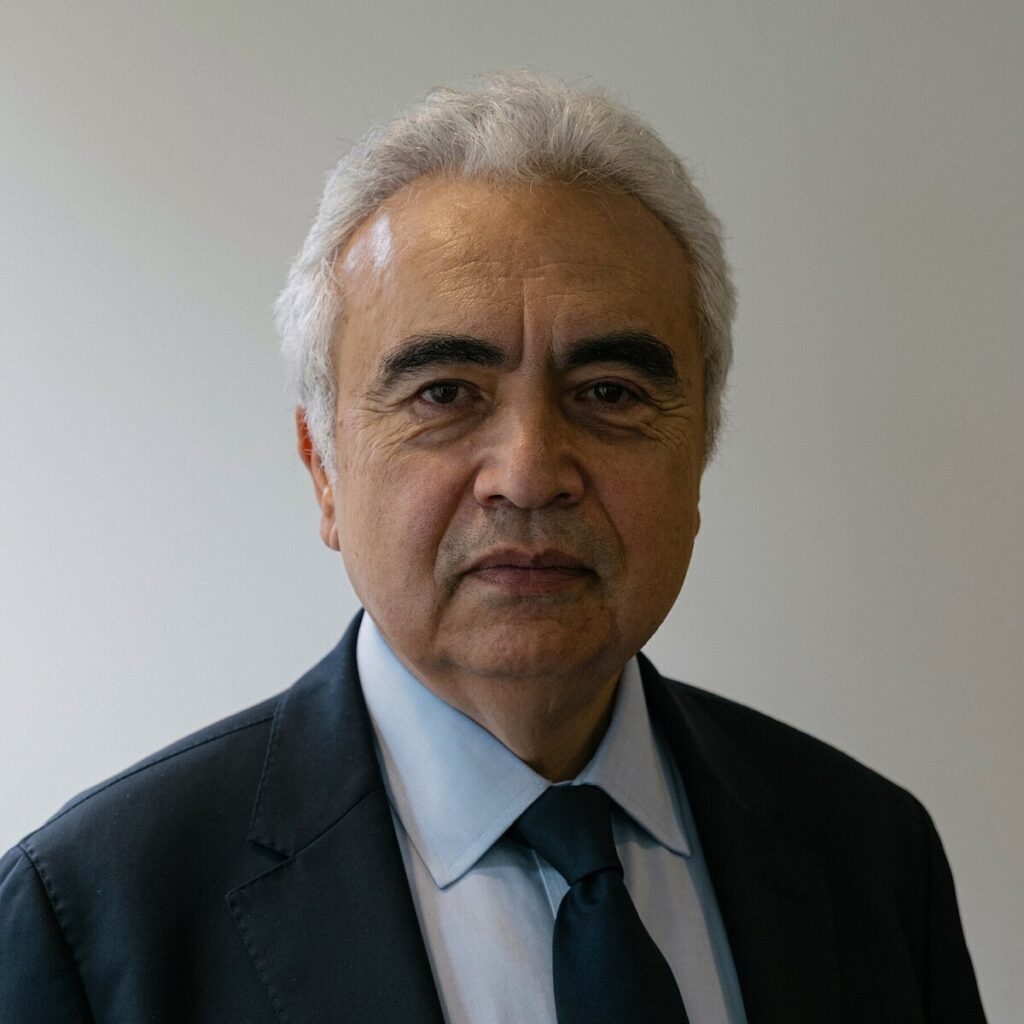
Why Everyone Wants to Meet the ‘World’s Most Boring Man’
Fatih Birol, the Executive Director of the International Energy Agency (IEA), has emerged as a pivotal figure in the global energy discourse, captivating the attention of politicians, oil industry leaders, and climate activists alike. His rise to prominence can be attributed to his steadfast advocacy for a balanced approach to energy transition, one that acknowledges the critical role of fossil fuels while simultaneously pushing for sustainable practices to combat climate change. Birol’s influence is underscored by the fact that his statements are often scrutinized and debated by a wide array of stakeholders, from government officials to corporate executives and environmentalists.
Under Birol’s leadership, the IEA has evolved from its traditional focus on oil supply security to a broader mandate that encompasses climate policy and renewable energy. This shift has been particularly notable in the wake of the Paris Agreement, where Birol has emphasized the need for countries to align their energy policies with climate goals. His recent reports have highlighted the urgent need for a significant reduction in fossil fuel investments, advocating for a rapid transition to renewable energy sources. For instance, the IEA’s World Energy Outlook has warned that without immediate action, the world is on track for a catastrophic rise in global temperatures, prompting calls for urgent investments in clean energy technologies. This balancing act has often drawn ire from the Trump administration, which criticized the IEA’s stance on climate policies and renewable energy, reflecting the contentious nature of energy politics in the current era.
Birol’s ability to navigate these complex dynamics has solidified his reputation as a key player in the energy sector. His background as an economist, combined with a deep understanding of the geopolitical implications of energy policy, has positioned him uniquely to mediate between competing interests. For instance, during the recent energy crises exacerbated by geopolitical tensions, Birol has called for a pragmatic approach that recognizes the immediate needs of energy security while advocating for long-term sustainability. His insights have not only influenced policy decisions but have also sparked discussions on how to achieve a just transition that supports both economic growth and environmental stewardship. As the world grapples with the dual challenges of energy security and climate change, Fatih Birol’s voice will likely continue to resonate, shaping the future of global energy policy.
Politicians, oil giants and climate activists hang on his every word. The Trump administration has blasted him. How did Fatih Birol get so big?


