Balancing between evolutionary rescue and extinction: The adaptive potential of reef-building corals in a warming world | Science
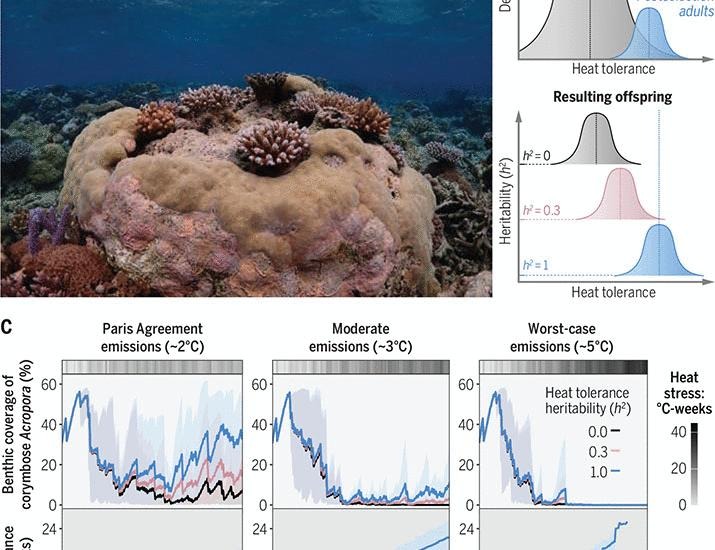
In the face of climate change, reef-building corals are demonstrating remarkable adaptive potential that may enable them to thrive despite rising ocean temperatures. As global temperatures continue to climb, coral reefs, which are vital ecosystems supporting a diverse array of marine life, are increasingly threatened by phenomena such as coral bleaching and ocean acidification. Recent research highlights that certain coral species possess genetic variations that allow them to withstand higher temperatures and adapt to changing environmental conditions. This adaptability is crucial, as coral reefs not only provide habitat for numerous marine organisms but also support coastal economies and protect shorelines from erosion.
One notable example of coral resilience can be seen in the study of the Acropora species, known for their fast growth and structural complexity. Researchers have identified specific genetic traits within these corals that enable them to tolerate increased thermal stress. In laboratory settings, corals with these advantageous traits have shown improved survival rates when exposed to elevated temperatures, suggesting that selective breeding or conservation efforts could enhance the resilience of coral populations in the wild. Additionally, scientists are exploring the role of symbiotic algae, which live in coral tissues and provide them with essential nutrients through photosynthesis. Some coral species have been found to host more heat-tolerant algal partners, further enhancing their ability to cope with warmer waters.
Despite these promising findings, the overall future of coral reefs remains uncertain, as widespread environmental changes continue to pose significant threats. Ocean acidification, driven by increased CO2 levels, can impair coral calcification, making it more challenging for them to build their calcium carbonate structures. Moreover, the pace of climate change may outstrip the ability of many coral species to adapt. Conservation efforts, such as the establishment of marine protected areas and restoration initiatives, are critical to safeguarding these ecosystems. By fostering genetic diversity and supporting the adaptive traits of corals, scientists hope to bolster the resilience of these essential marine habitats, ensuring they can continue to thrive in a warming world. The ongoing research into the adaptive potential of corals serves as a reminder of the intricate connections within marine ecosystems and the urgent need for concerted action to protect them.
The adaptive potential of reef-building corals in a warming world


