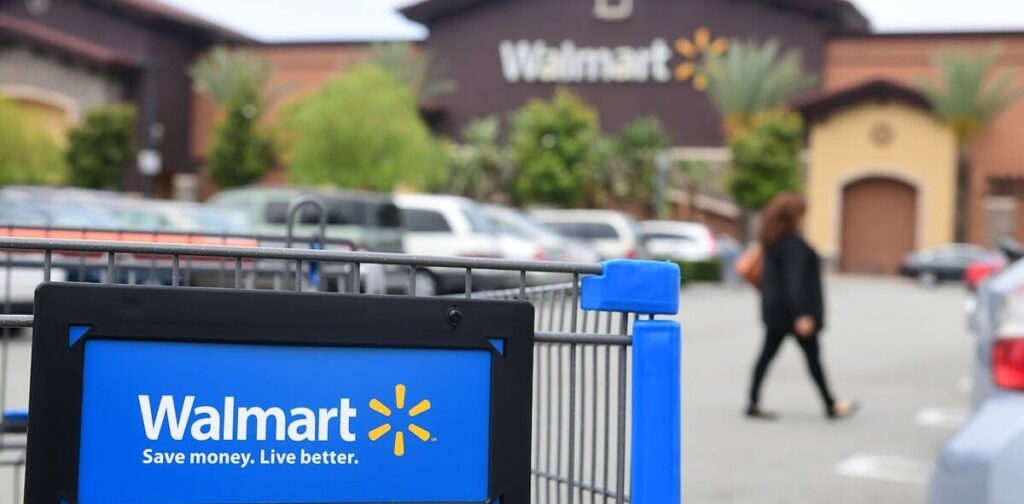
The ‘supercenter’ effect: How massive, one-stop retailers fuel overconsumption − and waste
In a recent study, researchers have highlighted the significant impact of ‘big-box’ supercenters, such as Walmart, Target, and Costco, on consumer purchasing behavior and waste generation. These large retailers, often exceeding 150,000 square feet, are designed to offer a wide array of products, from groceries to general merchandise, which can lead to a phenomenon known as overpurchasing. The study, co-authored by researchers including Lina Wang and Sungho Park, utilized a difference-in-differences analytical method to compare consumer waste trends in counties that experienced the opening of supercenters with those that did not. The findings revealed that the launch of a supercenter can increase consumer waste by up to 7%, with new store openings causing a more significant spike than conversions of existing stores into larger formats.
The implications of these findings are considerable, especially in the context of the broader retail landscape in the U.S. For decades, large-format retailers have overshadowed smaller neighborhood stores, prompting shifts in consumer behavior that favor mass consumption. For instance, Walmart’s “everyday low price” strategy encourages shoppers to buy more in a single trip, often leading to excess purchases that result in food waste as products expire or go unused. This trend not only has economic repercussions, with the U.S. generating nearly 300 million tons of consumer waste annually, but it also poses environmental challenges, as billions of dollars are spent managing this waste.
To address the issue of overpurchasing and its associated waste, the study suggests exploring potential solutions, such as implementing policies that encourage behavioral changes among consumers, like pay-as-you-throw waste management systems. Additionally, revitalizing neighborhood convenience stores could facilitate smaller, more frequent shopping trips, thereby reducing waste. Initiatives promoting local vendors and the reuse economy, including thrift stores and online marketplaces, are gaining traction and could prove beneficial for both the environment and local economies. By identifying effective strategies to mitigate the supercenter effect, communities can work towards fostering sustainable consumption and supporting small businesses, which play a crucial role in job creation and economic growth.
‘Big-box’ supercenters can contribute to overpurchasing by shoppers
Frederic J. Brown/AFP via Getty Images
Imagine walking out of a Walmart, Target or Costco. As you push your large shopping cart to your car, you ask yourself: Did I really need all that stuff?
The answer is you probably didn’t.
In a
recent study
, my co-authors
Lina Wang
,
Sungho Park
and I found that the presence of supercenters – large retailers that sell groceries alongside general merchandise – results in a significant uptick in consumer waste due to overpurchasing.
These supercenters often sit on lots in excess of 150,000 square feet. But figuring out how all that real estate affects people’s shopping habits – if it does at all – is tricky. That’s because a lot of factors influence how much people buy on a single shopping trip.
To answer this question, we looked at the impact of the spread of Walmart supercenters across the U.S. over a decade, using a technique called
difference-in-differences
– an analytical method in which we compared consumer waste trends in counties that saw supercenter launches with “matched” counties that did not. This matching ensured that counties were otherwise closely comparable on socioeconomic factors such as housing, income and education.
Our analysis showed that the launch of a supercenter results in an increase in consumer waste of up to 7%. Furthermore, this increase in consumer waste is larger for new supercenter openings compared with conversions, when existing regular stores are expanded into large-format ones.
Why it matters
For decades, neighborhood stores across the U.S. were edged out by large-format retailers: department stores, supercenters and shopping malls. Although there is evidence that many of these big-name retailers are
beginning to look toward smaller stores
, the shopping landscape remains dotted by supercenters.
And these large stores stimulate mass consumption through gradual shifts in
consumer behaviors
. For example, in their attempt to generate more sales, large-format retailers often underprice smaller neighborhood stores.
Take, for example, Walmart’s “
everyday low price” strategy
, which is key to its business model. This pricing strategy offers shoppers a largely consistent year-round low price rather than relying on occasional sales and discounts.
Further contributing to overpurchasing is the supercenters’ typical location, which tends to be away from residential areas. Naturally, in their effort to avoid multiple trips, consumers tend to maximize the utility of each visit by making their basket sizes larger.
Unfortunately, this overpurchasing often leads to waste as more goods reach expiration date or sit unused in people’s homes.
While this may be a profitable strategy for retailers, it’s bad for society and the environment and creates billions of dollars in waste. To put this into context, the United States generates close to
300 million tons of consumer waste every year
, and then spends
billions of dollars
managing this waste.
What still isn’t known
Now that we have measured the “supercenter effect,” we are keen to look at potential solutions to this problem. Some existing solutions are based on implementing policies that encourage behavioral shifts in consumers. For example, many cities have adopted a
pay-as-you-throw policy
that charges people based on the volume of waste generated.
Other solutions are more structural, such as bringing back neighborhood convenience stores and developing stronger circular economy channels. For example, neighborhood convenience stores can play an important role in mitigating the supercenter effect and could allow for smaller, more frequent shopping trips and significantly less waste.
In many cities,
initiatives promoting local
vendors and stores
are gaining momentum. Such solutions would not only encourage sustainable consumption but also have benefits for local economic growth by promoting small businesses that have historically
accounted for 62%
of net new job creation.
A second solution entails leveraging the “reuse economy,” which can provide a back-end channel for circulating surplus and used goods. While both offline and online reuse channels exist – through the likes of thrift stores, food banks and Facebook Marketplace, for example – they currently remain vastly underused.
Identifying and aggressively implementing such solutions might turn out to be both economically meaningful and environmentally beneficial. But more work needs to be done to figure out which solutions are more effective, and why.
The
Research Brief
is a short take on interesting academic work.
Suvrat Dhanorkar does not work for, consult, own shares in or receive funding from any company or organization that would benefit from this article, and has disclosed no relevant affiliations beyond their academic appointment.


