The Matcha Problem
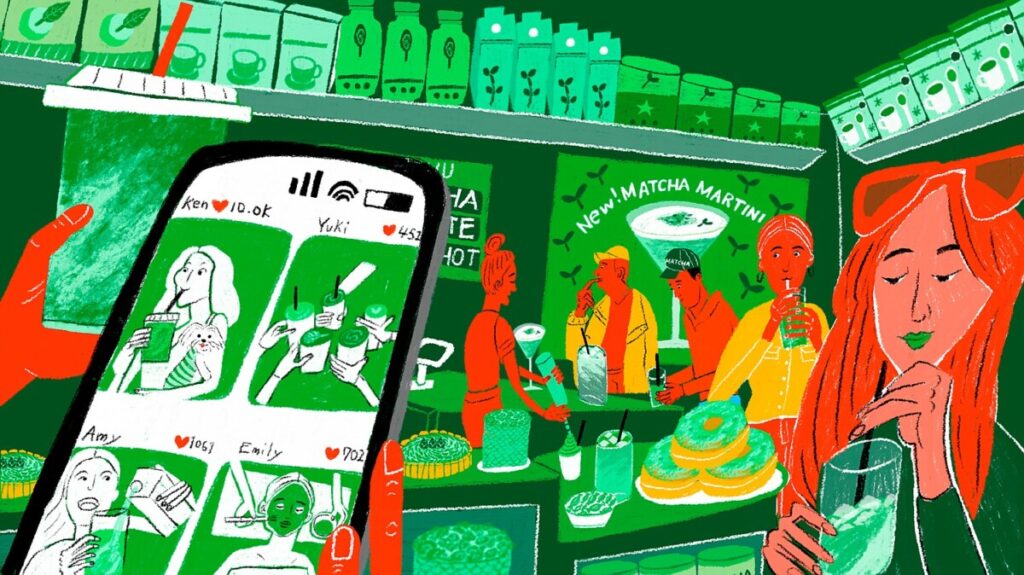
In recent years, matcha has surged in popularity across the globe, becoming a staple in everything from desserts to beverages and even skincare products. This vibrant green tea powder, which has its roots in Japan, is not just a trendy ingredient but has also been embraced by the mainstream American palate. The introduction of Pokémon’s Poltchageist, a “Grass/Ghost type” Pokémon that embodies the essence of matcha, perfectly captures the zeitgeist of this phenomenon. Retail sales of matcha powder in the U.S. have skyrocketed, with a staggering 86% increase over the past three years. In fact, matcha has begun to outsell coffee in some cafés, reflecting a broader shift in consumer preferences towards wellness-oriented, caffeine-rich alternatives. The global matcha market is projected to grow from an estimated $4.3 billion in 2023 to nearly double that by the end of the decade, driven by factors such as caffeine anxiety, the wellness boom, and a growing interest in visually appealing beverages on social media platforms like TikTok.
However, this meteoric rise comes with significant challenges. The traditional production of matcha is labor-intensive and requires specific climatic conditions, making it a delicate agricultural product akin to wine rather than a commodity like corn. As demand outpaces supply, the average price of matcha in Kyoto has nearly tripled, leading to a surge in counterfeit products and unregulated matcha alternatives flooding the market. Experts estimate that up to 90% of the powdered matcha available in stores may not even be authentic matcha, as manufacturers capitalize on the lack of regulation. This has raised concerns among purists and enthusiasts who fear that the integrity of matcha culture is being compromised in favor of mass-market appeal. As companies like PerfectTed leverage the trend by marketing “ceremonial grade” matcha—an unregulated term—there is a growing disconnection between the traditional Japanese tea ceremony and the modern interpretations of matcha being consumed today.
Despite the commercialization of matcha, some experts argue that the trend is not entirely negative, as long as consumers are aware of the cultural significance behind it. The matcha ceremony, steeped in history and ritual, is appreciated by a niche group of enthusiasts, while the broader audience may be more interested in the aesthetic and functional benefits of matcha. As the market continues to evolve, the challenge will be balancing the growing demand with sustainable practices that honor the rich heritage of matcha cultivation. With the potential for a backlash against the trend, it remains to be seen how long this green tea sensation will last, especially as the agricultural realities of matcha production are slow to adapt to the whims of modern consumerism. The future of matcha may ultimately hinge on finding a way to satisfy both the insatiable demand of today’s consumers and the preservation of its cultural roots.
https://www.youtube.com/watch?v=i9BQS6oSHGU
A couple of years ago, Pokémon introduced a new monster: Poltchageist, a “Grass/Ghost type” with special abilities in “hospitality” and being “heatproof.” It is wily and homicidal; it is also matcha.
Sure—why not? Matcha, a special preparation of green tea, is already everywhere else. It’s in candy and restaurant desserts and
ultra-firming eye cream
and Frappuccinos and a pretty foul-sounding
martini
. Loacker, the
100-year-old
Italian company that makes those Quadratini cookies, has
introduced
a matcha flavor. Dunkin’
sells
a matcha doughnut. Thousands or possibly millions of young people on TikTok seem to have devoted their life to decanting green sludge from one vessel to another. Retail sales of matcha powder in the United States are up by 86 percent from three years ago. Matcha is outselling coffee at some cafés,
including
my local Blank Street, which
isn’t really a coffeeshop at all anymore
—earlier this year, the company drenched its interiors in celadon, dropped the word
coffee
from its name, and began offering an ever-expanding menu of matcha drinks in baroque, hybridized flavors, such as carrot cake and “daydream.”
In 2023, the global matcha market was
estimated
to be $4.3 billion. That number is expected to nearly double by the end of the decade. Like most trends, this one is a synthesis of several macro-level factors, among them: caffeine anxiety, the wellness boom,
rising coffee prices
, the proliferation of cheap home milk frothers, and the fact that the color green looks
amazing
on video. Matcha has appeared, as if out of nowhere, to brute-force its way into the mainstream American palate.
Except—matcha does not come from nowhere. It comes from Japan, where it has, for centuries, been used ceremonially, and where supply challenges are now colliding with world-historic demand. For hundreds of years, matcha has been a specialized product, one that is, by definition, laborious to produce:
Camellia sinensis
thrives in subtropical, rainy climates. The best, sweetest matcha—the matcha that people who know matcha drink—comes from plants grown in the shade, after which their two youngest leaves are picked (by hand, only at the very beginning of the season) and then steamed, de-stemmed, deveined, dried, and ground between granite. As an agricultural product, it is much more like wine than like, say, corn. But climate change is shrinking the land that
C. sinensis
can grow on, and the farmers who have traditionally cultivated it are getting older, and they lack willing successors for the demanding work.
[
Read: The drink Americans can’t quit
]
And so, as interest spikes, things are getting weird. From 2024 to 2025, the average price in Kyoto for first-flush
tencha
, the whole leaves used to make matcha, nearly tripled. Farmers outside Japan—in China and South Korea, for example—are frantically cultivating
tencha
, hoping to catch the wave. Manufacturers are taking advantage of the market’s lack of regulation and are selling ground-up green tea as matcha. Joseph Sorensen, the chair of UC Davis’s Department of East Asian Languages and Cultures and the acting director of the university’s Global Tea Institute, estimates that 90 percent of the powdered matcha on store shelves isn’t technically matcha at all.
“Unauthorized resellers”
are scalping marked-up matcha powder on social media as if it were Bad Bunny tickets. Counterfeiters are—allegedly!—selling colored powder and hoping no one notices. Kelly Shaw, who leads marketing for the U.K. matcha brand PerfectTed, told me that her company has seen others bulk ordering its matcha on Amazon and reselling it at competing local shops.
Like Poltchageist, PerfectTed is a product of its time. Quite literally: It became popular in 2023, after two of its co-founders, Marisa Poster and Teddie Levenfiche, went on
Dragons’ Den
, the United Kingdom’s version of
Shark Tank
, when they were both 25. There, they sold matcha using the language of utility and the logic of enterprise: Matcha, Poster told the cameras, evoked a venerable ritual, but more important, it was a “massive opportunity in the natural-energy-drink sector.” Poster had learned of matcha while trying to manage her ADHD and anxiety as an undergraduate at the University of Pennsylvania. She was using energy drinks and coffee to stay awake while studying but was constantly crashing. Matcha—which contains less caffeine than coffee does but more than other green teas do, as well as an amino acid said to aid focus—offered her a cleaner buzz.
All five Dragons fought to give Levenfiche and Poster their money. PerfectTed is now the U.K.’s
fastest-growing retail brand
across all sectors; according to Shaw, it alone imports 25 percent of Japan’s matcha supply. In addition to its flagship product, an energy drink, the company sells canned matcha lattes, Nespresso-compatible matcha pods, and powdered, sometimes flavored matcha. Its website features photographs of sporty people in green outfits and ad copy suggesting that matcha is not only better caffeine but more
interesting
caffeine:
One graphic
juxtaposes an intoxicatingly swirly jade-green matcha latte with a generic paper coffee cup, the latter stamped with BORING in red, like a voided check.
The traditional Japanese matcha ceremony involves patience, special equipment, and zero high-fructose corn syrup. Most of the new-wave matcha companies courting customers outside Japan are offering something else entirely, by admission and design. “I think if it remained in a tea ceremony and required a
cha-wan
and a whisk, it wouldn’t have become as popular as it has,” Shaw told me, gently, using the Japanese word for the special vessel in which matcha is traditionally brewed.
But even as these companies reject historical authenticity, they employ it as a selling point: PerfectTed, like
many, many others
, calls its powdered matcha “ceremonial grade,” a newly popular designation that is
unregulated and completely meaningless
. Matcha, in these companies’ tellings, presents an ancient and vaguely spiritual answer to the trials of modern life—an easy-to-consume, crash-free caffeine hit to get you through a looming deadline, a monk-approved solution to a problem that a monk would never have. Like miso, tahini, gochujang, and so many other global foods that have become trendy in this context-collapsed, free-associative, flavormaxxed culinary era, matcha is no longer really a fully formed cultural product with a heritage to be fidelitous to. Rather, it is a collection of appealing attributes, ready to be stripped for parts and endlessly remixed—a novel flavor, a functional ingredient, a component, a value proposition, a brand.
[
Read: The golden age of the fried-chicken sandwich
]
Matcha’s shift from niche commodity with sacred associations to international celebrity is not, in Sorensen’s view, wholly negative, as long as people don’t “pretend that they’re participating in Japanese culture by having a Starbucks latte.” The matcha ceremony’s practitioners take it seriously, and they’re watching it get more expensive—but, he told me, this is a “pretty specialized group of enthusiasts.” To the degree that the teenagers buying my local Blank Street out of carrot-cake matcha lattes are driving up the price of a pillar of Japanese life, we’re talking about something that’s closer to golf clubs than to Communion wafers. And besides, Sorensen reminded me, much of the “matcha” flavor finding its way to the mass market isn’t actually matcha. “It’s pretty much the difference between something that is strawberry flavored,” he said, “and actual strawberries.” Food products can experience shortages, but
flavors
are a basically infinite resource, at least in food science’s modern era.
Sorensen and
others
are less worried about the rise in demand than they are about what comes after it. Matcha plants require three to five years to mature. Even if farmers were to have the arable land and the human labor to plant all the plants that the world wants right now, the world, at some point, is likely to stop wanting so much of it. Telegenic 20-somethings in the United States can get excited about a new way to stay focused or go viral, and almost immediately, a massive agri-industrial mechanism halfway around the world will shudder to life to satisfy them—a population that barely knows such a mechanism exists and that will probably move on soon anyway. Food, especially food that comes from plants, is slow. Trends, especially trends that come from the internet, are not.


