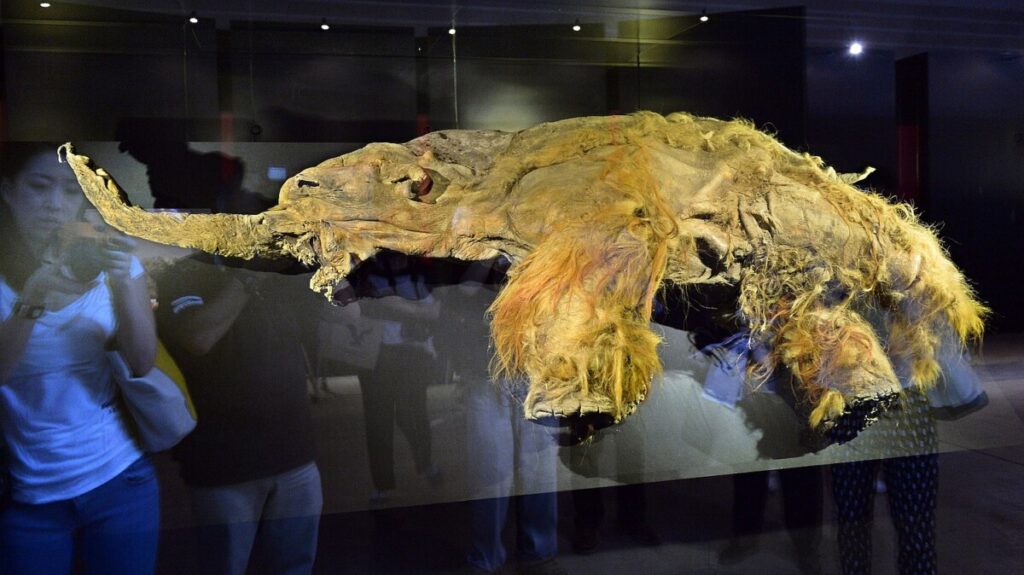
Oldest known RNA found in 40,000-year-old woolly mammoth leg
In a groundbreaking study published in the journal *Cell* on November 14, researchers have unveiled the oldest known RNA sequences recovered from the nearly intact remains of a 40,000-year-old juvenile woolly mammoth named Yuka. Discovered in 2010 by tusk hunters along the Dmitry Laptev Strait in Siberia, Yuka has been a treasure trove for paleontologists due to her exceptional preservation, which includes much of her fur, tusks, trunk, and ears. While previous research has indicated that woolly mammoths went extinct around 4,000 years ago due to climate change, Yuka’s well-preserved remains provide a unique window into the genetic makeup and life of these magnificent creatures that roamed the Earth during the last Ice Age.
The collaborative effort between Stockholm University and the Swedish Museum of Natural History has challenged long-standing assumptions regarding the durability of genetic material. Traditionally, RNA (ribonucleic acid) was believed to be too fragile to survive for long periods after death, with researchers focusing primarily on DNA recovery. However, the team, led by paleogeneticist Emilio Mármol, successfully extracted RNA from Yuka’s frozen muscle tissue, revealing vital insights into her biological functions at the time of her death. This included evidence of cellular stress, suggesting that Yuka was likely attacked by cave lions shortly before her demise. The researchers identified over 20,000 protein-coding genes, uncovering RNA molecules that play critical roles in muscle construction and metabolism, thus painting a vivid picture of the mammoth’s final moments.
Moreover, the discovery of microRNAs—small RNA molecules that regulate gene expression—marks a significant advancement in the field of paleogenomics. This finding not only demonstrates that RNA can endure far longer than previously thought, but it also opens new avenues for studying gene regulation in extinct species. The implications extend beyond the woolly mammoth; researchers are optimistic about the potential to analyze RNA from other ancient organisms and even extinct pathogens, such as Ice Age-era influenza viruses. This research not only enriches our understanding of woolly mammoths but also enhances our grasp of evolutionary biology and ancient ecosystems, paving the way for future discoveries in the field.
A 40,000-year-old juvenile
woolly mammoth
named Yuka is not only remarkable because she was uncovered nearly intact or her grisly cause of death. Her muscles provided paleogeneticists with the oldest known RNA sequences ever recovered. Detailed in a study published on November 14 in the journal
Cell
, the samples contradict previous assumptions about the genetic material’s resilience while furthering our understanding of the famous, extinct megafauna.
Although the last
woolly mammoths
succumbed to a warming planet around 4,000 years ago, the vast majority of them lived and died during the last Ice Age. Paleontologists have since exhumed
multiple specimens
in regions like Siberia, where the frozen tundra and permafrost often keeps the remains remarkably well preserved.
Of those, one woolly mammoth stands apart from all others. In 2010, local tusk hunters discovered the
nearly intact remains of a juvenile
near the coast of the Dmitry Laptev Strait in Siberia. Later nicknamed Yuka, the specimen still features much of its fur, as well as remnants of its tusks, trunk, and small ears. Even at almost 10 feet tall and weighing nearly five tons, Yuka likely died during an attack by cave lions. She’s remained the gold standard of woolly mammoths for nearly 25 years, and consistently provides researchers with new insights about the species and its genetic makeup.
The latest RNA revelations come from a collaboration between researchers at Stockholm University and the Swedish Museum of Natural History. RNA, short for
ribonucleic acid
, is a polymeric molecule responsible for gene expression and is vital to most biological functions.
One of Yuka’s legs, illustrating the exceptional preservation of the lower part of the leg after the skin had been removed, which enabled recovery of ancient RNA molecules. Credit: Valeri Plotnikov
Valerii V Plotnikov
“With RNA, we can obtain direct evidence of which genes are ‘turned on,’ offering a glimpse into the final moments of life of a mammoth that walked the Earth during the last Ice Age,” paleogeneticist and study coauthor Emilio Mármol said in an
accompanying announcement
. “This is information that cannot be obtained from DNA alone.”
For years, researchers assumed gleaning that type of genetic evidence from a woolly mammoth to be nearly impossible. Although the ability to recover DNA and certain other proteins now extends past one million years, RNA was long thought too delicate to survive even a few hours after death. Mármol and his colleagues suspected otherwise, however.
“We wanted to explore whether we could expand RNA sequencing further back in time than done in previous studies,” explained Stockholm University evolutionary genomist and study coauthor Love Dalén.
Mármol, Dalén, and their collaborators knew that if any ancient specimen still possessed any RNA, it would be a well preserved mammoth like Yuka. After examining samples of her frozen muscle, Mármol’s team scoured over 20,000 protein-coding genes, many of which were inactive. They eventually identified RNA molecules responsible for coding key protein functions in muscle construction and stress-related metabolic regulation. These discoveries added further evidence to the theory of Yuka’s final moments.
“We found signs of cell stress, which is perhaps not surprising since previous research suggested that Yuka was attacked by cave lions shortly before [her] death,” said Mármol.
Apart from the RNA itself, the scientists also located microRNAs that don’t encode for proteins.
“[MicroRNAs] were among the most exciting findings we got,” said molecular bioscientist and study coauthor Marc Friedländer. “The muscle-specific microRNAs we found in mammoth tissues are direct evidence of gene regulation happening in real time in ancient times. It is the first time something like this has been achieved.”
“Our results demonstrate that RNA molecules can survive much longer than previously thought,” added Dalén.
Dalén added that the team now believes they will soon be able to examine the “turned on” genes in other extinct animals, but the advancements don’t only concern creatures from the distant past. Further breakthroughs could help sequence RNA viruses like Ice Age-era influenza and coronaviruses.
The post
Oldest known RNA found in 40,000-year-old woolly mammoth leg
appeared first on
Popular Science
.


