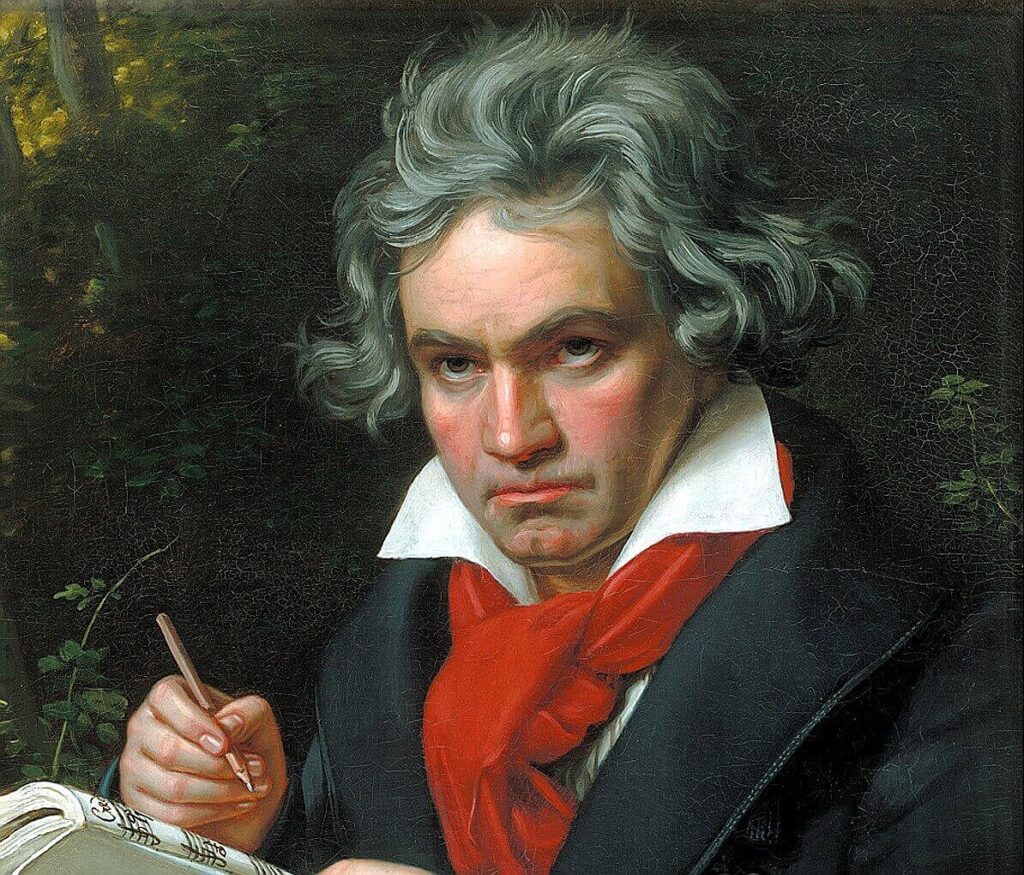
Ludwig van Beethoven
Ludwig van Beethoven, born in 1770 and passing away in 1827, is widely regarded as one of the most influential composers in the history of Western classical music. His contributions not only transformed the musical landscape of his time but also set the stage for the Romantic era that followed. Beethoven’s work marked a significant departure from the conventions of the Classical period, where compositions primarily served religious purposes, educational needs, or social entertainment. Instead, he infused his music with profound emotional depth and personal expression, paving the way for future generations of composers to explore individualism and emotional storytelling through their art.
Beethoven’s early compositions, such as his piano sonatas and string quartets, showcased his mastery of form and structure while simultaneously pushing the boundaries of musical expression. His symphonies, particularly the iconic Fifth and Ninth, are prime examples of this evolution; they reflect a dramatic narrative arc, encapsulating struggle, triumph, and humanity’s collective spirit. The Ninth Symphony, with its choral finale featuring Friedrich Schiller’s “Ode to Joy,” is not just a musical masterpiece but also a powerful anthem of unity and brotherhood that resonates even today. This ability to connect with audiences on an emotional level is what sets Beethoven apart from his predecessors, as he moved away from the purely functional aspects of music to create works that speak to the human experience.
Moreover, Beethoven’s life story adds a layer of intrigue to his legacy. He faced significant personal challenges, including deafness that began in his late 20s and worsened over time, yet he continued to compose some of his most celebrated works during this period of profound adversity. This resilience not only enhances the narrative of his music but also serves as an inspiration, illustrating how creativity can flourish even in the face of great obstacles. Beethoven’s impact on music is immeasurable; he is credited with bridging the gap between the Classical and Romantic eras, influencing countless composers who followed, including Brahms, Wagner, and Mahler. His innovative spirit and dedication to personal expression have solidified his status as a timeless figure in the world of music, ensuring that his works continue to be celebrated and performed around the globe.
https://www.youtube.com/watch?v=W-fFHeTX70Q
Ludwig van Beethoven (1770 – 1827) is one of the greatest composers in history. His work marked a turning point for composers, who had previously written primarily for religious services, to teach, or to entertain at social functions. But Beethoven’s […]