Canada loses its official ‘measles-free’ status – and the US will follow soon, as vaccination rates fall
In a startling shift for public health in North America, Canada has officially lost its measles-free status following a significant outbreak that infected over 5,000 individuals in 2025. The Pan American Health Organization (PAHO) made this announcement on November 10, 2025, after a thorough review of public health data by its measles elimination commission in Mexico City. This marks a dramatic change for a country that had successfully eliminated measles transmission back in 1998. The resurgence of this highly contagious disease is attributed to a troubling decline in childhood vaccination rates, which have plummeted from approximately 90% in 2019 to around 82% in 2022 and 2023. As a result, measles cases have spiked across all provinces in Canada, with tragic consequences, including the deaths of two infants.
The situation in Canada is not an isolated incident; the United States is also grappling with significant measles outbreaks, with over 1,600 cases reported in 2025—the highest number since 1992. These outbreaks are largely concentrated among unvaccinated populations, highlighting a broader issue of waning public trust in health messaging and declining vaccination uptake. Experts emphasize that to maintain herd immunity and prevent outbreaks, at least 95% of the population must be vaccinated against measles. Unfortunately, the fallout from the COVID-19 pandemic has exacerbated vaccine hesitancy, leading to increased vulnerability to vaccine-preventable diseases. As both Canada and the U.S. face the potential loss of their measles-free designations, the implications extend beyond their borders, raising concerns about the risk of measles spreading to other regions, particularly Central and South America, which currently maintain their measles-free status.
Looking ahead, it is crucial for public health officials and communities to address the underlying issues contributing to declining vaccination rates. Without a concerted effort to rebuild trust in vaccines and improve vaccination coverage, the likelihood of further outbreaks of measles and other preventable diseases looms large. The resurgence of measles serves as a stark reminder of the importance of maintaining high vaccination rates to protect public health and prevent the return of diseases that had once been under control. As the situation develops, the need for effective public health communication and community engagement will be more vital than ever to safeguard the health of future generations.
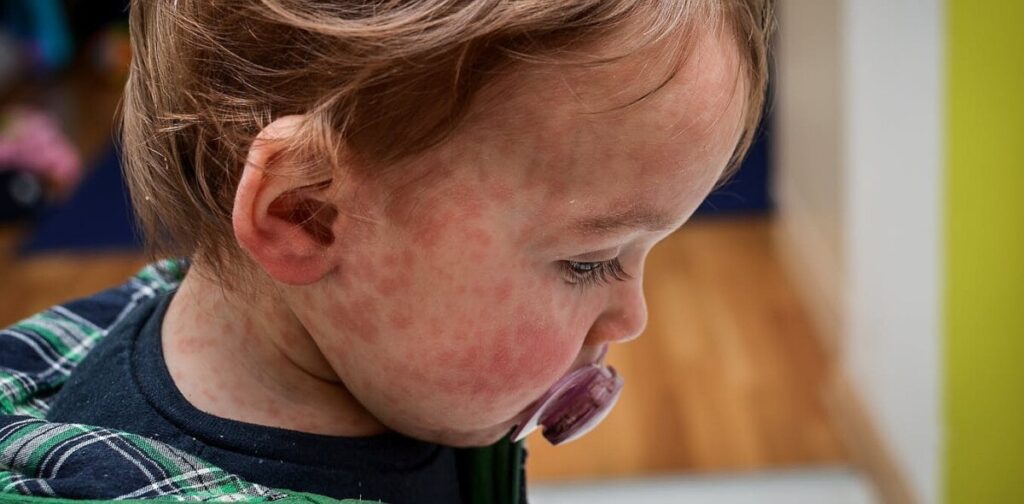
Canada eliminated measles in 1998 but had a major outbreak in 2025.
jure/iStock via Getty Images Plus
In the wake of a
measles outbreak in Canada that has infected
thousands of people over the past year, an international health agency
revoked the country’s measles-free status
on Nov. 10, 2025.
The Pan American Health Organization, which serves as the World Health Organization’s regional office for the Americas, made this announcement after the agency’s
measles elimination commission
met in Mexico City to review the latest public health data.
As a
global health epidemiologist
who studies the spread of infectious diseases, this change in status does not surprise me. Measles is highly contagious, and a drop in childhood vaccination rates
in Canada
and in other countries has left many children unprotected from the disease.
The resurgence of measles in Canada after decades with very low numbers of cases
is not an isolated problem
. The U.S. has also had
large outbreaks of measles this year
, and it will likely soon lose its measles-free designation as well.
The loss of measles elimination status is a symptom of a deeper issue:
declining trust
in public messaging about science and health, which has led to decreased vaccination rates and growing vulnerability to vaccine-preventable diseases.
What does it mean for a country to be measles-free?
Measles is one of the most contagious diseases on the planet. Before the measles vaccine was
licensed for use in 1963
, nearly every child got measles infection and
more than 2 million children died
from measles each year.
The vaccine decreased that risk dramatically. By 1968, five years after the vaccine became available, case counts in the U.S. had
dropped by more than 95%
. Cases in Canada also
decreased substantially
after the vaccine was introduced.
Tragically,
about 100,000 children still die from measles
each year even though a safe, effective and low-cost vaccine is available. Almost all of those deaths occur in low-income countries where many children do not have access to recommended vaccines.
The World Health Organization uses
three labels to describe
how well a country is preventing the spread of infectious diseases such as measles. A disease is said to be controlled when public health interventions such as routine childhood vaccinations significantly lower the rate of new infections. A disease is considered to be eliminated from a country when the only cases that happen are small outbreaks linked to international travel. And finally, a disease is deemed eradicated only after several years of no cases occurring anywhere in the world.
To achieve the status of measles elimination, a country must have no ongoing local transmission of the disease
for at least one year
. It will lose that status if it has a chain of cases that spread from person to person for more than one year.
Measles cases have occurred in every province in Canada in 2025.
Once a country has eliminated measles, there is almost no risk from the disease as long as vaccination rates stay high. But when vaccination rates drop, outbreaks will soon start happening.
What happened in Canada?
In 1998, the Pan American Health Organization
confirmed that Canada had eliminated measles transmission
. Two years later, the U.S. also
gained the measles-free designation
.
By 2016, every country in the Americas had achieved measles elimination status. The region
lost that status in 2018
after outbreaks in Brazil and Venezuela, and then
regained it in 2024
.
But childhood vaccination rates
have been falling worldwide
, especially during and after the COVID-19 pandemic. To protect communities from measles outbreaks,
about 95% of the population
must be vaccinated against the disease.
In Canada, the percentage of 2-year-olds who have received at least one dose of measles vaccine dropped from about 90% in 2019 to
about 82% in 2022 and 2023
. As the number of unvaccinated people in the population increased, the risk of measles outbreaks grew.
After having only 16 total cases of measles nationwide between 2020 and 2023, the number of measles cases in Canada jumped to more than 100 in 2024 and
more than 5,000 cases in 2025
. Cases have occurred among infants, children and adults in every Canadian province in 2025, and two infants have died.
Fewer than 10% of the people who have gotten sick had been vaccinated against the disease.
What happens next?
It is likely that both the U.S. and Mexico will lose their measles-free designation in 2026, because both countries have had
sustained outbreaks of measles
since early 2025.
Although
more than 90% of kindergartners in the U.S.
are vaccinated against measles, that rate is too low to protect communities from outbreaks. An
outbreak that started in Texas
in January 2025
infected more than 760 people
and caused the deaths of two children.
In total, more than
1,600 Americans
in more than 40 states have gotten sick from measles in 2025. That is more cases than any year since 1992. More than 90% of the people who got sick were unvaccinated.
Mexico has also had
thousands of measles cases this year
, mostly among unvaccinated people.
Central America, South America and the Caribbean will retain their measles-free status for now. But the outbreaks in North America increase the risk of measles spreading to other countries.
Without a significant improvement in vaccination coverage and public trust in community health measures, many countries are likely to face more, and bigger, outbreaks of measles and other vaccine-preventable diseases in the coming years.
Kathryn H. Jacobsen does not work for, consult, own shares in or receive funding from any company or organization that would benefit from this article, and has disclosed no relevant affiliations beyond their academic appointment.


