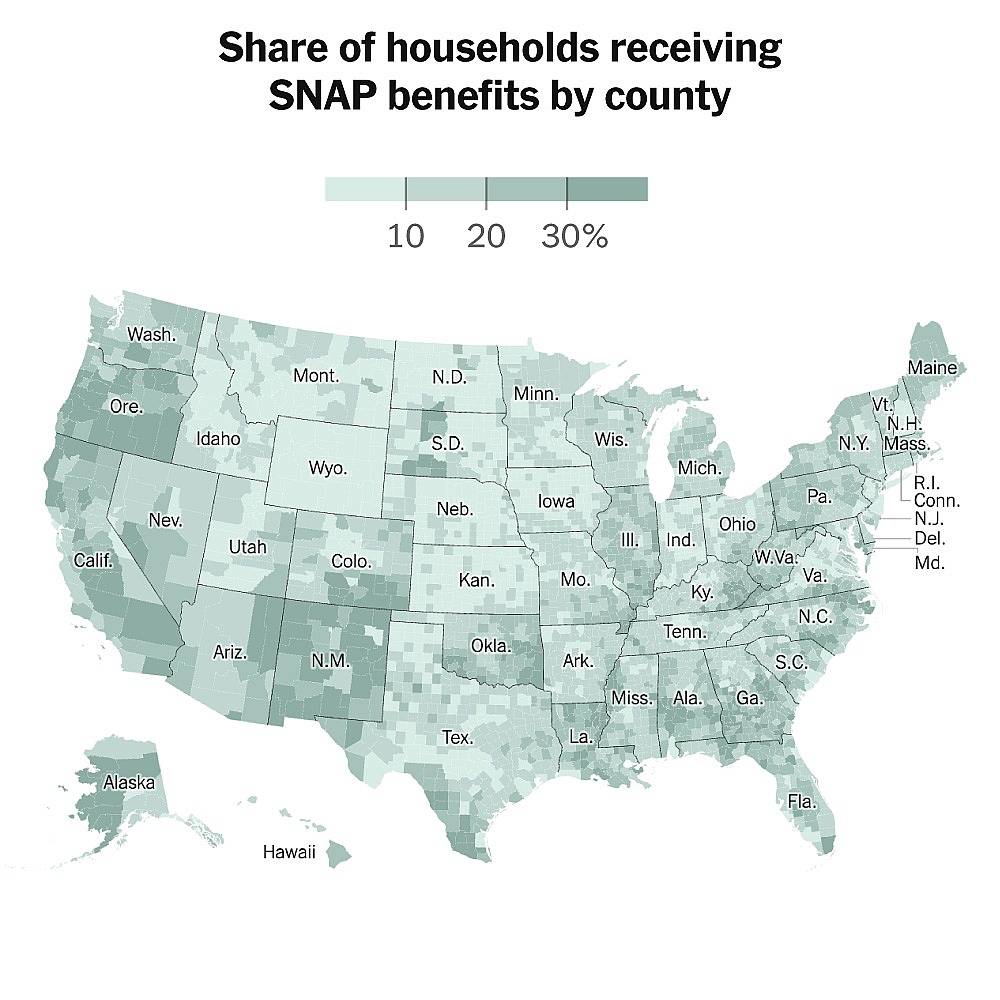
SNAP Map: Here’s Who Will Be Affected by Disruptions to Food Aid
The Supplemental Nutrition Assistance Program (SNAP), commonly known as food stamps, plays a critical role in providing nutritional assistance to millions of Americans, regardless of their political affiliations. A recent analysis reveals that a significant number of SNAP recipients reside in districts represented by Democratic lawmakers, highlighting a complex interplay between political representation and the socioeconomic realities of food insecurity. According to the U.S. Department of Agriculture, approximately 41 million people rely on SNAP benefits, which underscores the program’s importance in alleviating hunger and supporting families across the nation.
Despite the political leanings of many SNAP recipients, the program’s reach extends far beyond party lines, affecting communities in both urban and rural settings. For instance, while states like California and New York, which have large Democratic majorities, show high enrollment rates in SNAP, conservative states such as Mississippi and Arkansas also report significant numbers of participants. This illustrates that food insecurity is not confined to a single demographic or political ideology; rather, it is a pervasive issue that transcends geographical and political boundaries. The program is designed to assist those in need, including low-income families, the elderly, and individuals with disabilities, ensuring that essential nutritional support is available to all who qualify.
In addition to its broad impact, SNAP has been a focal point of political debate, especially regarding funding and eligibility criteria. Critics often argue about the program’s efficiency and the potential for misuse, while advocates emphasize its necessity in combating hunger and supporting economic stability. The ongoing discussions about SNAP reflect larger conversations about welfare programs in America, with implications for future legislation and policy decisions. As the nation continues to grapple with economic challenges, understanding the demographics of SNAP recipients can inform better strategies to address food insecurity and support vulnerable populations across the political spectrum.
More SNAP recipients live in Democratic districts. But the program touches every corner of the country.