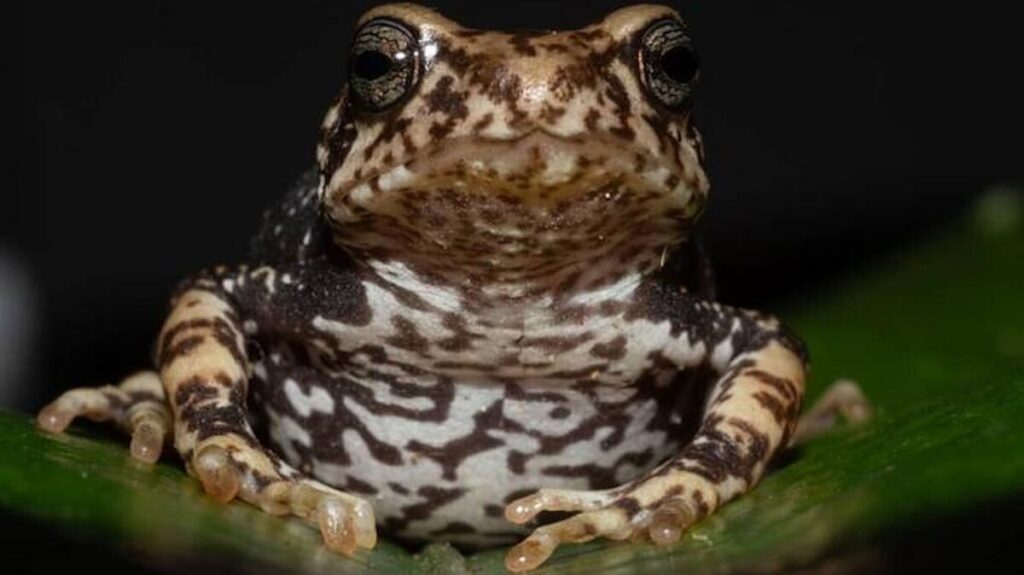
These toads don’t start as tadpoles
The lifecycle of frogs is a fundamental concept in early science education, often illustrated by their progression from eggs to tadpoles and finally to adult amphibians. However, the Nectophrynoides genus, commonly known as tree toads, challenges this traditional narrative. Unlike the vast majority of the nearly 8,000 known frog species that undergo a typical metamorphosis, Nectophrynoides have developed a unique reproductive strategy: they give birth to live young, known as “toadlets,” bypassing the egg and tadpole stages entirely. This intriguing adaptation allows these toads to thrive in their specific habitats, particularly in regions where access to water for egg-laying is limited.
Recent research published in the journal *Vertebrate Zoology* highlights the discovery of three new species of tree toads in Tanzania’s jungles, further expanding the understanding of this unique reproductive mode. The study, co-authored by Mark Scherz, a herpetology curator at the Natural History Museum Denmark, emphasizes the diverse reproductive strategies among frogs, which often diverge from the well-known metamorphosis paradigm. To confirm these new species, researchers utilized a technique called museuomics, extracting DNA from historical specimens collected as far back as 1905. This innovative approach allowed scientists to reassess and classify the morphological diversity of these toads, shedding light on their evolutionary history.
Despite the excitement surrounding these discoveries, the future of Nectophrynoides species is precarious. The Eastern Arc Mountains of Tanzania, a hotspot for biodiversity, are facing severe threats from deforestation and climate change, putting many tree toads at risk of extinction. With one species already extinct in the wild and another not seen since 2003, conservation efforts are crucial to ensure the survival of these fascinating amphibians. While the discovery of new species is a positive development, it underscores the urgent need for protective measures to preserve their habitats and promote the continuation of their unique life cycles.
A
frog’s lifecycle
is likely one of the earliest bits of science that many of us remember learning. They start as eggs, hatch into
tadpoles
, and soon grow into the recognizable adult amphibians. Pretty simple and straightforward, right?
While that remains true for the vast majority of the planet’s nearly
8,000 known frog species
, a handful of the amphibians have evolved a more streamlined reproductive process. Members of the
Nectophrynoides
genus (more commonly known as tree toads) don’t bother with the egg and tadpole stages. Instead, they give birth to tiny, live “toadlets.”
Nectophrynoides
comprise only about one percent of all frogs and toads, but that number is officially increasing. In a study published in the journal
Vertebrate Zoology
, biologists describe an additional three tree toad species discovered living in the jungles of Tanzania that have this tadpole-less life cycle.
Nectophrynoides, like this N. viviparus, live in the low vegetation. Credit: Michele Menegon
“It’s common knowledge that frogs grow from tadpoles—it’s one of the classic metamorphosis paradigms in biology,” Mark Scherz, study co-author and herpetology curator at the Natural History Museum Denmark,
said in a statement
. “But [frogs] actually have a wide variety of reproductive modes, many of which don’t closely resemble that famous story.”
To confirm these three newest tree toad species, Scherz and colleagues needed to consult some of the very first
Nectophrynoides
specimens ever collected. In 1905, German researcher Gustav Tornier announced the discovery of a Tanzanian toad whose live births contradicted common knowledge of the amphibians. Those initial specimens have since spent 120 years in the archives of Berlin’s Museum für Naturkunde. The team visited the museum and collected DNA samples from the original toads using a technique known as museuomics. As its name implies, museuomics is the process of obtaining genomic data from biological material housed in museums.
One of the newly described toad species, Nectophrynoides uhehe. Credit: Michele Menegon
Like its relatives, Nectophrynoides luhomeroensis has large skin glands all over its body. Credit: Michele Menegon
“Phylogenetic work from a few years ago had already let us know there was previously unrecognized diversity among these toads,” explained University of Copenhagen biologist and study co-author Christian Thrane. “But by travelling to different natural history museums and examining hundreds of preserved toads, I was able to get a better idea of their morphological diversity, so we could describe these new species.”
“Our museomics work was able to reveal exactly which populations those old specimens belonged to, giving us a lot more confidence for future work on these toads,” added University of Potsdam museuomics expert and study co-author Alice Petzold.
Nectophrynoides viviparus and its relatives vary greatly in color. Credit: Michele Menegon
The prevailing theory is that tree toads evolved their unique birthing strategy due to their habitats. Simply put, it’s easier to forgo laying eggs for live birth if your home is far from a habitable body of water. Unfortunately, the remarkable evolutionary adaptation is exacerbating the threat of extinction. The Eastern Arc Mountains of Tanzania are one of the most biodiverse regions on Earth, but they’re also disappearing due to
deforestation
and
climate change
.
The study’s authors noted that most known tree toads are already on the verge of eradication. One species,
Nectophrynoides asperginis
, is already extinct in the wild, while
Nectophrynoides poyntoni
hasn’t been seen since 2003. As wonderful as it is to find new examples of the impressive toads, conservation efforts will be the only way to ensure they can continue breeding new generations of toadlets.
The post
These toads don’t start as tadpoles
appeared first on
Popular Science
.


