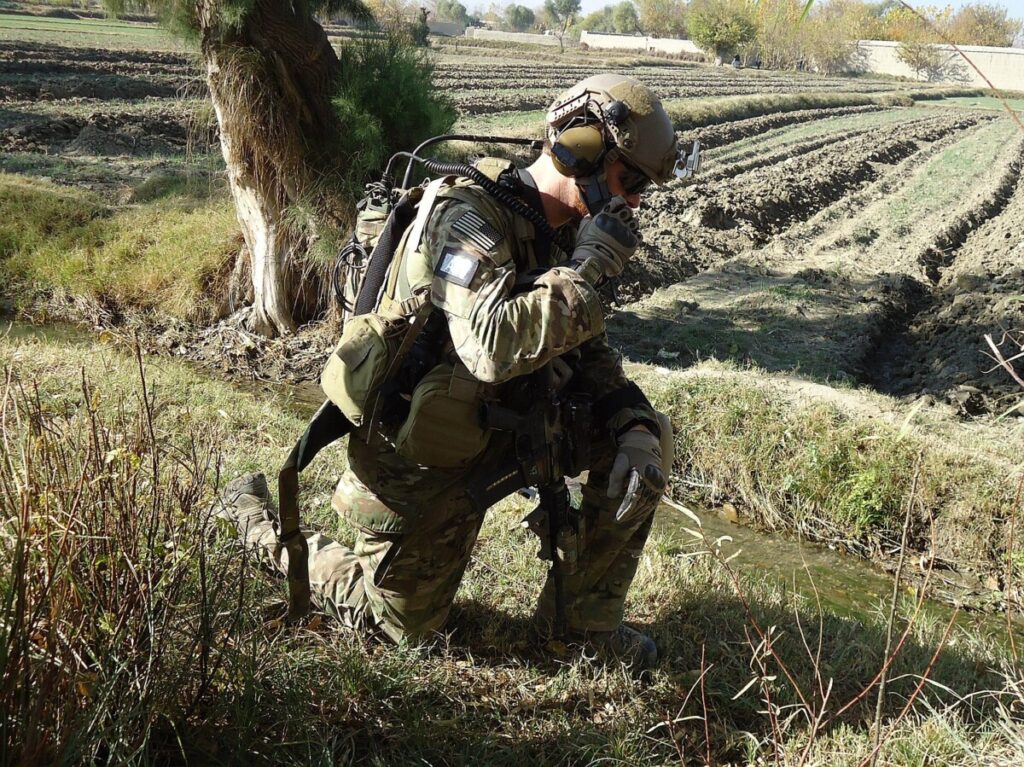
The US Army says it’s now getting soldiers next-day fixes on new tech rather than making them wait 6 months
The U.S. Army is undergoing a significant transformation in how it develops and implements its command and control systems, exemplified by the Next Generation Command and Control (NGC2) initiative. This software-driven system is currently being tested through a series of exercises, allowing soldiers to collaborate directly with developers to address issues in real time. Unlike traditional military development processes that often take months for upgrades, soldiers are now able to see fixes implemented overnight. This agile approach is crucial as the Army seeks to keep pace with rapid technological advancements and prepare for potential high-intensity conflicts in the future.
Maj. Gen. Patrick Ellis, commanding general of the Army’s 4th Infantry Division, highlighted the positive feedback from soldiers who appreciate the immediate response to their input. This collaborative environment is a departure from the typical lengthy feedback cycles, fostering a more dynamic relationship between soldiers and developers. The ongoing Ivy Sting exercises at Fort Carson, Colorado, have facilitated this interaction, with each iteration of testing leading to incremental upgrades in capabilities, such as enhanced connectivity between Howitzers and drones for intelligence gathering. The NGC2 system represents a major shift from older, more rigid command and control technologies, emphasizing an open architecture and a focus on software and data integration.
The Army’s commitment to a more agile development process is evident in its broader strategy to engage with industry partners like Anduril and Palantir, aiming to create a more collaborative and responsive procurement environment. Joe Welch, the Army executive overseeing the NGC2 program, remarked on the evolution of relationships with industry, stressing the importance of building technology that can be rapidly updated based on user feedback. This iterative design approach has proven effective in other projects, such as the Mid-Range Capability (MRC) missile system, which benefited from soldier input during deployments. As the Army continues to embrace this new methodology, it is not only enhancing its capabilities but also fundamentally changing its operational culture to be more responsive and innovative in the face of evolving warfare challenges.
TK
Army Maj. Joel Anderson
US Army soldiers are working with developers to refine the service’s new command and control system in real time.
NGC2 is a software-driven command-and-control system now being tested through a series of Army exercises.
Soldiers are getting fixes overnight rather than in six months, officials said.
The US Army is rushing to close the dangerous gap between how fast technology evolves and how slowly the military usually moves.
The service’s
Next Generation Command and Control
(NGC2) system is being developed with soldiers and developers fixing problems in real time instead of waiting months for upgrades, Army officials said.
It’s a different, faster approach to developing weapons than the service is used to; it’s a process officials said is essential for preparing the Army for a potential high-intensity future conflict.
NGC2, has been a leading new development in the Army’s broader transformation initiative that’s focused on new weapons and technologies like uncrewed capabilities and artificial intelligence, and the service is leaning hard on soldier feedback for faster development.
“What soldiers are really enjoying is having the ability to talk to the developers,” Maj. Gen. Patrick Ellis, commanding general of the Army’s 4th Infantry Division, told reporters at a recent media roundtable.
Ellis said that while industry likes this setup, the soldiers really like it because it’s not the usual “I’ve offered my opinion, and six months later another engineering release comes out.”
“It’s much more a case of, ‘I’ve offered my opinion, and tomorrow, what I asked you to fix has now been fixed,'” he said.
TK
US Army photo by Pvt. Jacob Cruz
Ellis said soldiers and developers have been in constant conversation about how to use this new technology during the Army’s
Ivy Sting exercises
at Fort Carson, Colorado. The Army has completed two rounds of testing so far, with a third set for next month and a larger event next year that will pit NGC2 against simulated cyber and electronic warfare threats.
Each Ivy Sting has seen incremental upgrades to NGC2, including the number of Howitzers connected, the use of drones to provide intelligence, surveillance, and reconnaissance feeds, AI models for identifying targets, and more diversified systems for commanders to make decisions.
NGC2 marks a major shift from the command and control technologies the Army has long relied on. It’s a more centralized system relying on open architecture, data, and software. The development team behind it, including Anduril, Palantir, and other companies, has been
working with the Army
on its specific capabilities.
Ellis said that the Army is staying deeply involved in the project from start to finish, rather than serving as a temporary stop for contractors who build something and move on.
Army leadership has been emphasizing the need for a new approach to buying, developing, and fielding weapons, as well as more collaborative relationships with industry partners. They’re prioritizing agile and adaptive development of new systems, a more
Silicon Valley
approach.
TK
US Army photo by Pvt. Jacob Cruz
Joe Welch, the Army executive overseeing the NGC2 program, said the system is one example of a “totally different relationship with industry than what we have previously been doing within our historic acquisitions,” noting the service’s goal to avoid past pitfalls and build technology that can be updated and improved quickly.
Getting input from soldiers into the development of new technologies isn’t new, but there’s an effort to move faster as warfare evolves. For instance, that feedback has been useful in the swift development of the Army’s
Mid-Range Capability, or Typhon
, missile system.
During an exercise in the Philippines earlier last year, soldiers tweaked Typhon in the field, reducing reload time and stress on its components. User input was collected during and after the deployment in the region.
In a report earlier this year, the Government Accountability Office, a congressional watchdog agency, said the Army’s MRC program reflected “an iterative product development approach” with flexible requirements and regular user feedback. The focus was getting a “minimum viable product” into the hands of soldiers and letting that drive iterative development.
The
iterative design approach
has been a growing interest for the Army and is present in work on NGC2 as well. What the Army’s doing with NGC2, Welch said, “is really changing how the institutional Army behaves.”
“It’s showing we can move not just in acquisition more quickly, but in all the aspects of what we do,” he said.
Read the original article on
Business Insider


