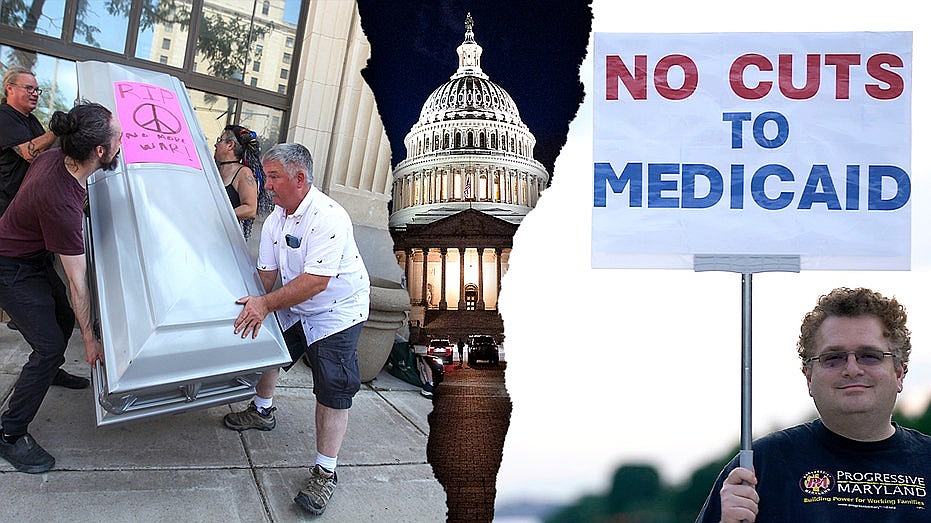
Republicans, health experts push back on Democrats’ Medicaid ‘scare tactics’
In the wake of a prolonged government shutdown sparked by disputes over Obamacare subsidies, the ongoing conflict between Democrats and Republicans regarding Medicaid reforms has intensified. Democrats have accused the GOP of implementing cuts that primarily benefit the wealthy while simultaneously raising premiums and jeopardizing coverage for vulnerable populations. They argue that these reforms undermine the very essence of Medicaid, which is designed to support individuals who cannot participate in the labor market, including the disabled, pregnant women, children, and low-income seniors. Conversely, Republicans and conservative health policy experts assert that these claims are exaggerated and misleading. They argue that the reforms introduced under the Trump administration, particularly those linked to tax cuts, are intended to enhance the program’s integrity and ensure that Medicaid funds are directed toward those who genuinely need them.
Republican leaders, such as Rep. Morgan Griffith and Rep. Brett Guthrie, emphasize that the changes will not adversely affect the traditional Medicaid population. They defend stricter eligibility requirements as a means to ensure that benefits reach the intended recipients, claiming that these adjustments will strengthen the program. For instance, the GOP’s reforms require able-bodied, working-age adults to engage in work, education, or volunteer activities to receive benefits, a move they argue will reduce waste and prevent misuse of funds. Additionally, the Republicans have raised concerns about how certain states, particularly those led by Democrats, have exploited funding loopholes to finance healthcare for non-citizens, which they believe detracts from the program’s core mission.
Democrats have responded vigorously to these reforms, launching advertising campaigns that depict the GOP’s actions as harmful to Medicaid recipients. Groups like Protect Our Care have invested significant resources in messaging that warns against the potential fallout of these changes. However, proponents of the Republican reforms, including disability advocates, argue that the modifications will ultimately improve services for individuals with disabilities by increasing access to home and community-based services and ensuring that funding is utilized effectively. They believe that the reforms will create a more robust framework for Medicaid, allowing it to better serve its most vulnerable beneficiaries while promoting financial security and accountability. As the debate continues, both sides remain entrenched in their positions, making it clear that the future of Medicaid and its reforms will be a pivotal issue in American healthcare policy.
https://www.youtube.com/watch?v=fHl8ktogYsQ
Even before the conflict over Obamacare subsidies that resulted in a month-and-a-half-long government shutdown, Democrats were already attacking Republicans over their reforms to the federal public health insurance infrastructure, which has expanded over many years.
Democrats say the GOP’s cuts were put in place to give tax breaks to the wealthy, and serve to raise people’s premiums and kick them off their coverage. But Republicans, free-market health policy experts and a disability advocate argue these are “scare tactics” used to deceive the public about what Republicans are really trying to do to Medicaid.
According to conservative health policy experts who spoke to Fox News Digital, Republican changes have done nothing to harm those whom Medicaid was originally intended for — people not expected to be in the labor market, such as individuals with disabilities, pregnant women, children and seniors. They argue the
Medicaid reforms
built into Trump’s tax cuts have actually improved the federal healthcare program for those it is supposed to be serving.
DEMOCRATIC LAWMAKERS REEL AFTER SENATE VOTES TO REOPEN GOVERNMENT: ‘REPUBLICAN-MADE HEALTHCARE CRISIS’
“The Working Families Tax Cuts increased oversight efforts as part of a larger package of Medicaid program integrity measures to more precisely serve the traditional Medicaid and the Medicaid Expansion populations,” said Rep. Morgan Griffith, R-Va., who serves as chairman of the House Committee on Energy and Commerce Subcommittee on Health. “Progressive Democrats and their Congressional allies are desperate as they try to pan the Working Families Tax Cuts as devastating to the traditional Medicaid population, which is not true! The traditional Medicaid population, which includes expectant mothers, low-income seniors, children and individuals with disabilities, is not affected by our bill!”
Stricter eligibility requirements — which experts who support the GOP’s approach told Fox News would ensure Medicaid dollars go to those they were intended for — are among the Republican reforms that have drawn Democrats’ ire. Medicaid and the Children’s Health Insurance Program had more than 82 million enrollees in 2024, compared with 42.1 million in 2005.
Democrats are also upset with provisions that impact how states get reimbursed for certain
healthcare coverage
via the federal government. Republicans have argued that Democratic states, like California, have been using funding loopholes in this framework so that federal dollars can help them pay for the ballooning cost of covering health insurance for non-U.S. citizens.
KEY TRUMP AGENCY VOWS TO CLAW BACK OVER $1B BENEFITING ILLEGALS IN BLUE STATES: ‘WON’T TOLERATE IT’
The latest fight that triggered the recent government shutdown centered on temporary Obamacare subsidies enacted under President Joe Biden during the coronavirus pandemic, described by his administration as a way to ease healthcare costs during that economic strain. But, since February, Democrats have targeted vulnerable Republicans over Medicaid through ad buys and messaging campaigns. One group, Protect Our Care, reportedly spent $1 million on billboards and TV ads titled “Hands Off Medicaid.”
However, Paragon Health Institute President Brian Blase argues these changes serve to “rightfully refocus” Medicaid, not ruin it.
“It requires able-bodied, working-age adults to work, go to school, or volunteer to receive benefits. It cracks down on corporate-welfare schemes that direct billions of dollars to wealthy, politically connected insurers and hospitals,” Blase said. “And it reduces waste, fraud, and abuse that divert resources from those that truly need it.”
Chairman of the House Committee on Energy and Commerce,
Rep. Brett Guthrie, R-Ky.,
said point-blank that “members of the traditional Medicaid population will not lose coverage due to this law,” while slamming the “left-wing media” for perpetuating attacks on Republicans.
“Time and again, Republicans have fought for strengthening, sustaining, and securing the Medicaid program for our most vulnerable Americans — expectant mothers, children, low-income seniors, and individuals living with disabilities,” Guthrie argued. “Republicans are enabling the Medicaid program to serve its intended purpose, and we will continue to fight for solutions that protect the program for generations to come.”
REPUBLICANS DUB FETTERMAN ‘VOICE OF REASON’ AFTER HE ACCUSES HIS OWN PARTY OF ‘PLAYING CHICKEN’
Dean Clancy, Senior Health Policy Fellow at Americans for Prosperity, applauded Republicans for sticking to their guns in the face of “Democrats’ hyperbolic claims and histrionic scare tactics aimed at blocking any change to Medicaid.”
Another angle of attack for Democrats has been claims that the Republican reforms will negatively impact people with disabilities. The fear is that the increased eligibility requirements will be a major barrier to people with disabilities who might struggle with such tasks. They also fear the funding framework change for states could push them to reduce benefits, eligibility or limit services for this population.
But Rachel Barkley, Director of the National Center’s Able Americans Program, which promotes free-market policy reforms for people with disabilities, said she is confident that Republicans’ reforms to Medicaid will “directly improve” the lives of those living with disabilities.
Among the reforms Barkley praised were the implementation of the Helping Communities with Better Support (HCBS) Act, which she said “expands access to Medicaid home- and community-based services for individuals with disabilities and their caregivers,” while simultaneously increasing transparency and accountability for those waiting for care.
Barkley also highlighted new tax provisions ushered in by Republicans that she said will serve to promote financial security for those with disabilities.
But importantly, Barkley added, the
GOP reforms
— such as new work requirements — serve to ensure that disabled people are given the priority within Medicaid that they deserve.
Clancy, meanwhile, noted that he and the folks at Americans For Prosperity, a D.C. think tank that promotes free-market solutions to problems, were big fans of the “Personal Option” that he says Republicans’ Medicaid reforms advanced.
Clancy has described the “Personal Option” as “a set of sensible, principled reforms that make American health care better, more affordable, and more accessible for everyone — without a government takeover.” He said the approach gives Medicaid enrollees more control over how their services are delivered rather than leaving those decisions to the government.