Nouvelle Vague review: Richard Linklaters tribute to Jean-Luc Godard and Breathless is good vibes only
Richard Linklater is set to make a splash in 2025 with two films that celebrate the artistic legacies of notable figures in music and cinema. Both projects are making their debut at the prestigious New York Film Festival, with “Blue Moon” leading the charge as a biopic about Lorenz Hart, the iconic American lyricist known for his collaboration with Richard Rodgers. Following closely is “Nouvelle Vague,” a film that pays homage to the French New Wave, particularly Jean-Luc Godard’s groundbreaking debut, “Breathless” (À bout de souffle). Linklater’s passion for this cinematic movement is palpable, but some critics are questioning whether this admiration might overshadow the film’s narrative.
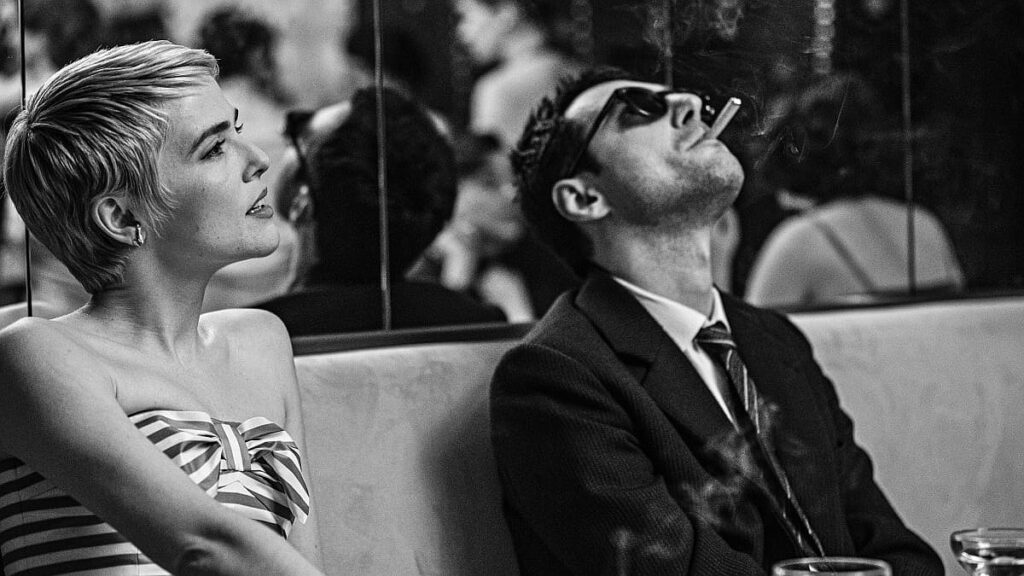
Set in Paris during the vibrant year of 1959, “Nouvelle Vague” captures the fervor of the French New Wave as critics-turned-directors like François Truffaut and Claude Chabrol begin to make their mark. The film centers on Godard, portrayed by Guillaume Marbeck, who is eager to create his first feature. The narrative follows the chaotic production of “Breathless,” a film that became a hallmark of the movement despite its tumultuous shooting schedule. Linklater employs stylistic choices reminiscent of the era, including black-and-white cinematography and a 4:3 aspect ratio, immersing viewers in the time period. However, rather than replicating Godard’s techniques, Linklater focuses on the creative process behind the scenes, showcasing the camaraderie among the cast and crew, and the playful interactions that reveal their personalities beyond their cinematic personas.
While “Nouvelle Vague” successfully captures the essence of its subject matter, some critics argue that the film occasionally leans too heavily on its homage to “Breathless.” Linklater and his co-writers meticulously document the production’s key moments, which can lead to a feeling of checklist-style storytelling, rather than the spontaneous energy that defined Godard’s original work. Despite this, the film shines in its portrayal of the lighter, more human aspects of filmmaking, such as the crew’s downtime and Godard’s quirky personality traits. Ultimately, “Nouvelle Vague” stands as a charming tribute to the French New Wave, inviting both fans of the genre and newcomers to enjoy its blend of reverence and humor. The film is set to hit select theaters on October 31 and will be available on Netflix starting November 14.
Richard Linklater is having a very busy 2025.
The
Boyhood
and
Before Sunrise
director has not one but two projects on the film festival circuit. Both are playing the
New York Film Festival
, and both pay tribute to real-life artists of song and screen.
Blue Moon
, the first of the pair to hit theaters, is a biopic of American lyricist Lorenz Hart, the former creative partner of Richard Rodgers. Linklater’s second film of the year,
Nouvelle Vague
, follows suit, paying loving tribute to the French New Wave movement and to Jean-Luc Godard’s debut feature,
Breathless
(
À bout de souffle
).
Linklater’s reverence for
Breathless
and the entire French New Wave are evident in each frame. But can that love sometimes get in
Nouvelle Vague
‘s own way?
What is
Nouvelle Vague
about?
Guillaume Marbeck and Aubry Dullin in “Nouvelle Vague.”
Credit: Jean-Louis Fernandez / Courtesy of Netflix
The year is 1959, the place is Paris, and the French New Wave movement is in full swing.
Cahiers du Cinéma
film critics like François Truffaut (Adrien Rouyard) and Claude Chabrol (Antoine Besson) have made their directorial debuts, focusing on auteur-driven movies above all else. One of their fellow critics, Jean-Luc Godard (Guillaume Marbeck), is champing at the bit to make his first feature film. After all, in his own words, the only way to critique a movie is to make one yourself.
SEE ALSO:
What’s fresh on Netflix, HBO Max, Disney+, and more?
Godard finally gets the chance with
Breathless,
the story of criminal Michel Poiccard and Patricia, the American woman he loves. While the film became one of the French New Wave’s most influential works, its production was fairly chaotic. Working on a low budget, and filming over just 23 days (
Nouvelle Vague
cuts that number to 20), Godard basically improvised the film as he went, much to the consternation of producer Georges de Beauregard (Bruno Dreyfürst) and American star Jean Seberg (Zoey Deutch). Linklater reimagines that chaos in its entirety, charting the film’s journey from development to post-production.
Nouvelle Vague
formally pays tribute to the French New Wave, but isn’t an outright copy.
Matthieu Penchinat, Guillaume Marbeck, Aubry Dullin, and Zoey Deutch in “Nouvelle Vague.”
Credit: Courtesy of Netflix
In order to submerge audiences in the world of the French New Wave, Linklater adopts some elements of its style. Told almost entirely in French,
Nouvelle Vague
is shot in black and white with a 4:3 ratio, complete with film grain to give it an older feel.
However, Linklater doesn’t totally ape the filmmaking techniques Godard pioneered during the making of
Breathless
, such as jump cuts. Instead, he focuses more on clueing the audience into
how
Godard came to these techniques. For the guerilla-style shooting on the streets of Paris, Linklater introduces the false mail cart that hid
Breathless
‘ handheld camera, along with cinematographer Raoul Coutard (Matthieu Penchinat). For
Breathless
‘ long walk-and-talk sequences, Linklater dutifully follows stars Seberg and Jean-Paul Belmondo (Aubry Dullin) as they stroll the Champs-Élysées. His prime focus here isn’t Godard’s filming, but rather his plan to dub over whatever Seberg and Belmondo are saying in post. Instead of speaking in character, the two actors wonder aloud just what the rest of the shoot has in store for them.
SEE ALSO:
‘Blue Moon’ review: Andrew Scott burns, Ethan Hawke clowns in grating biopic
The focus on process propels
Nouvelle Vague
, offering up a loving look at the ups and downs of the film’s production. But the film’s true strengths lie not in Linklater’s take on Godard’s style, but rather in Linklater’s own strength as the master of the hangout movie. Yes, watching Godard choreograph a scene in real time is compelling. But if you’ve seen
Breathless
, you’ve already seen these scenes. You know how they play out!
Instead, what’s more compelling is the downtime between filming: the crew hanging out in a café, Seberg teaching Belmondo American dance moves, Godard playing pinball. These scenes allow us to understand the characters better as people, as opposed to the pillars of the French New Wave they’d become.
Marbeck’s Godard is the standout here. Eyes perpetually hidden behind sunglasses and a lit cigarette always at his lips, Marbeck plays Godard as part genius, part petulant child. As a result,
Nouvelle Vague
seems both reverent of and humored by Godard’s many, many,
many
philosophical tirades on the subject of filmmaking. The mix lets Linklater bring a lightness to
Nouvelle Vague
‘s numerous production scenes, while also paying respect to the man who made
Breathless
possible.
At times, Linklater’s reverence can overpower
Nouvelle Vague
.
Aubry Dullin and Zoey Deutch in “Nouvelle Vague.”
Credit: Jean-Louis Fernandez / Courtesy of Netflix
Occasionally, though, the reverence for
Breathless
can take over
Nouvelle Vague
, for the worse. Linklater and screenwriters Holly Gent and Vincent Palmo, whose script Michèle Halberstadt and Laetitia Masson adapted into French, dutifully catalog the entire 20-day
Breathless
shoot. They hit major beats quickly. Here’s how Godard filmed Michel’s shootout with a policeman! Here’s how he got the shot of the Paris streetlamps turning on behind Michel!
Yet after a while, these brief vignettes can begin to seem like
Nouvelle Vague
going through the motions, as if Linklater has a checklist of every piece of
Breathless
behind-the-scenes trivia he needs to account for. At these points,
Nouvelle Vague
loses the improvisational sense of play that its own muse strove so hard for while shooting
Breathless
.
Overall, though,
Nouvelle Vague
proves a sweet tribute to an influential film movement, one that doesn’t take itself too seriously. If you’re a French New Wave fan, come for the
Breathless
tributes, but stay for the hangout vibes.
Nouvelle Vague
was reviewed out of the New York Film Festival.
Nouvelle Vague
hits select theaters Oct. 31
before
coming to Netflix Nov. 14
.