CEOs aren’t ‘job-hugging’ like the rest of us
In a landscape marked by significant corporate upheaval, the trend of CEO departures is reaching unprecedented levels, even as many employees find themselves clinging to their jobs amidst a cooling job market. As reported by Business Insider, 2025 has already seen 1,650 CEOs exit their positions, a number that aligns with the record turnover observed in 2024, the highest since tracking began in 2002. High-profile exits, such as Linda Yaccarino from X and Daniel Ek’s planned transition to executive chairman at Spotify, highlight this trend. In stark contrast, everyday workers are grappling with job insecurity, fears surrounding artificial intelligence, and a resurgence of strict management styles that leave them feeling trapped in their roles. Richard Smith, a professor at Johns Hopkins Carey Business School, notes that while workers face anxiety and diminishing engagement, many CEOs enjoy a sense of well-being and financial security that allows them to navigate job changes with relative ease.
The disparity in well-being between CEOs and their employees is striking. Smith’s research indicates that senior leaders now report higher rates of well-being compared to the average worker, a reversal from the early pandemic period when managers were more stressed about remote operations. Employees today are often burdened by quality-of-life concerns, such as return-to-office mandates and the looming threat of AI, leading to a pervasive sentiment of being unable to make career moves. Meanwhile, CEOs, who typically have substantial financial cushions, are less constrained and can afford to step down without immediate concern for their livelihoods. This dynamic is further complicated by the fact that CEO tenures are shrinking, now averaging 7.2 years, down from 8.4 years in prior years. The pressure from shareholders for performance is intensifying, prompting boards to swiftly oust underperforming leaders, as highlighted by the recent uptick in global shareholder activism.
Moreover, the compensation gap between CEOs and average employees continues to widen, with CEOs earning a median of 194.5 times what typical employees make in 2024, up from 176.7 times in 2020. This escalating disparity raises questions about the sustainability of such pay structures, as voiced by notable figures like Warren Buffett. Ultimately, while the corporate world is witnessing a wave of leadership changes, the everyday worker faces a more precarious existence, highlighting a growing divide in the corporate landscape. As the job market cools and anxieties mount, the question remains: how will this evolving dynamic affect the future of work and leadership in corporate America?
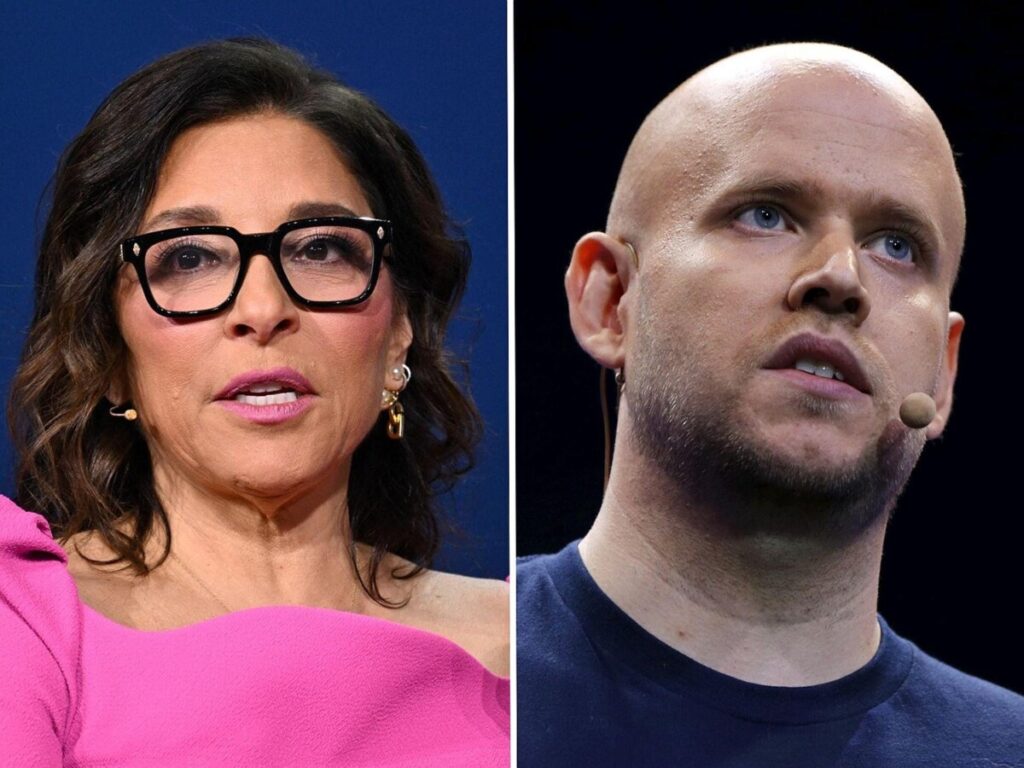
Linda Yaccarino stepped down as CEO of X in July, while Daniel Ek, Spotify’s cofounder and CEO, is set to become the streaming service’s executive chairman in January.
PATRICK T. FALLON/ Getty Images; Shannon Stapleton/ Reuters
CEO departures remain high as many workers cling to their roles amid a
cooling job market
.
Senior leaders now report greater well-being than employees, reversing an early-pandemic trend.
CEOs’ median pay was 176.7 times that of their typical employee in 2024, according to a data firm.
You might be
hugging your job
, but the big boss — not so much.
CEO departures across corporate America remain at
record levels
, while many everyday workers are clinging to their roles as they face a cooling job market,
anxiety over AI
, and a resurgent
no-nonsense management style
.
The result is a corporate split screen:
CEOs can generally roll out
and land on their feet, while workers feel stuck, said Richard Smith, a professor at the Johns Hopkins Carey Business School.
Unlike many rank-and-file employees who rely on regular paychecks and fear layoffs, erstwhile CEOs often have a financial cushion. That means they don’t have to worry if they go a year or two without working, he said.
“As the old saying goes, it’s good to be at the top,” Smith told Business Insider.
Leaders are feeling better than workers
Whether it’s
worries about job security
or just a painful hangover from the role-swapping frenzy of the Great Resignation, metrics like
worker engagement
and well-being are down.
Smith, who runs the Human Capital Development Lab at Johns Hopkins, has surveyed US employees annually since 2019 and, in
newly tabulated data
from 2024
involving more than 1.3 million workers, found that managers and senior leaders reported greater rates of well-being than the average employee.
That’s a reversal, he said, from the early days of the pandemic, when managers reported lower well-being than workers as leaders were fretting over challenges like running remote teams.
‘I can’t make a move right now’
Smith said many workers are now grappling with quality-of-life concerns, such as
return-to-office mandates
. In other cases, some employees are feeling threatened by AI or otherwise sensing that employers’ demands for their skills are softening. For many workers, he said, it’s leading to a sense of, “I can’t make a move right now.”
CEOs, for various reasons, don’t appear to be as constrained.
By the end of September, 1,650 CEOs at US companies had departed, reports Challenger, Gray & Christmas. The 2025 exits are in line with 2024, which saw the highest annual level since the staffing and coaching firm began tracking CEO turnover in 2002.
Some of the chiefs making moves have high profiles.
Linda Yaccarino, who had been running X
, stepped down in July. And Spotify’s cofounder and CEO, Daniel Ek, plans to become executive chairman of the streaming service in January. On Friday,
Walmart CEO Doug McMillon
, 59, said he would retire in January after about a decade in the role.
CEOs’ tenures are also getting shorter. Departing chiefs had been on the job 7.2 years as of the third quarter, less than the average of 8.4 years in 2021 and 2023, the leadership advisory firm
Russell Reynolds Associates
found.
Reasons to bounce
Not all CEOs give up their jobs because they want to, of course. Boards can be quick to oust underperformers because directors are under a lot of pressure from shareholders, Jesse Fried, a professor at Harvard Law School, told Business Insider.
The third quarter of 2025 saw record levels of
global shareholder activism
, Barclays reports.
Broadly,
CEOs have more things to juggle
than leaders did decades ago, Fried said.
“The environment has become much more dynamic, which makes their job harder,” he said.
The exits come as those in the corner office are also generally getting paid more — a development that
Berkshire Hathaway’s Warren Buffett
assailed on Monday in a letter to shareholders.
CEOs earned a median of 176.7 times what their typical employee made in 2020, rising to 194.5 times in 2024, the data firm Equilar found.
Regardless, hefty pay packages can give CEOs a big cushion to fall back on if they get the boot — or simply get antsy.
In many cases, Fried said, “If they never want to work again, they can do that.”
Do you have a story to share about your career? Contact this reporter at
tparadis@businessinsider.com
.
Read the original article on
Business Insider